California Buckeye
California Buckeye is long-lived for a relatively small tree. Specimens regularly reach 150 to 200 years in undisturbed settings, though in managed landscapes with irrigation and soil compaction, expect a shorter but still respectable lifespan of 50 to 100 years.
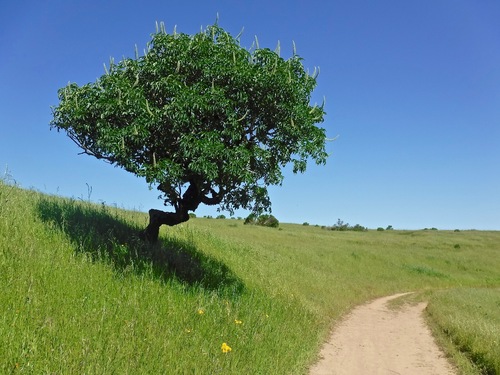
Typically 15 to 30 feet tall with a spread that often matches or exceeds the height. In open settings with good light, the canopy can reach 35 feet across. It is a wide, low-branching tree, so plan for spread, not just height, when choosing a planting site.
Care & Maintenance
Once established, this tree wants almost no summer water. Irrigating it through a dry California summer is one of the fastest ways to kill it, because it has gone dormant on purpose and wet roots in that state invite root rot. Plant it in well-drained soil with full sun to light shade, and do not fertilize it. It evolved in poor, rocky soils and extra nutrients do more harm than good.
Common Issues & Threats
- Overwatering during summer dormancy: This is the most common way homeowners accidentally kill a California Buckeye. If you are running drip irrigation near it from July through September, stop. The tree has gone dormant intentionally and does not want water.
- Powdery mildew (Erysiphe aesculi): A white, powdery coating on the leaves in spring is common, especially in years with cool, humid mornings. It looks alarming but rarely causes serious harm to a healthy tree. Improving air circulation around the canopy is more useful than fungicide sprays.
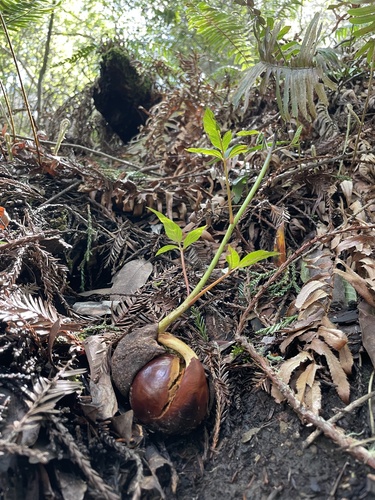
- Toxic fruit drop liability: The large, smooth seeds that fall in autumn are toxic to dogs, horses, and children if eaten. If you have pets or kids regularly in the yard, think carefully about placement. The husks also create a slip hazard on hard surfaces like patios or walkways.
Pruning Guide
The best window for structural pruning is late winter, just before the flowers emerge in February or March. Remove crossing branches, deadwood, and anything that creates a hazard, but resist the urge to do heavy pruning in summer when the tree is dormant, because wounds during that period are slow to close. California Buckeye naturally forms a wide, rounded crown and rarely needs aggressive shaping if you start with good structure early.
Did You Know?
Here is what most people get wrong: when this tree goes bare in August, their first instinct is to water it more. That is exactly backwards. The summer leaf drop is a drought adaptation that has worked for this species for thousands of years, and adding water at that point stresses the root system. Also worth knowing: the seeds were traditionally used by Native California tribes to stun fish in streams, and the nectar is toxic to European honeybees, though native bees that evolved alongside this tree handle it fine.
Where California Buckeye Is Found
California Buckeye is common in 279 of the US communities we cover, across 1 climate regions.
... and 267 more cities
Need California Buckeye Care?
Find ISA-certified arborists experienced with California Buckeye in your area.
Take the Tree Risk Quiz