California Bay Laurel

200 to 400 years under good conditions, with some old-growth specimens on record exceeding that range.
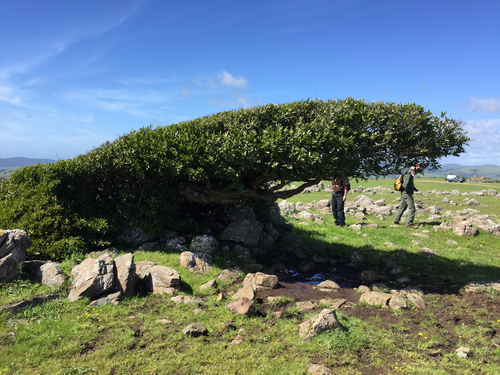
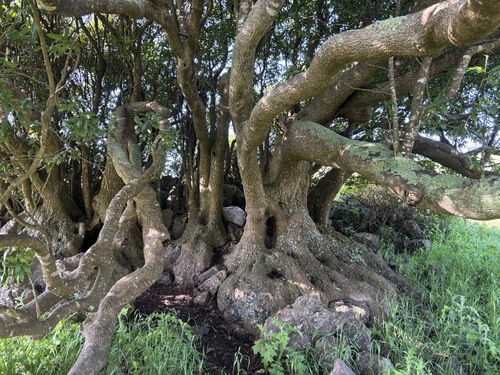
40 to 75 feet tall with a spread of 30 to 60 feet, though coastal wind exposure and available water will significantly influence the final size. Multi-trunk specimens tend to spread wider than single-leader trees.
Care & Maintenance
Once established, this tree is highly drought tolerant and does not need summer irrigation in most coastal settings. It prefers well-drained soil and will rot at the crown if planted in low spots that collect water. Full sun to partial shade both work, but it grows more vigorously with some afternoon shade in hotter inland-coastal zones.
Common Issues & Threats
- Phytophthora ramorum (Sudden Oak Death carrier): This is the big one most homeowners don't know about. California Bay Laurel is the primary reservoir host for P. ramorum, the pathogen behind Sudden Oak Death. The bay itself rarely dies from it, but infected bay leaves and soil spread spores to any oaks nearby. If you have coast live oaks within 50 feet, this relationship matters.
- Armillaria root rot: In heavy clay soils or areas with poor drainage, Armillaria mellea (oak root fungus) can colonize the root system. You'll see declining vigor, yellowing leaves, and sometimes white mycelial mats under the bark at the base. There is no cure once it's established, so drainage and planting site matter from day one.
- Soft scale insects (Coccidae): Various soft scale species will coat stems and cause sticky honeydew buildup, followed by sooty mold fungus on the leaves below. It looks alarming but is rarely fatal. A horticultural oil application in late winter before new growth flushes will knock populations back significantly.
Pruning Guide
Prune in late fall through winter when the tree is least active and when Phytophthora spore dispersal is lowest. This tree does not need much pruning and actually resents heavy cuts, responding with dense water sprout clusters that become a long-term maintenance headache. Focus on removing crossed limbs, dead wood, and any branches growing into structures, and make clean cuts at the branch collar rather than flush cuts.
Did You Know?
Here is what most people get wrong: they assume the leaves are interchangeable with Mediterranean bay (Laurus nobilis) for cooking. They are not. California Bay Laurel leaves contain roughly three times the volatile oil concentration, so one leaf does the work of three, and too many will make a dish taste medicinal and harsh. The second thing worth knowing is that smelling crushed leaves in an enclosed space, like a car with the windows up, can trigger a migraine in sensitive people. It is that potent.
Where California Bay Laurel Is Found
California Bay Laurel is common in 388 of the US communities we cover, across 1 climate regions.
... and 376 more cities
Need California Bay Laurel Care?
Find ISA-certified arborists experienced with California Bay Laurel in your area.
Take the Tree Risk Quiz