Brisbane Box
60 to 100 years under good conditions, though street trees in poor soil with restricted root zones often look rough by 40 to 50 years.
Typically 30 to 50 feet tall with a canopy spread of 20 to 35 feet. Street tree specimens with root restrictions tend to top out closer to 30 feet, while trees in open landscape conditions push toward the upper end.
Care & Maintenance
Once established, Brisbane Box is genuinely drought tolerant, and overwatering is actually the bigger threat to it in Southern California than underwatering. It prefers well-drained soil and full sun, and will reward deep infrequent irrigation over frequent shallow watering. Skip fertilizing unless you see yellowing foliage; most landscape soils have enough nutrients, and pushing growth with nitrogen just creates weak wood.
Common Issues & Threats
- Phytophthora root rot from overwatering: This is the most common killer. Homeowners water on a lawn schedule and the roots suffocate. Signs are branch dieback from the top down, not from the outside in.
- Iron chlorosis in alkaline soils: Yellowing leaves with green veins, usually showing up first on newer growth. Coastal SoCal soils can run alkaline enough to lock out iron uptake. A soil acidifier or chelated iron drench addresses this.
- Psyllid infestations: Small sap-sucking insects that cause stippled, distorted, or sticky foliage. Brisbane Box can attract psyllid species related to those that hammer eucalyptus nearby. A healthy, properly watered tree typically shrugs them off, but a stressed tree can get hit hard.
Pruning Guide
The most important window is when the tree is young, before the branch structure is set. You want a single dominant leader and well-spaced lateral branches with no tight V-shaped crotches, which are weak attachment points. Once mature, Brisbane Box doesn't need much routine pruning beyond removing dead wood and any crossing branches. The mistake most crews make is lion-tailing it, stripping interior foliage so the weight ends up at the branch tips, which dramatically increases wind failure risk.
Did You Know?
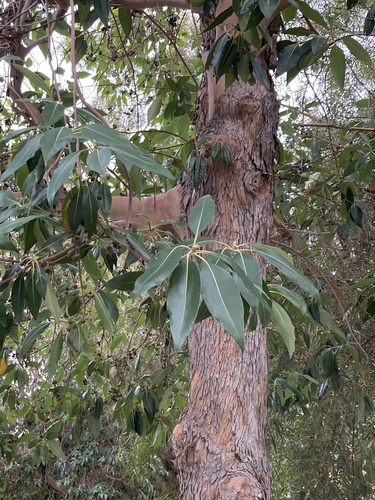
Most people assume the peeling bark is a sign of disease or stress, and they call an arborist in a panic. It's completely normal, it's just how the tree grows, and that bark texture is one of its genuine ornamental assets. What surprises most homeowners is that Brisbane Box is native to subtropical rainforest margins in Queensland, yet it performs better in dry coastal California than many trees that look like they belong here. It's one of those cases where a tree from a dramatically different climate ended up being exactly the right fit.
Where Brisbane Box Is Found
Brisbane Box is common in 388 of the US communities we cover, across 1 climate regions.
... and 376 more cities
Need Brisbane Box Care?
Find ISA-certified arborists experienced with Brisbane Box in your area.
Take the Tree Risk Quiz