Blue Spruce
200 to 400 years in native mountain conditions. In suburban landscapes, especially east of the Rockies, expect meaningful decline to begin between 40 and 80 years, often accelerated by poor planting conditions or persistent Rhizosphaera infection.
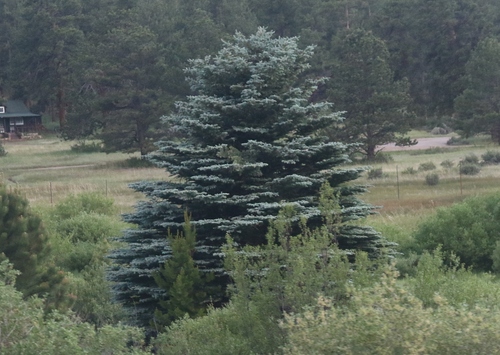
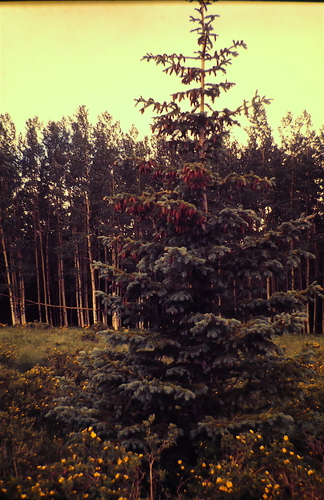
Typically 40 to 60 feet tall with a spread of 15 to 20 feet in landscape settings, though 75-foot specimens exist. The dense pyramidal form is widest at the base, so even a tree that looks narrow from the street is taking up a substantial footprint underground and in the canopy.
Care & Maintenance
Blue spruce wants full sun and well-drained, slightly acidic soil. It's drought-tolerant once established, but young trees need consistent watering through the first two to three summers. Skip fertilizer unless a soil test shows an actual deficiency, because pushing fast soft growth makes the tree more vulnerable to the fungal diseases that already plague this species.
Common Issues & Threats
- Rhizosphaera needle cast (Rhizosphaera kalkhoffii): A fungal disease that turns inner needles purple-brown before dropping them, working from the bottom of the tree upward. Most homeowners assume lower branch dieback is just normal aging, but by the time the upper canopy shows symptoms, the infection is already advanced. Copper-based fungicide applications in spring can slow it, but you need to start before symptoms appear.
- Cytospora canker (Leucostoma kunzei): Look for white or dried resinous sap oozing from branches, usually lower in the canopy first. This fungus moves into trees that are already stressed by drought, compaction, or injury, and there is no chemical cure. You remove infected branches back to clean wood and focus on improving the tree's overall vigor.
- Size and site problems: Blue spruce planted near a foundation or under a power line in 1995 is now a 45-foot tree heading for the house. This is not a small accent tree, and the people who sold it to your parents as one were not being straight with you. Evaluate any blue spruce within 20 feet of a structure and have an honest conversation about its future.
Pruning Guide
Prune in late winter before new growth emerges, and only remove what needs to go: dead wood, diseased branches, or anything crossing and rubbing. Do not shear blue spruce the way you would arborvitae or boxwood. It will not regenerate from old bare wood, so cutting back past the green growth leaves permanent dead stubs that never fill back in.
Did You Know?
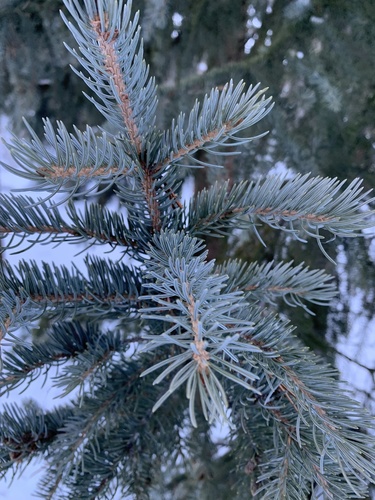
The blue color is not pigment. It is a waxy coating called a glaucous bloom, and if you rub a needle firmly between your fingers, you strip that coating off and the needle turns green underneath. In its native range in Colorado and Utah, blue spruce commonly lives 200 to 400 years, but suburban specimens in the mid-Atlantic and Midwest often begin serious decline at 40 to 60 years because compacted soil, poor drainage, and reflected heat from pavement are nothing like a Rocky Mountain slope.
Where Blue Spruce Is Found
Blue Spruce is common in 2098 of the US communities we cover, across 3 climate regions.
... and 2086 more cities
Need Blue Spruce Care?
Find ISA-certified arborists experienced with Blue Spruce in your area.
Take the Tree Risk Quiz