Bigleaf Maple
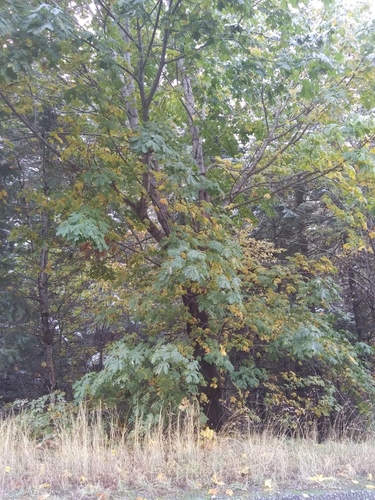
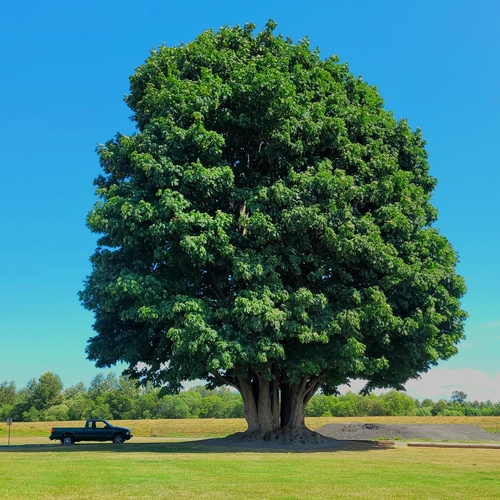
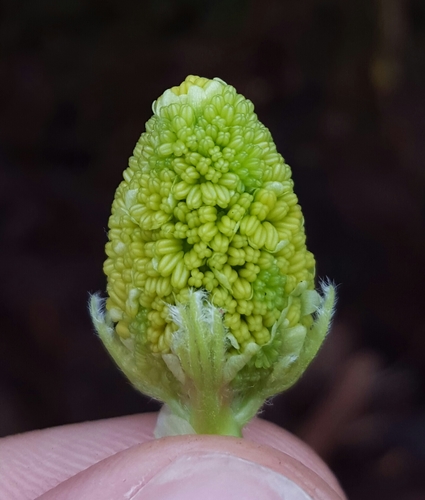
200 to 300 years in undisturbed conditions, though urban trees rarely exceed 100 years due to soil compaction, root damage, and construction impacts.
60 to 100 feet tall with a spread of 40 to 75 feet. Trees in open, well-watered sites can exceed these dimensions considerably.
Care & Maintenance
Established bigleaf maples are remarkably self-sufficient in the Pacific Northwest and generally don't need supplemental watering once their roots are set. They prefer well-drained soil but tolerate the wet winters common to the region. Avoid fertilizing mature trees unless a soil test shows a specific deficiency. Fertilizing a large maple with no deficiency just pushes soft, pest-prone growth.
Common Issues & Threats
- Verticillium wilt: This soil-borne fungus is the most serious threat to bigleaf maples in the PNW. Branches die back suddenly, often one side of the canopy first. There's no cure once it's established in the soil, and a severely infected tree is a removal decision, not a treatment decision.
- Aphid honeydew and sooty mold: Bigleaf maples host enormous aphid populations in summer, and the sticky honeydew they drop coats everything below, including cars and patios. The black sooty mold that grows on it looks alarming but doesn't kill the tree. Most people spray the tree when they should just wait, because predatory insects typically crash the aphid population by late summer on their own.
- Structural failure in large specimens: Here's what most people get wrong about bigleaf maples. They assume a tree that looks healthy is structurally sound. Bigleaf maples over 80 feet frequently develop internal decay in co-dominant stems and major scaffold branches, and the failure can happen without warning. If your tree has multiple large stems originating from a low crotch, get an arborist to assess it before the next windstorm.
Pruning Guide
Prune bigleaf maple in late summer or early fall, after the summer aphid and disease pressure has dropped. Avoid pruning in spring when the tree is leafing out and wounds heal poorly. The main goal on a mature specimen is removing deadwood and any co-dominant leaders with tight, bark-included unions. These included-bark junctions don't get stronger over time, they get weaker, and they're where big trees fail.
Did You Know?
The moss, lichen, and ferns colonizing bigleaf maple bark aren't harming the tree. They're epiphytes, meaning they use the bark as a platform but take nothing from the tree. Some Pacific Northwest bigleaf maples carry hundreds of pounds of epiphytic growth. Also, bigleaf maple seeds are one of the most reliable food sources for band-tailed pigeons during migration, which makes your tree a functioning piece of regional wildlife habitat, not just a landscape specimen.
Where Bigleaf Maple Is Found
Bigleaf Maple is common in 345 of the US communities we cover, across 1 climate regions.
... and 333 more cities
Need Bigleaf Maple Care?
Find ISA-certified arborists experienced with Bigleaf Maple in your area.
Take the Tree Risk Quiz