Banyan Tree
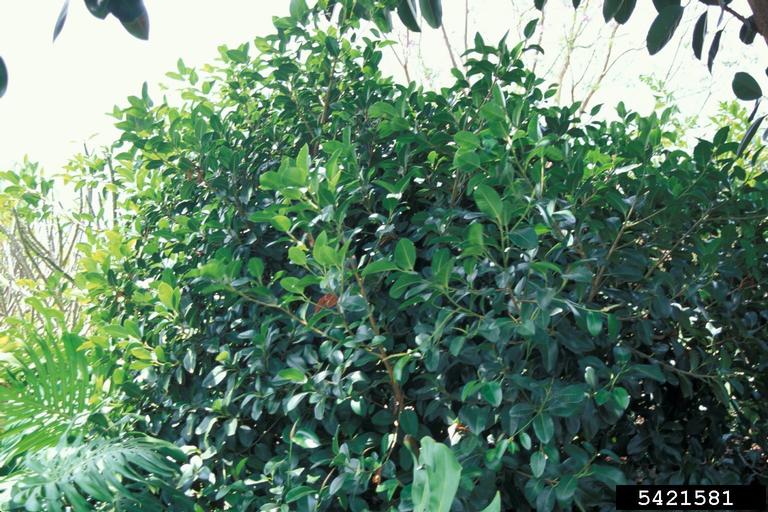
Several hundred years with adequate space and no catastrophic damage. The oldest documented banyans in Asia are estimated at over 500 years.
The main trunk can reach 60 to 80 feet tall, but height is almost beside the point. Canopy spread on an unmanaged tree can exceed 200 feet across and continue expanding indefinitely as aerial roots establish new trunks.
Care & Maintenance
Established banyans in Hawaii need almost no supplemental watering once their roots are deep into the soil. They tolerate a range of soils but grow fastest in moist, well-drained ground with full sun. Fertilizing a mature banyan is rarely necessary and can actually push excessive growth you then have to manage.
Common Issues & Threats
- Root damage to foundations and utilities: Banyan roots are aggressive and will find your water and sewer lines. A tree planted 30 feet from your house today can have roots under your slab within a decade. This is the number one thing homeowners underestimate.
- Cuban laurel thrips (Gynaikothrips ficorum): These tiny insects fold and distort new banyan leaves, creating papery brown galls. The damage looks alarming but rarely kills the tree. Heavy infestations can be treated with systemic insecticides, but on a large tree the cost and coverage become real logistical problems.
- Fig wax scale (Ceroplastes rusci): These waxy, pinkish-brown bumps colonize branches and weaken them by sucking sap. You'll also notice sticky honeydew on surfaces below, followed by sooty mold. Horticultural oil sprays work on reachable branches, but scaling up treatment to a large banyan canopy is a different challenge entirely.
Pruning Guide
Most people prune banyans reactively, waiting until the aerial roots are already hitting the ground and forming new trunks. If you do not want the tree to expand, you need to cut those aerial roots before they establish. Once a secondary trunk roots into the soil, removing it is essentially a tree removal project. Prune anytime in Hawaii, but avoid heavy cuts during the wettest months when fungal issues are higher.
Did You Know?
Here is what most people get wrong: they think of the banyan as a big shade tree, the way you would think of an oak. It is not. It is an expanding organism, and without management it will keep colonizing space for as long as it lives. The famous Lahaina banyan, planted as a single tree in 1873, eventually covered nearly two acres with dozens of secondary trunks before the 2023 wildfires heavily damaged it.
Where Banyan Tree Is Found
Banyan Tree is common in 121 of the US communities we cover, across 1 climate regions.
... and 109 more cities
Need Banyan Tree Care?
Find ISA-certified arborists experienced with Banyan Tree in your area.
Take the Tree Risk Quiz