Austrian Pine
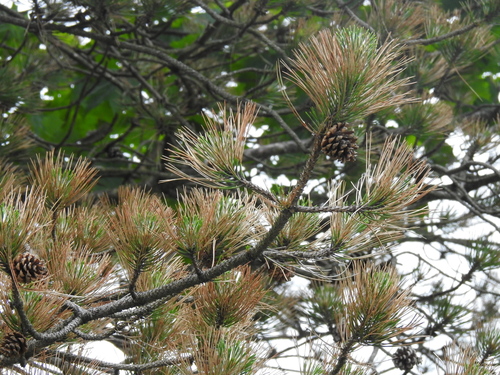
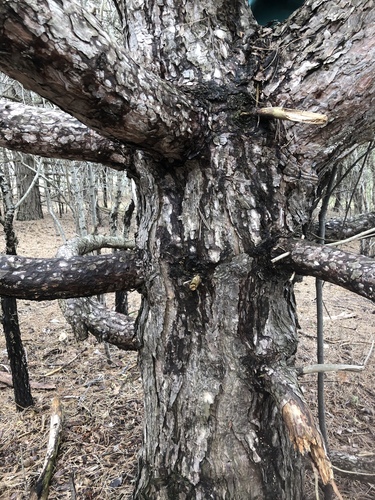
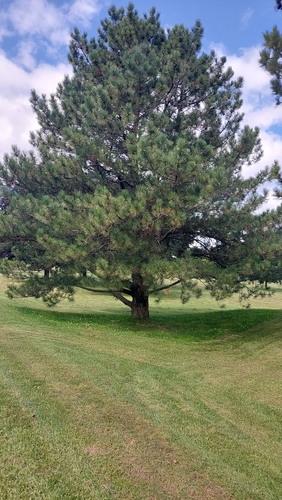
Austrian Pine can live 80 to 120 years under ideal conditions, but in Diplodia-heavy regions many trees are failing and being removed well before 40 years.
Typically 40 to 60 feet tall with a spread of 20 to 40 feet, though windbreak specimens often stay on the shorter end due to site stress and repeated tip dieback.
Care & Maintenance
Austrian Pine wants full sun and well-drained soil. It is drought tolerant once established, so heavy supplemental watering in clay soils actually creates conditions that favor fungal disease. Skip the fertilizer unless a soil test tells you otherwise, and avoid high-nitrogen fertilizers that push soft new growth, which is exactly what Diplodia sapinea targets first.
Common Issues & Threats
- Diplodia Tip Blight (Diplodia sapinea): This is the big one in the Mountain West. The fungus kills new candles in spring, leaving clusters of brown, stunted shoot tips that look like the tree was scorched. It moves down into older wood over time, and once it reaches the main stem, the tree is a candidate for removal, not treatment.
- Dothistroma Needle Blight (Dothistroma septosporum): Look for yellow and tan banding on the needles, with the tips turning brown while the needle base stays green. It defoliates the lower crown first and works upward. Wet spring weather spreads it quickly, and trees weakened by Diplodia are especially vulnerable.
- Ips Bark Beetles: Stressed or wounded Austrian Pines attract Ips engraver beetles, which bore under the bark and create distinctive S-shaped galleries. Pitch tubes on the bark and fading crown sections are the signs. Beetles are usually a symptom of a tree already in trouble, not the original cause.
Pruning Guide
Prune Austrian Pine in dry weather, ideally late winter before new growth emerges in spring. The mistake most people make is pruning during wet spring conditions, which is exactly when Diplodia spores are active and spread through fresh cuts. Never prune more than one-third of the crown at a time, and remove dead or dying branch tips all the way back to healthy tissue, not just partway.
Did You Know?
Austrian Pine was once considered a bulletproof windbreak tree, but in many parts of the Mountain West it has essentially been removed from recommended planting lists because Diplodia tip blight has devastated regional populations so thoroughly. Most homeowners assume a browning pine is dying from drought or cold, but with Austrian Pine, Diplodia is the first thing to rule out, and ruling it out means getting up into the tree and looking at the base of dead shoot tips under magnification for tiny black fungal structures called pycnidia.
Where Austrian Pine Is Found
Austrian Pine is common in 421 of the US communities we cover, across 1 climate regions.
... and 409 more cities
Need Austrian Pine Care?
Find ISA-certified arborists experienced with Austrian Pine in your area.
Take the Tree Risk Quiz