Albizia
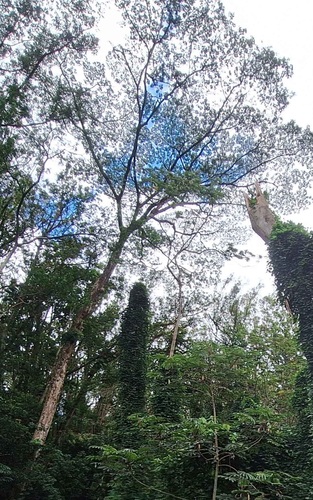
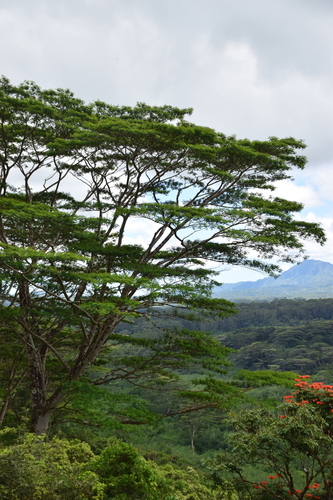
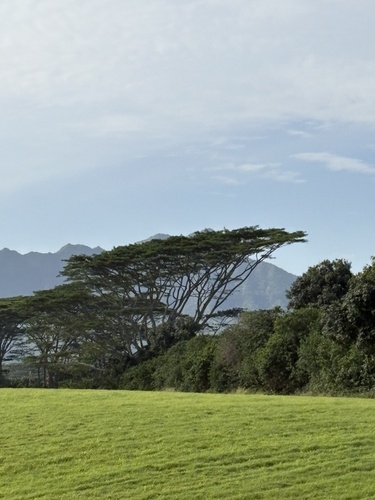
Relatively short for a tree of its stature: typically 20 to 40 years, often cut shorter by Fusarium wilt or storm damage. The irony is that a fast-dying Albizia is more dangerous than a living one.
60 to 100 feet tall with a canopy spread of 40 to 60 feet. In Hawaii's favorable conditions, some specimens exceed 100 feet. The crown is wide and flat-topped, which maximizes wind load and is a primary reason the tree fails so often in storms.
⚠ Problem Species
Why it's a problem: Extremely fast-growing, extremely brittle - the #1 hazard tree in Hawaii. Falls in every storm.
Care & Maintenance
Albizia thrives in Hawaii's wet and mesic zones with almost no help from you. It needs no supplemental watering, no fertilizer, and tolerates poor soils — this is exactly why it spreads so aggressively. If you have one on your property, the honest answer is that 'care' is not your primary concern. Risk management is.
Common Issues & Threats
- Catastrophic branch failure: The wood is exceptionally weak for its size. Large limbs drop without warning, especially after rain when the canopy holds extra weight. This is not a 'sometimes' problem — it is the defining characteristic of this tree.
- Vascular wilt (Fusarium oxysporum f. sp. albiziae): A fungal pathogen that has been killing Albizia trees across Hawaii since the early 2000s. You may notice sudden crown dieback, yellowing leaves, and a tree that looks like it died overnight. There is no cure, and a dead Albizia becomes even more unpredictable structurally.
- Invasive spread and root damage: Albizia produces enormous quantities of seeds that germinate readily, meaning one tree becomes dozens within a few years. The root system is aggressive enough to crack driveways, compromise septic systems, and destabilize slopes — a serious concern on Hawaii's steep terrain.
Pruning Guide
Here is what most people get wrong: they prune Albizia to make it safer, but structural pruning does not fix structurally weak wood. Removing weight from one limb does not change the tensile strength of the fiber. If you prune it, use a licensed arborist who understands weight distribution, and expect to be back on a 12-to-18-month cycle. Even a well-pruned Albizia is still a hazard tree — pruning reduces the risk, it does not eliminate it.
Did You Know?
Albizia holds a verified record as one of the fastest-growing trees in the world, documented at up to 10 meters of height gain per year under ideal conditions. What surprises most homeowners is that the tree's rapid growth is directly linked to its failure rate — it builds wood so quickly that the cellular structure is loose and weak, the arboreal equivalent of building a skyscraper out of balsa.
Where Albizia Is Found
Albizia is common in 121 of the US communities we cover, across 1 climate regions.
... and 109 more cities
Need Albizia Care?
Find ISA-certified arborists experienced with Albizia in your area.
Take the Tree Risk Quiz