Tree Trimming & Pruning in Silver Star, MT
Cost Estimates - Silver Star
Pruning Guide for Silver Star Trees
In Cold-Dry climate (Zone 5a), timing matters. Pruning at the wrong time can stress trees, invite disease, or kill them outright.
Silver Star Pruning Calendar
Late winter (February-March) for most. Avoid fall pruning - doesn't heal before winter
What Type of Pruning Do Your Trees Need?
- Crown cleaning - removing dead, diseased, and crossing branches. The most common and important service. Every Silver Star tree benefits from this every 2-3 years.
- Crown thinning - selectively removing interior branches to reduce wind resistance and improve light penetration. Important for dense canopy species like Quaking Aspen.
- Crown raising - removing lower branches for clearance over sidewalks, driveways, and structures. Especially needed for ~27-year-old trees that have grown into walkways.
- Crown reduction - reducing overall canopy size. Only appropriate when trees have outgrown their space. Never "top" a tree - proper reduction cuts back to lateral branches.
What NOT to Do
Never "top" a tree (cutting all branches back to stubs). Topping destroys the tree's structure, causes rapid weak regrowth, and creates a more dangerous tree than you started with. Any company that recommends topping isn't worth hiring.
See full climate profile and risk assessment for Silver Star →
Drought & Water Stress
Silver Star receives only 9.4 inches of annual rainfall - well below what most landscape trees need to survive without irrigation. Active May through September, dormant October through April
Common Trees in Silver Star
Native & Adapted Species
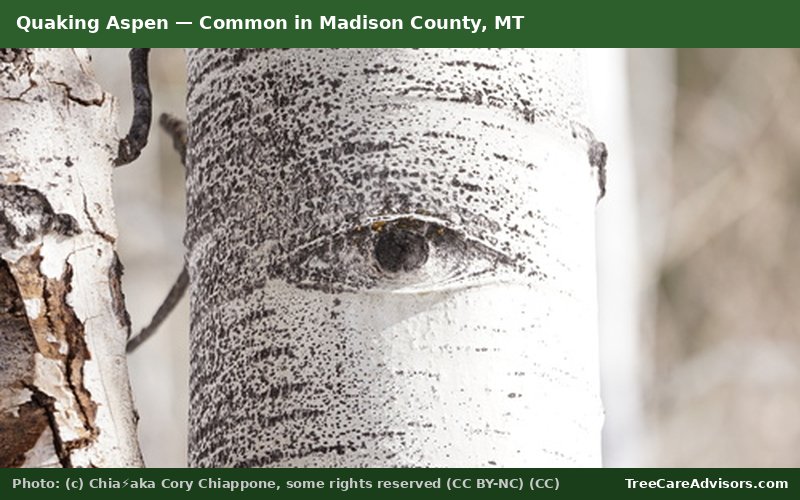
Quaking Aspen
The iconic mountain tree - actually a clonal organism, golden fall color, short-lived individually (40-60 yrs)
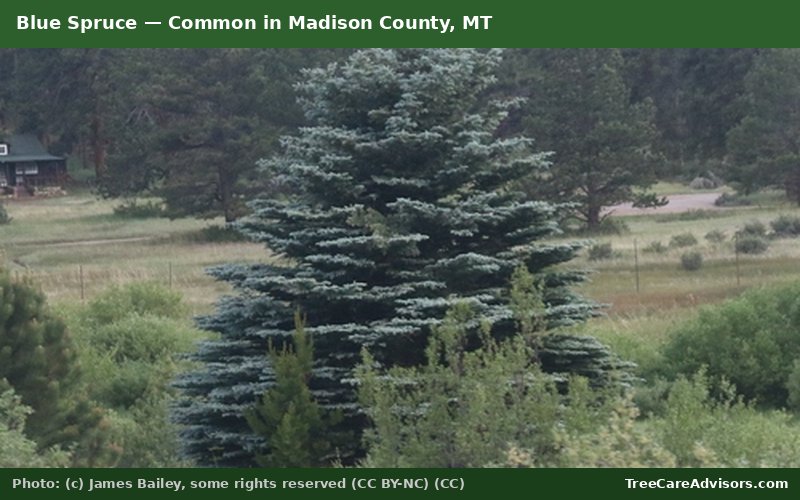
Blue Spruce
Colorado's state tree, stiff blue needles - but needle cast disease is epidemic
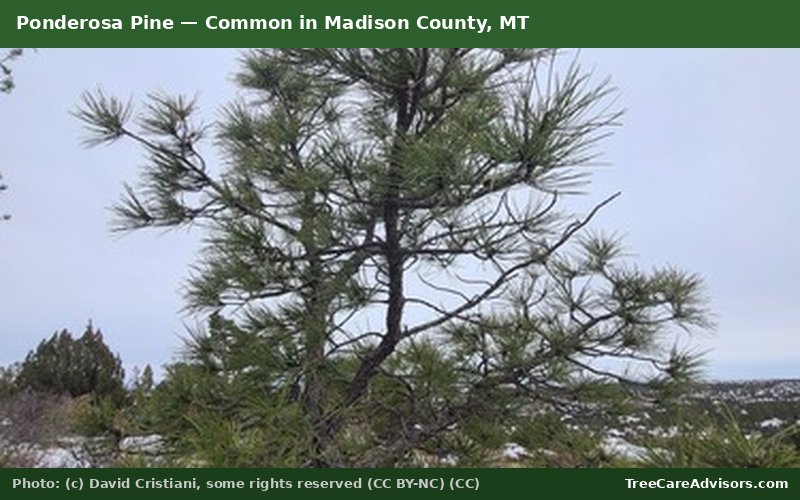
Ponderosa Pine
Tall, open-crowned, butterscotch-scented bark, fire-adapted
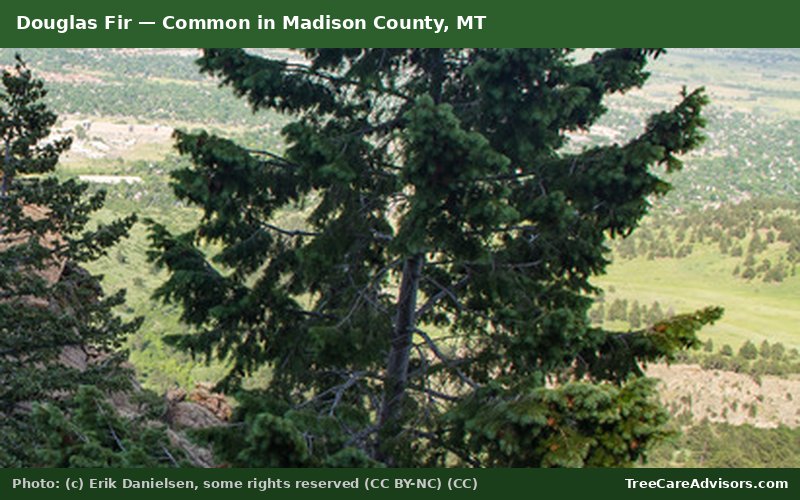
Douglas Fir
Not a true fir - tall, pyramidal, important timber species
Problem Species to Watch
Russian Olive
Extremely invasive in riparian areas, thorny, now illegal to plant in CO
Siberian Elm
Invasive, weak wood, constant branch failure
Green Ash
EAB has arrived in Front Range Colorado and Utah - die-off beginning
Tree Trimming & Pruning Cost in Silver Star
Silver Star's regional cost multiplier is 1.17x the national average, reflecting higher property values (median $437,500) and labor costs in the Madison County area. Varies significantly by tree size, species, and access
Wildfire & Defensible Space
Dry climate (9" annual rainfall) — defensible space management including tree pruning is recommended.
Key defensible space practices for Silver Star properties:
- Maintain 30 feet of cleared space immediately around structures
- Remove dead branches, leaf litter, and dry vegetation
- Prune tree canopies to create 10+ feet of clearance between crowns
- Remove highly flammable species (eucalyptus, juniper, ornamental grasses) near structures
Freeze Protection for Silver Star Trees
With January lows averaging 13.0°F in Silver Star, hard freezes are a serious and recurring threat to trees. Freeze-thaw cycles crack bark, kill cambium tissue, and can split trunks.
Active Tree Threats in Madison County
Mountain Pine Beetle critical
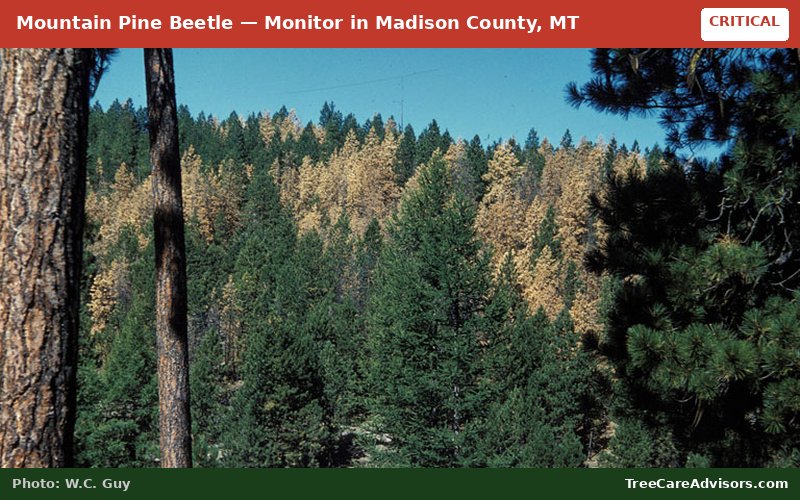
Affects: Lodgepole pine (primary), ponderosa pine, limber pine, whitebark pine
Native bark beetle whose populations have exploded due to drought and warmer winters that no longer kill overwintering larvae. Beetles mass-attack trees, introducing blue-stain fungi that stop water transport. Trees turn red and die within a year.
Emerald Ash Borer critical
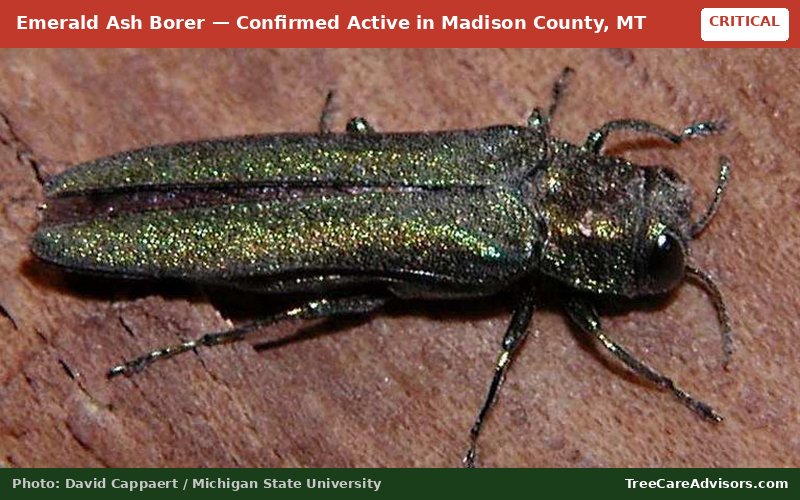
Affects: All ash species - very common urban trees in Front Range CO and Wasatch Front UT
Same devastating beetle as eastern US. Colorado and Utah cities planted heavily in ash - many municipalities have 15-20% ash canopy that will be lost.
Ips Beetle Complex moderate-high
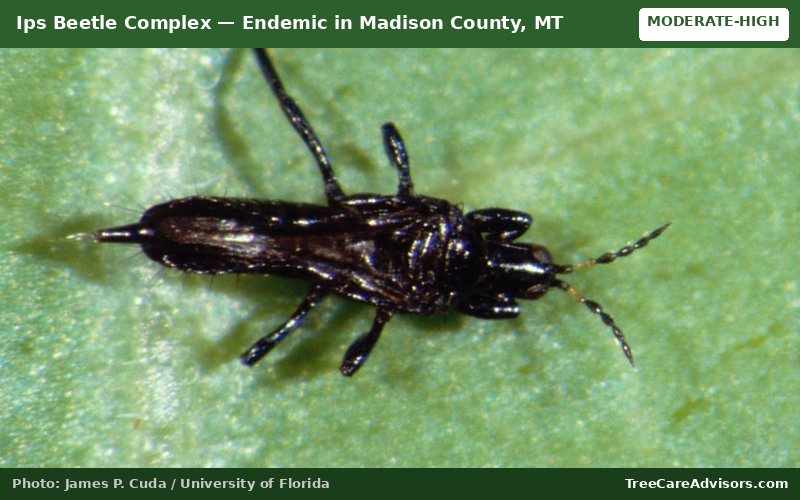
Affects: Spruce, pine - urban and forest settings
Multiple Ips bark beetle species that attack weakened conifers. Unlike mountain pine beetle, Ips can have multiple generations per year and attacks a broader range of species including spruce.
What 1980s-2000s-Era Trees Need in 2026
1980s-2000s Homes (25-45 years old trees)
Peak of designed residential landscapes. Professional landscape architects specified diverse palettes. McMansion era brought larger properties with more trees.
Common Issues
- **'Crepe Murder'** - the epidemic of bad pruning (topping crepe myrtles into ugly stubs) has created structurally compromised trees with weak regrowth across the South.
- **Approaching first major maintenance** - trees in this age range are large enough to need professional pruning for the first time. Many homeowners haven't budgeted for it.
- **Raywood Ash decline** - widely planted in California in the 1990s, now showing anthracnose and structural decline
Recommended Actions
- Structural pruning NOW - this is the critical window to establish good branch architecture before trees get too large
- Stop 'crepe murder' - educate on proper crepe myrtle pruning (remove crossing/rubbing branches, not indiscriminate topping)
- Replace short-lived ornamentals (purple-leaf plum, Bradford pear) that are declining
Frequently Asked Questions
How much does tree trimming & pruning cost in Silver Star?
When is the best time to prune trees in Silver Star?
How often should trees be trimmed in Silver Star?
How much water do trees need in Silver Star's dry climate?
Can freezing temperatures damage my trees in Silver Star?
How do I find a good arborist in Silver Star?
Get Tree Trimming & Pruning Quotes in Silver Star
Compare ISA-certified arborists serving Silver Star and Madison County.
Get Free Quotes