Tree Trimming & Pruning in Seneca Gardens, KY
Cost Estimates - Seneca Gardens
Pruning Guide for Seneca Gardens Trees
In Mixed-Humid climate (Zone 7a), timing matters. Pruning at the wrong time can stress trees, invite disease, or kill them outright.
Seneca Gardens Pruning Calendar
Late winter (January-March) while dormant. Oaks: November-March only to prevent oak wilt
What Type of Pruning Do Your Trees Need?
- Crown cleaning - removing dead, diseased, and crossing branches. The most common and important service. Every Seneca Gardens tree benefits from this every 2-3 years.
- Crown thinning - selectively removing interior branches to reduce wind resistance and improve light penetration. Important for dense canopy species like Sugar Maple.
- Crown raising - removing lower branches for clearance over sidewalks, driveways, and structures. Especially needed for ~88-year-old trees that have grown into walkways.
- Crown reduction - reducing overall canopy size. Only appropriate when trees have outgrown their space. Never "top" a tree - proper reduction cuts back to lateral branches.
What NOT to Do
Never "top" a tree (cutting all branches back to stubs). Topping destroys the tree's structure, causes rapid weak regrowth, and creates a more dangerous tree than you started with. Any company that recommends topping isn't worth hiring.
See full climate profile and risk assessment for Seneca Gardens →
Common Trees in Seneca Gardens
Native & Adapted Species
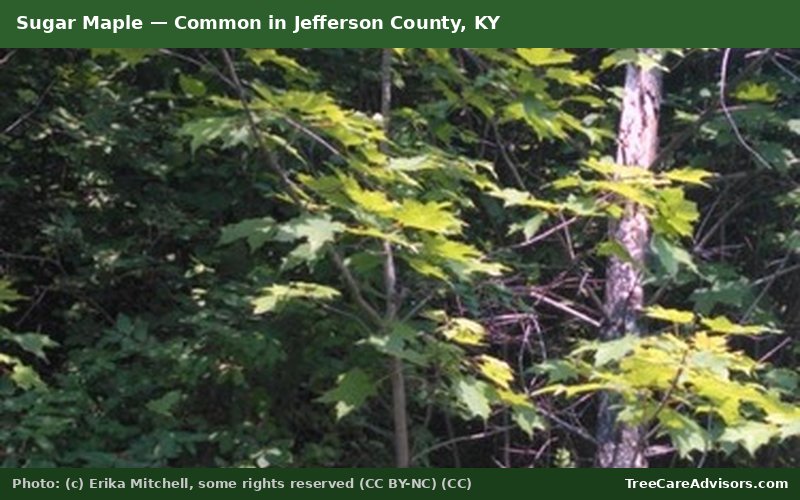
Sugar Maple
The iconic fall color tree - brilliant orange/red, shade champion, slow-growing
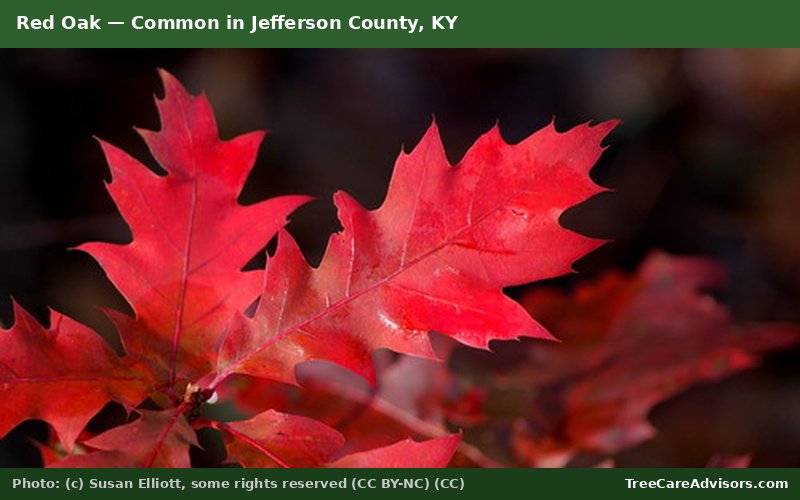
Red Oak
Fast-growing oak, excellent shade, good fall color, valuable timber
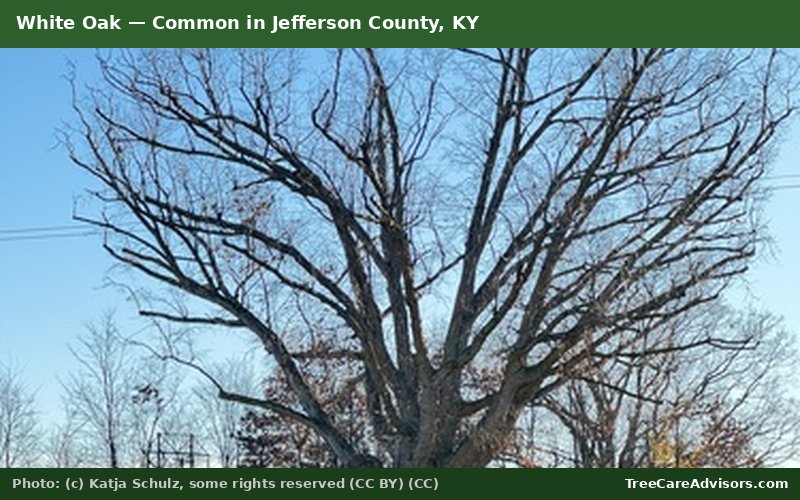
White Oak
Long-lived (300-600 years), wide-spreading, slow-growing, acorn producer
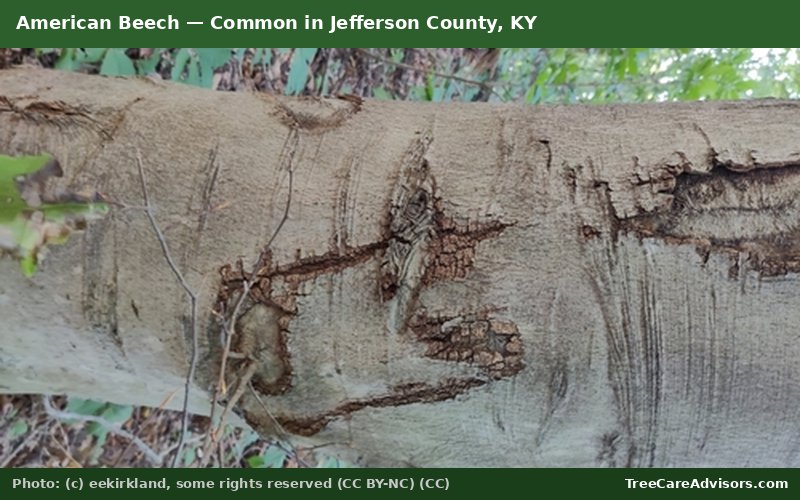
American Beech
Smooth gray bark, golden fall color, shallow roots, colonial root sprouts
Problem Species to Watch
Norway Maple
Invasive - dense shade kills understory, shallow roots heave sidewalks, now banned in some states
Bradford Pear
Structurally catastrophic - splits in half at 15-20 years, invasive cross-pollination
Silver Maple
Extremely fast but weak wood, aggressive surface roots, splits in storms
Tree Trimming & Pruning Cost in Seneca Gardens
Seneca Gardens's regional cost multiplier is 1.23x the national average, reflecting higher property values (median $490,200) and labor costs in the Louisville/Jefferson County, KY-IN area. Varies significantly by tree size, species, and access
Tree Services Near Seneca Gardens
We also cover tree care in these nearby communities:
Storm Damage Risk in Seneca Gardens
Jefferson County averages 31.3 significant storm events per year, including 25.3 high-wind events.
Wind is the primary threat to trees in Seneca Gardens. Severe thunderstorms and high-wind events cause the most tree failures.
Managing Seneca Gardens's Aging Tree Canopy
~88-year-old trees are at or past typical lifespan for many species. Structural decline, internal decay, and catastrophic failure risk.
Active Tree Threats in Jefferson County
Formosan Subterranean Termites critical
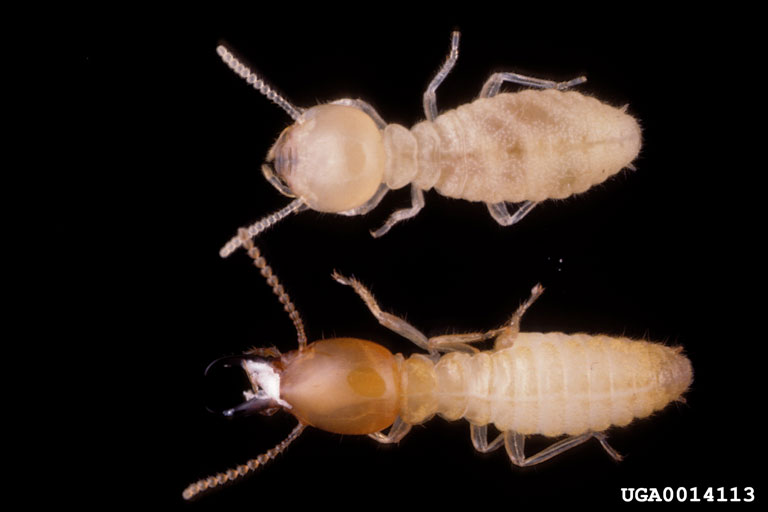
Affects: Both dead wood and living trees - will hollow out live oaks and other species from the inside
The most destructive termite species in the US. Colonies can contain millions of individuals. Unlike native termites, Formosans build above-ground carton nests IN living trees, consuming heartwood while the tree appears healthy from outside.
Laurel Wilt critical
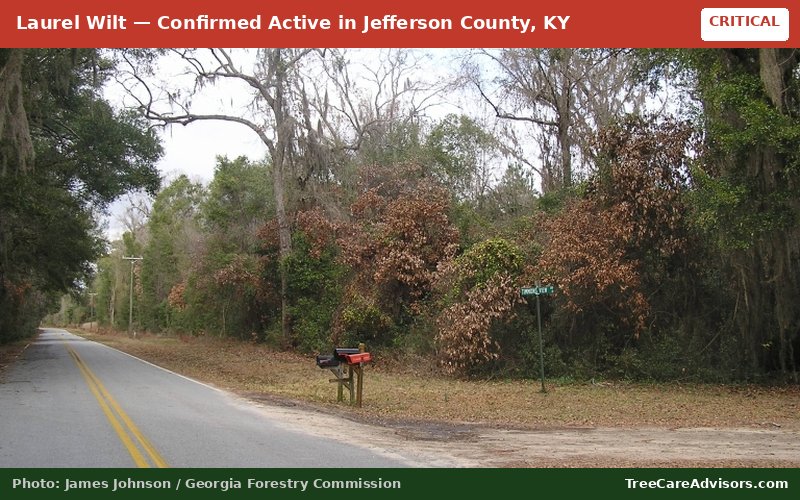
Affects: Redbay, sassafras, swamp bay, avocado, pondspice
Fungal disease spread by the redbay ambrosia beetle (invasive from Asia). The beetle introduces the fungus when it bores into the tree to farm. Has killed over 300 million redbays and threatens the avocado industry.
Southern Pine Beetle high
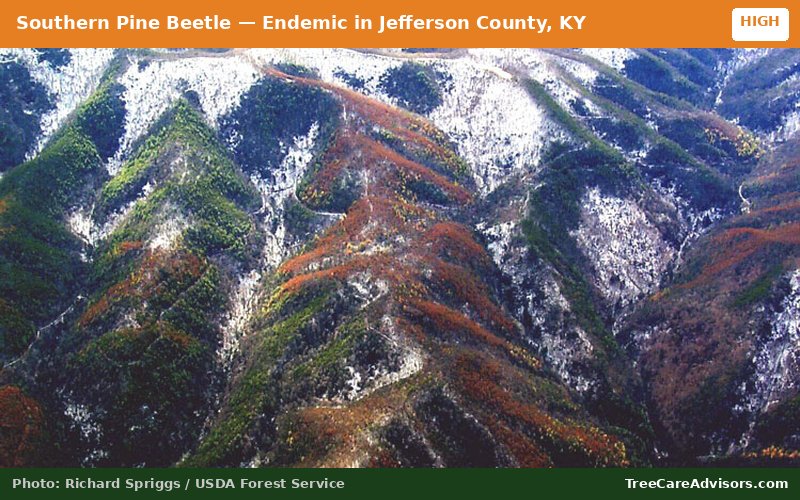
Affects: Loblolly, shortleaf, Virginia, pitch, and other southern pines
Small bark beetle (size of a grain of rice) that mass-attacks stressed pines. Trees die rapidly when beetle populations overwhelm defenses. Outbreaks can kill thousands of acres of pine.
What Pre-1940-Era Trees Need in 2026
Pre-1940 Homes (85+ years old trees)
Original plantings are now massive, legacy specimens. Many are second or third-generation replacements.
Common Issues
- **Structural decline** - trees this age are at or past the typical lifespan for many species. Internal decay is common even when the exterior looks healthy.
- **Massive root systems** - 85+ years of root growth means roots have invaded every pipe, foundation, walkway, and utility line nearby.
- **Canopy weight** - enormous canopies with potential for catastrophic limb failure. One limb from an 85-year-old oak can weigh thousands of pounds.
Recommended Actions
- Annual or biannual inspection by a certified arborist (ISA credentials) with resistograph or sonic tomography for internal decay assessment
- Structural pruning to reduce canopy weight and wind resistance (crown reduction, NOT topping)
- Cable and brace systems for co-dominant stems on high-value trees
Frequently Asked Questions
How much does tree trimming & pruning cost in Seneca Gardens?
When is the best time to prune trees in Seneca Gardens?
How often should trees be trimmed in Seneca Gardens?
How do I find a good arborist in Seneca Gardens?
Get Tree Trimming & Pruning Quotes in Seneca Gardens
Compare ISA-certified arborists serving Seneca Gardens and Jefferson County.
Get Free Quotes