Tree Removal in Gorst, WA
Cost Estimates - Gorst
When Should You Remove a Tree in Gorst?
Not every problem tree needs to come down. But some situations in Mixed-Marine climates make removal the safest option:
- Dead or dying trees - a dead tree becomes a brittle hazard within 1-2 years, especially with 0 storm events per year in Kitsap County
- Trees with more than 50% crown dieback - recovery is unlikely and the remaining structure is compromised
- Severe lean that developed suddenly - indicates root failure, not natural growth. Urgent removal needed.
- Mushrooms or conks at the base - visible fruiting bodies mean extensive internal decay. The tree may look fine but is structurally hollow.
- ~67-year-old trees with multiple defects - at this age in Gorst, compounding issues (included bark + deadwood + root damage) make removal safer than repeated pruning
See full climate profile and risk assessment for Gorst →
Common Trees in Gorst
Native & Adapted Species
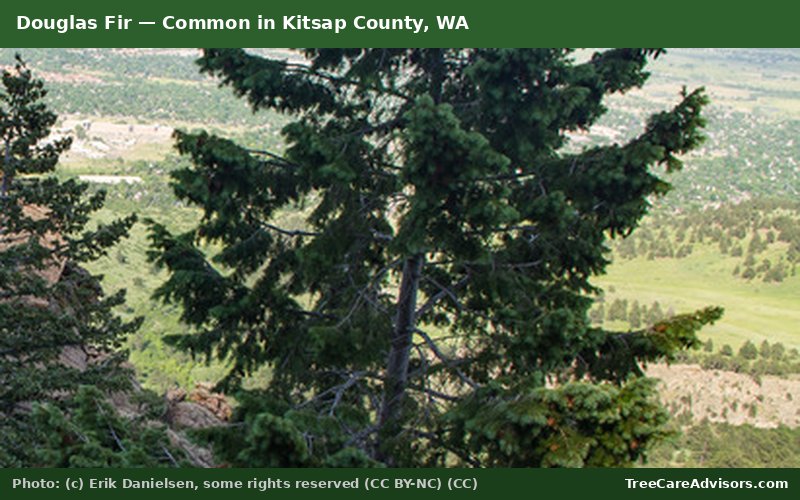
Douglas Fir
The defining tree of the PNW - can reach 250ft, dominant timber species
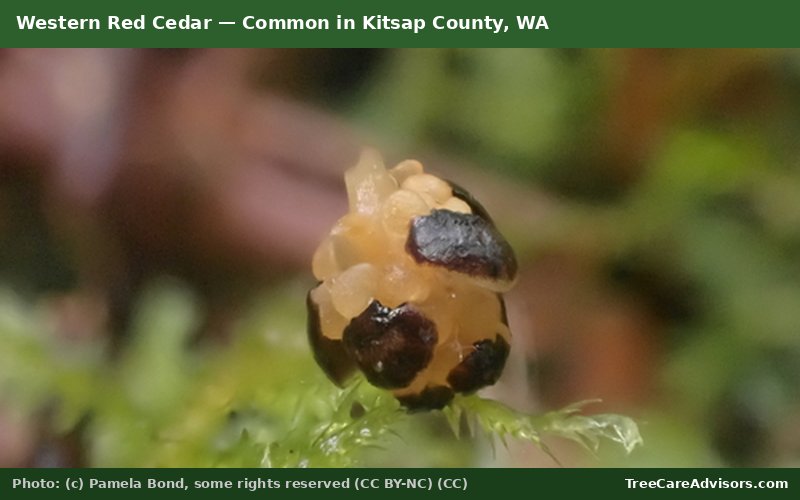
Western Red Cedar
Long-lived evergreen, naturally rot-resistant wood, cultural significance
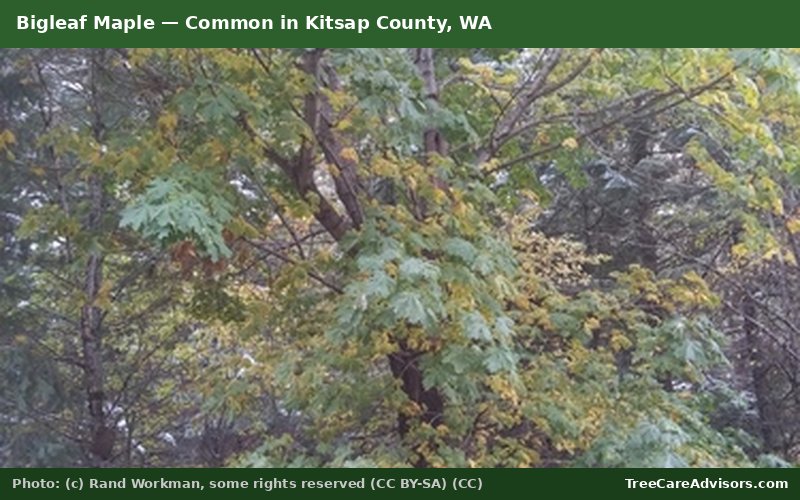
Bigleaf Maple
Massive spreading maple, moss-draped in wet climates, golden fall color
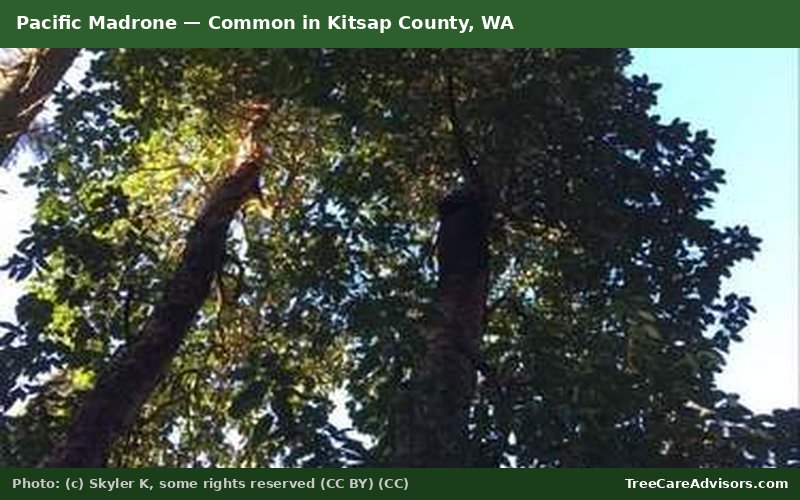
Pacific Madrone
Beautiful peeling red bark, evergreen broadleaf, difficult to transplant
Problem Species to Watch
English Ivy (on trees)
Not a tree but the #1 tree killer in PNW - smothers and topples trees
Black Locust
Invasive suckering, thorny, displaces native understory
English Holly
Invasive, spread by birds, forms dense thickets
Tree Removal Cost in Gorst
Gorst's regional cost multiplier is 1.22x the national average, reflecting higher property values (median $482,600) and labor costs in the Bremerton-Silverdale-Port Orchard, WA area. Varies significantly by tree size, species, and access
Tree Services Near Gorst
We also cover tree care in these nearby communities:
Managing Gorst's Aging Tree Canopy
~67-year-old trees need regular professional assessment. Watch for crown dieback, deadwood, and root-infrastructure conflicts.
Active Tree Threats in Kitsap County
Laminated Root Rot high
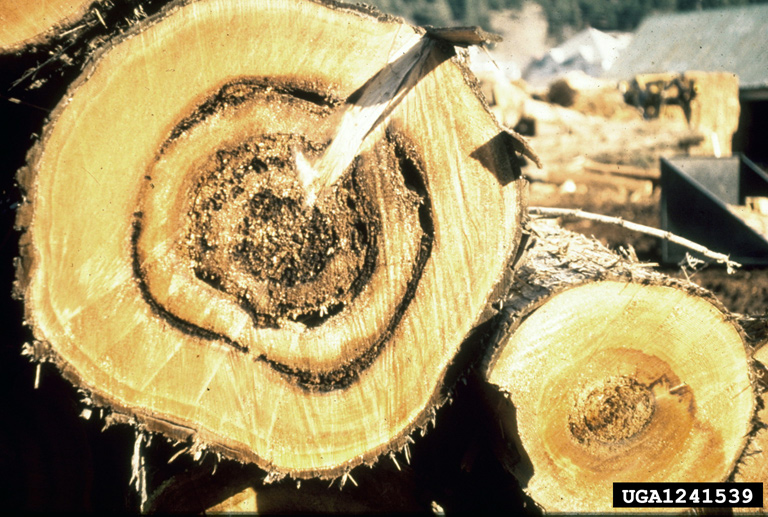
Affects: Douglas fir (primary), grand fir, mountain hemlock - the dominant conifers of the PNW
Soil fungus (Phellinus sulphurascens) that spreads through root contact. Infected trees show reduced growth, thinning crown, and eventually blow over in wind because roots are rotted. Spreads slowly but persistently through stands.
Swiss Needle Cast moderate-high
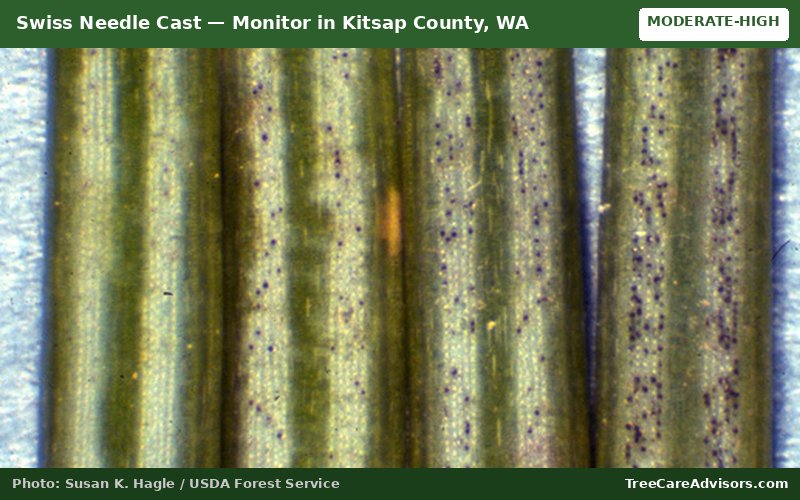
Affects: Douglas fir - the most common tree in PNW landscapes
Fungal disease that causes Douglas fir to shed needles prematurely. Trees look thin and yellow. Fog and moisture promote the fungus. Coastal areas worst affected.
Bronze Birch Borer moderate
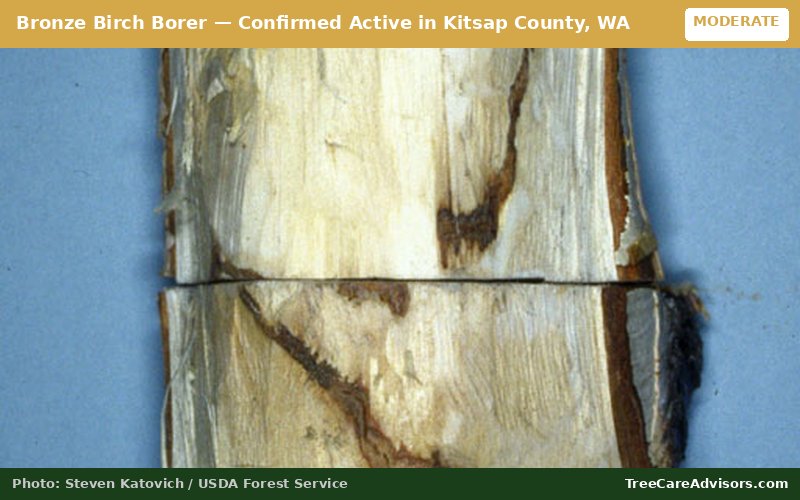
Affects: European white birch (highly susceptible), paper birch, other birch species
Native beetle that attacks stressed birch trees. Larvae bore under bark, killing branches from top down. European white birch (the popular ornamental) is far more susceptible than native species.
What 1940s-1960s-Era Trees Need in 2026
1940s-1960s Homes (65-85 years old trees)
Post-war suburban boom. Cookie-cutter developments planted the same few species on every property.
Common Issues
- **Silver Maple crisis** - these fast-growing trees are now enormous with weak, brittle wood. They split in every ice storm. Surface roots have destroyed lawns, driveways, and sewer lines. The most-removed tree in America.
- **Norway Maple invasiveness** - dense shade has killed lawn and understory. Shallow roots heave sidewalks. Many states now prohibit planting. 65-year-old specimens are large and expensive to remove.
- **Overgrown evergreens** - Blue Spruce and White Pine planted as 3ft nursery trees are now 50-60ft specimens too close to houses, blocking light and dropping branches on roofs.
Recommended Actions
- Remove declining Silver Maples before they fail - budget $3,000-8,000 for large specimen removal
- Replace Norway Maples with native alternatives (Sugar Maple, Red Maple, or Zelkova)
- Assess Blue Spruce for Cytospora canker and Rhizosphaera needle cast - if lower half is bare, removal is likely best
Frequently Asked Questions
How much does tree removal cost in Gorst?
Do I need a permit to remove a tree in Gorst?
How do I know if my 67-year-old tree needs to be removed?
How do I find a good arborist in Gorst?
Get Tree Removal Quotes in Gorst
Compare ISA-certified arborists serving Gorst and Kitsap County.
Get Free Quotes