Tree Removal in Sugarland Run, VA
Cost Estimates - Sugarland Run
When Should You Remove a Tree in Sugarland Run?
Not every problem tree needs to come down. But some situations in Mixed-Humid climates make removal the safest option:
- Dead or dying trees - a dead tree becomes a brittle hazard within 1-2 years, especially with 34 storm events per year in Loudoun County
- Trees with more than 50% crown dieback - recovery is unlikely and the remaining structure is compromised
- Severe lean that developed suddenly - indicates root failure, not natural growth. Urgent removal needed.
- Mushrooms or conks at the base - visible fruiting bodies mean extensive internal decay. The tree may look fine but is structurally hollow.
Storm damage note: Loudoun County averages 34 storm events per year. If a tree has visible damage after a storm, keep everyone away from the fall zone and call an arborist. Don't try to remove a partially fallen tree yourself.
See full climate profile and risk assessment for Sugarland Run →
Storm Damage Risk in Sugarland Run
Loudoun County averages 33.5 significant storm events per year, including 27.3 high-wind events.
Wind is the primary threat to trees in Sugarland Run. Severe thunderstorms and high-wind events cause the most tree failures.
Common Trees in Sugarland Run
Native & Adapted Species
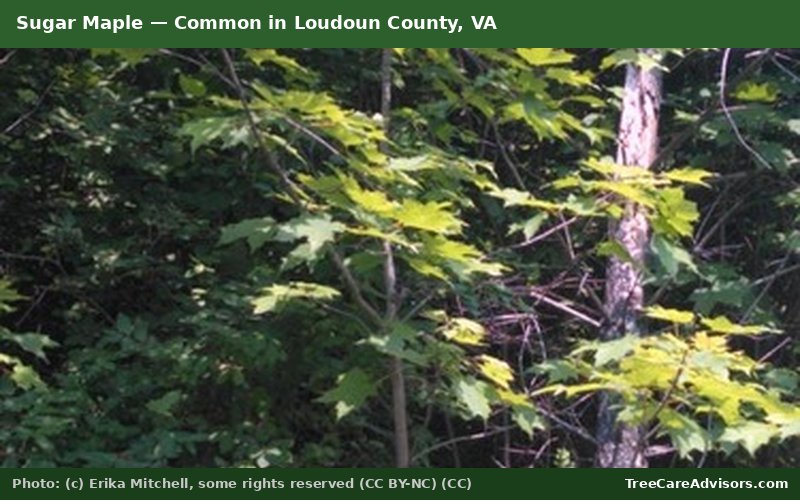
Sugar Maple
The iconic fall color tree - brilliant orange/red, shade champion, slow-growing
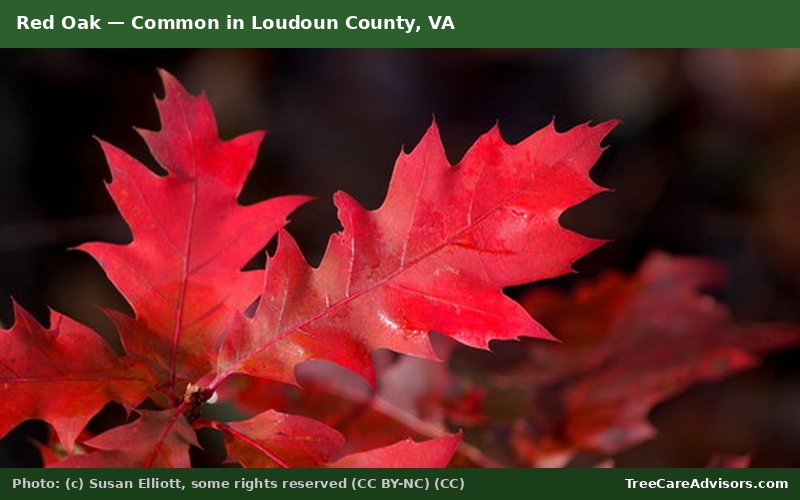
Red Oak
Fast-growing oak, excellent shade, good fall color, valuable timber
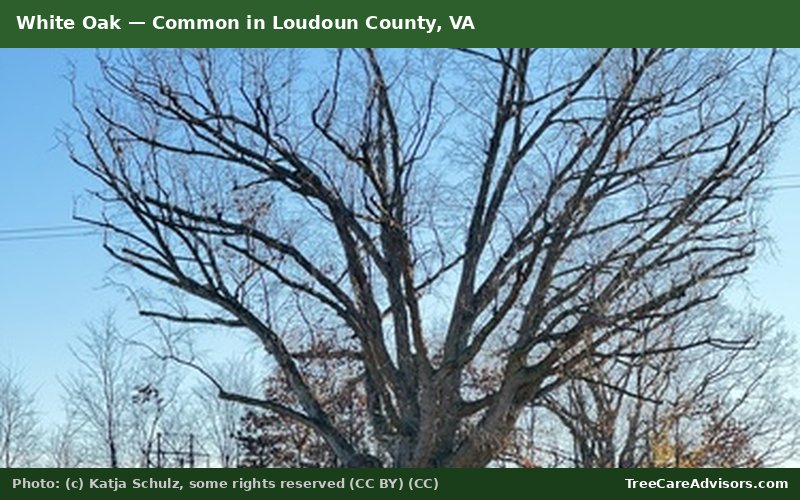
White Oak
Long-lived (300-600 years), wide-spreading, slow-growing, acorn producer
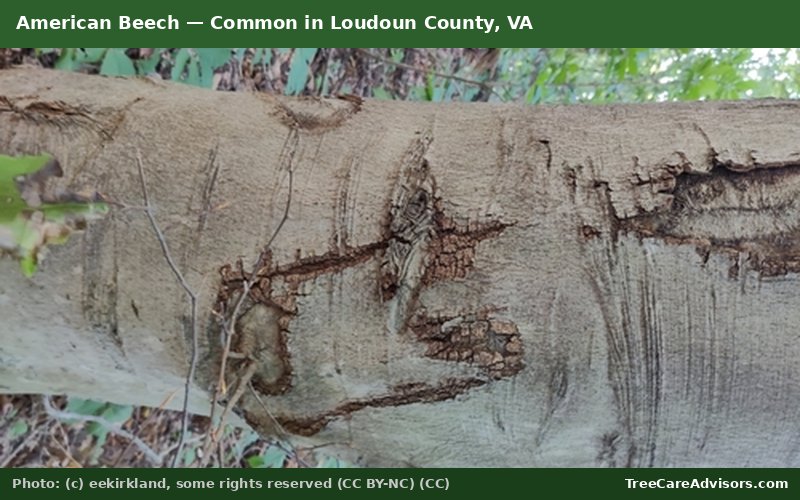
American Beech
Smooth gray bark, golden fall color, shallow roots, colonial root sprouts
Problem Species to Watch
Norway Maple
Invasive - dense shade kills understory, shallow roots heave sidewalks, now banned in some states
Bradford Pear
Structurally catastrophic - splits in half at 15-20 years, invasive cross-pollination
Silver Maple
Extremely fast but weak wood, aggressive surface roots, splits in storms
Tree Removal Cost in Sugarland Run
Sugarland Run's regional cost multiplier is 1.25x the national average, reflecting higher property values (median $514,400) and labor costs in the Washington-Arlington-Alexandria, DC-VA-MD-WV area. Varies significantly by tree size, species, and access
Tree Services Near Sugarland Run
We also cover tree care in these nearby communities:
Freeze Protection for Sugarland Run Trees
With January lows averaging 24.9°F in Sugarland Run, freezing temperatures can damage non-native and marginally hardy species. Tropical and semi-tropical plantings are particularly vulnerable.
Active Tree Threats in Loudoun County
Emerald Ash Borer (EAB) critical
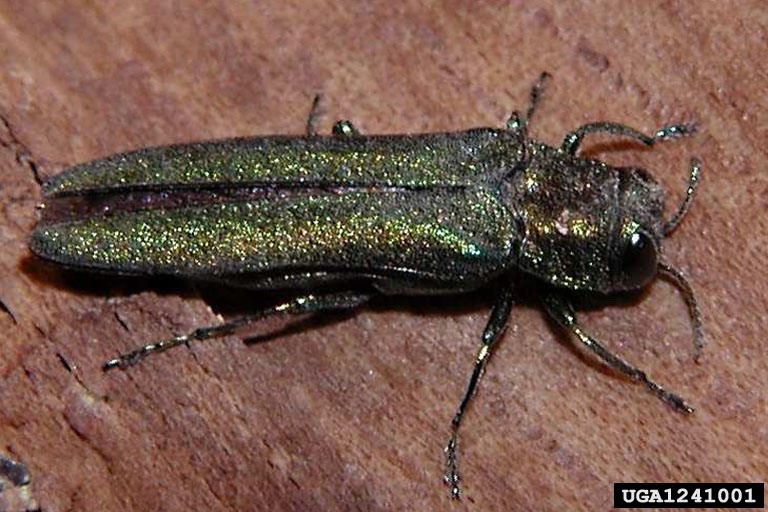
Affects: All ash species (Fraxinus) - green, white, black, blue ash
Metallic green beetle native to Asia. Larvae feed under bark, cutting off water and nutrient transport. Tree dies within 2-5 years of infestation. Has killed hundreds of millions of ash trees in North America since 2002.
Spotted Lanternfly high
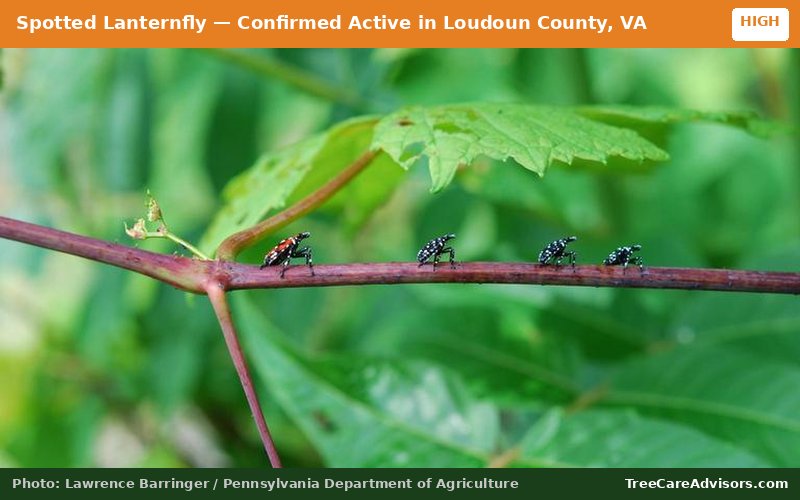
Affects: Tree of Heaven (primary host), but feeds on 70+ species including maples, oaks, walnut, willow, birch, grape
Showy planthopper from Asia. Feeds on sap, excretes honeydew that promotes sooty mold. Doesn't usually kill trees directly but weakens them and creates a mess. Major agricultural pest on grapes and orchards.
Oak Wilt high
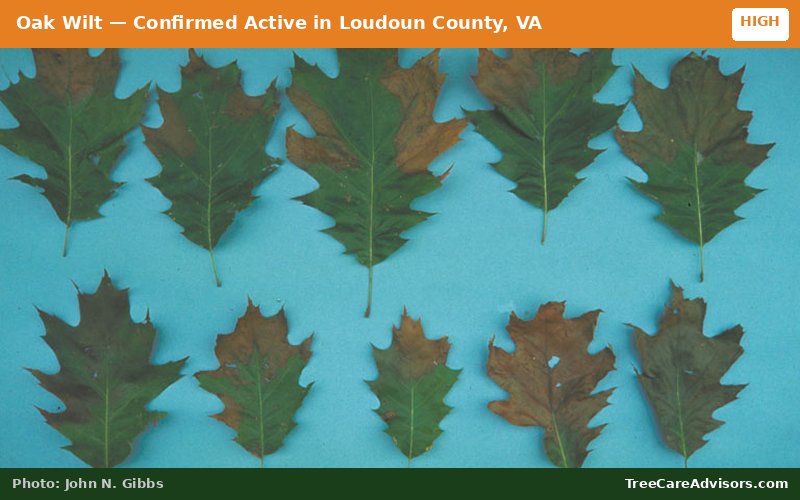
Affects: Red oak group (red, pin, scarlet, black - usually fatal). White oak group (white, bur, swamp white - slower, sometimes survivable).
Fungal disease (Ceratocystis fagacearum) that clogs water-conducting vessels. Red oaks can die within weeks. Spreads through connected root systems between nearby oaks and via beetles attracted to fresh wounds.
What 1980s-2000s-Era Trees Need in 2026
1980s-2000s Homes (25-45 years old trees)
Peak of designed residential landscapes. Professional landscape architects specified diverse palettes. McMansion era brought larger properties with more trees.
Common Issues
- **'Crepe Murder'** - the epidemic of bad pruning (topping crepe myrtles into ugly stubs) has created structurally compromised trees with weak regrowth across the South.
- **Approaching first major maintenance** - trees in this age range are large enough to need professional pruning for the first time. Many homeowners haven't budgeted for it.
- **Raywood Ash decline** - widely planted in California in the 1990s, now showing anthracnose and structural decline
Recommended Actions
- Structural pruning NOW - this is the critical window to establish good branch architecture before trees get too large
- Stop 'crepe murder' - educate on proper crepe myrtle pruning (remove crossing/rubbing branches, not indiscriminate topping)
- Replace short-lived ornamentals (purple-leaf plum, Bradford pear) that are declining
Frequently Asked Questions
How much does tree removal cost in Sugarland Run?
Do I need a permit to remove a tree in Sugarland Run?
Can freezing temperatures damage my trees in Sugarland Run?
How do I find a good arborist in Sugarland Run?
Get Tree Removal Quotes in Sugarland Run
Compare ISA-certified arborists serving Sugarland Run and Loudoun County.
Get Free Quotes