Tree Removal in Fort Mill, SC
Cost Estimates - Fort Mill
When Should You Remove a Tree in Fort Mill?
Not every problem tree needs to come down. But some situations in Warm-Humid climates make removal the safest option:
- Dead or dying trees - a dead tree becomes a brittle hazard within 1-2 years, especially with 11 storm events per year in York County
- Trees with more than 50% crown dieback - recovery is unlikely and the remaining structure is compromised
- Severe lean that developed suddenly - indicates root failure, not natural growth. Urgent removal needed.
- Mushrooms or conks at the base - visible fruiting bodies mean extensive internal decay. The tree may look fine but is structurally hollow.
Storm damage note: York County averages 11 storm events per year. If a tree has visible damage after a storm, keep everyone away from the fall zone and call an arborist. Don't try to remove a partially fallen tree yourself.
See full climate profile and risk assessment for Fort Mill →
Common Trees in Fort Mill
Native & Adapted Species
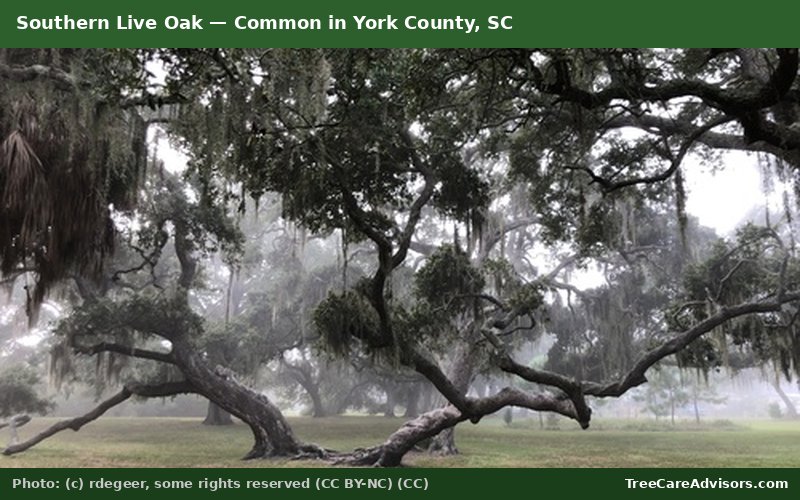
Southern Live Oak
The iconic spreading oak of the South - can live 500+ years, massive canopy
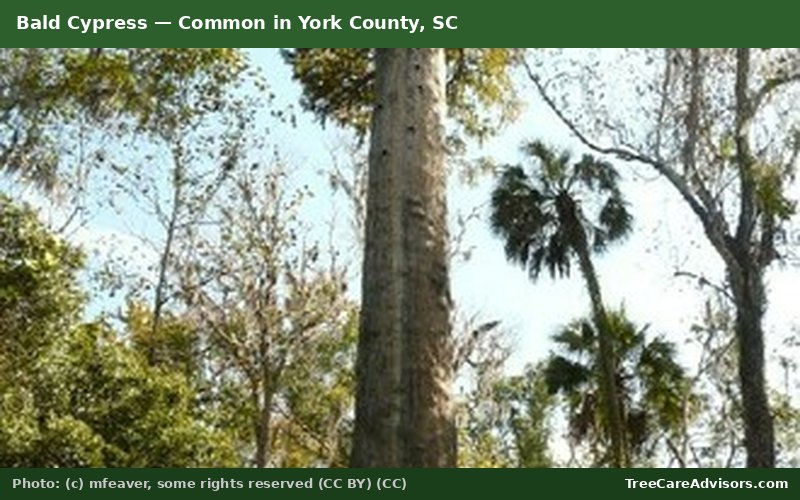
Bald Cypress
Deciduous conifer, swamp-adapted, distinctive knees, excellent longevity
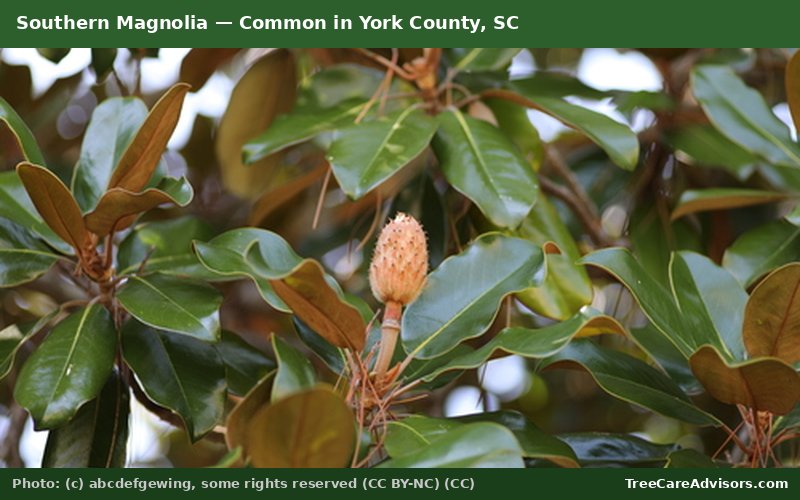
Southern Magnolia
Evergreen, large fragrant white flowers, heavy leaf drop
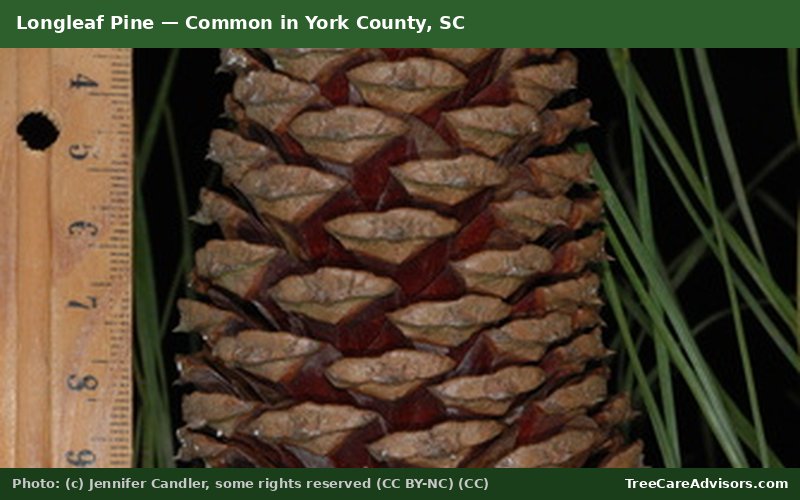
Longleaf Pine
Historic timber species, fire-adapted, slow-starting growth
Problem Species to Watch
Bradford Pear
Structurally weak - splits in storms. Now banned in many states as invasive
Camphor Tree
Invasive in FL, massive root system, difficult to remove
Chinese Tallow
Extremely invasive, banned in many southern states
Tree Removal Cost in Fort Mill
Fort Mill's regional cost multiplier is 1.14x the national average, reflecting higher property values (median $414,600) and labor costs in the Charlotte-Concord-Gastonia, NC-SC area. Varies significantly by tree size, species, and access
Tree Services Near Fort Mill
We also cover tree care in these nearby communities:
Storm Damage Risk in Fort Mill
York County averages 11.0 significant storm events per year, including 7.6 high-wind events.
Active Tree Threats in York County
Formosan Subterranean Termites critical
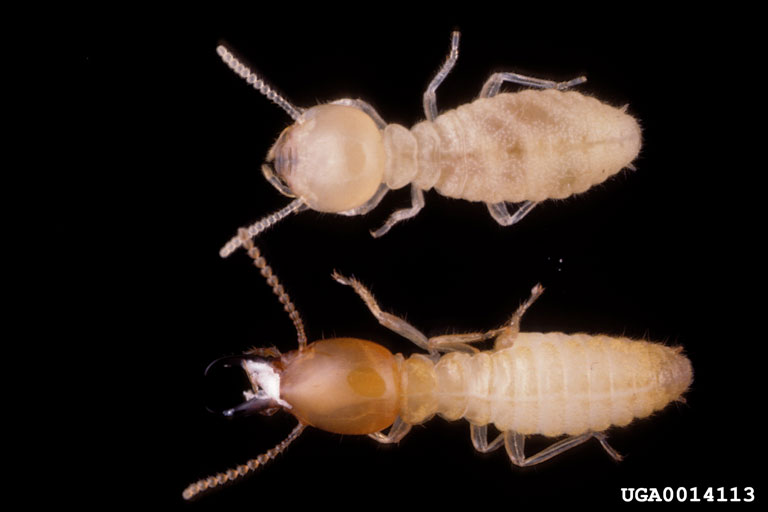
Affects: Both dead wood and living trees - will hollow out live oaks and other species from the inside
The most destructive termite species in the US. Colonies can contain millions of individuals. Unlike native termites, Formosans build above-ground carton nests IN living trees, consuming heartwood while the tree appears healthy from outside.
Laurel Wilt critical
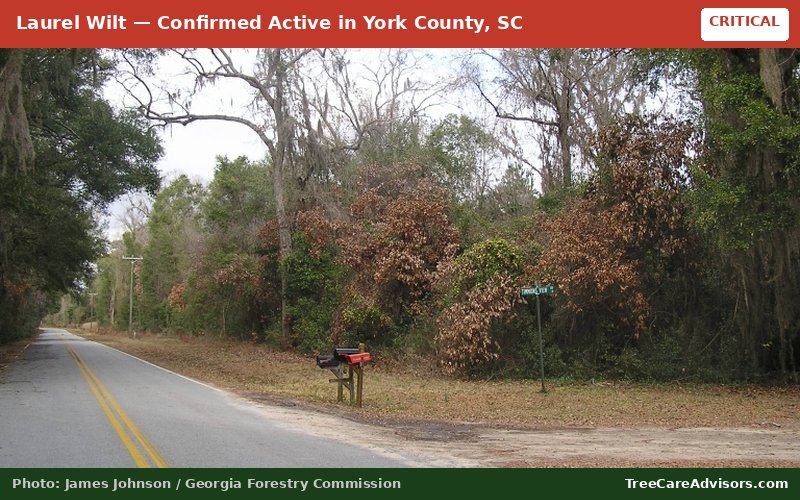
Affects: Redbay, sassafras, swamp bay, avocado, pondspice
Fungal disease spread by the redbay ambrosia beetle (invasive from Asia). The beetle introduces the fungus when it bores into the tree to farm. Has killed over 300 million redbays and threatens the avocado industry.
Southern Pine Beetle high
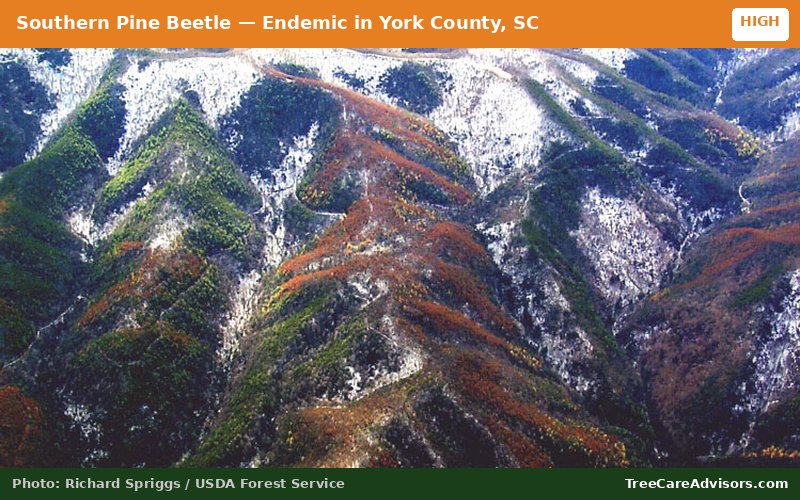
Affects: Loblolly, shortleaf, Virginia, pitch, and other southern pines
Small bark beetle (size of a grain of rice) that mass-attacks stressed pines. Trees die rapidly when beetle populations overwhelm defenses. Outbreaks can kill thousands of acres of pine.
What 2000s-2015-Era Trees Need in 2026
2000s-2015 Homes (10-25 years old trees)
Water-wise landscaping trend, especially in the West. 'Right tree, right place' philosophy gaining traction. More native species in designs.
Common Issues
- **Establishment failures** - container-grown trees sometimes develop circling roots that girdle the trunk years later. Trees planted 10-20 years ago may now be showing girdling root symptoms (trunk flare is buried or absent).
- **Stake dependency** - trees left staked too long (common with builder landscapes) develop weak trunks that can't support their own canopy.
- **Builder-grade landscaping** - mass-planted builder landscapes used whatever was cheap and available, not what was appropriate for the site. Many are now failing.
Recommended Actions
- Check for girdling roots - if the trunk goes straight into the ground with no visible root flare, excavate the base to check
- Remove any remaining stakes and guy wires (should have been removed 1 year after planting)
- First structural pruning to establish dominant central leader and remove co-dominant stems
Frequently Asked Questions
How much does tree removal cost in Fort Mill?
Do I need a permit to remove a tree in Fort Mill?
How do I find a good arborist in Fort Mill?
Get Tree Removal Quotes in Fort Mill
Compare ISA-certified arborists serving Fort Mill and York County.
Get Free Quotes