Tree Removal in Walton, NE
Cost Estimates - Walton
When Should You Remove a Tree in Walton?
Not every problem tree needs to come down. But some situations in Cool-Humid climates make removal the safest option:
- Dead or dying trees - a dead tree becomes a brittle hazard within 1-2 years, especially with 29 storm events per year in Lancaster County
- Trees with more than 50% crown dieback - recovery is unlikely and the remaining structure is compromised
- Severe lean that developed suddenly - indicates root failure, not natural growth. Urgent removal needed.
- Mushrooms or conks at the base - visible fruiting bodies mean extensive internal decay. The tree may look fine but is structurally hollow.
Storm damage note: Lancaster County averages 29 storm events per year. If a tree has visible damage after a storm, keep everyone away from the fall zone and call an arborist. Don't try to remove a partially fallen tree yourself.
See full climate profile and risk assessment for Walton →
Storm Damage Risk in Walton
Lancaster County averages 28.6 significant storm events per year, including 15.4 high-wind events.
Wind is the primary threat to trees in Walton. Severe thunderstorms and high-wind events cause the most tree failures.
Common Trees in Walton
Native & Adapted Species
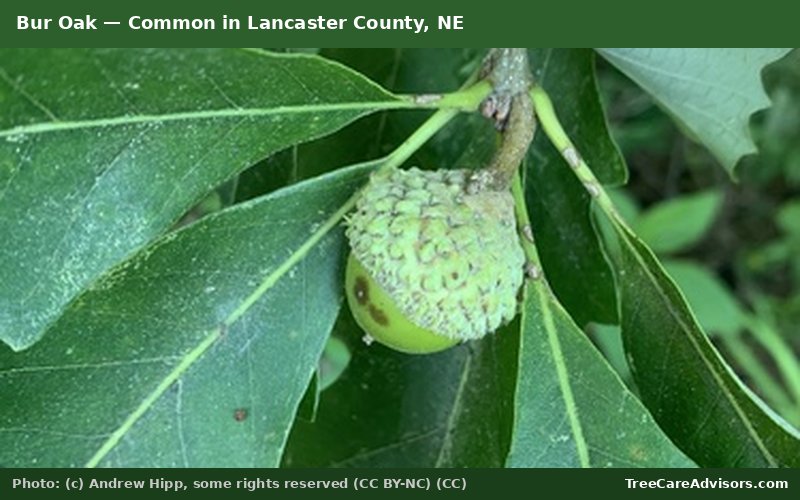
Bur Oak
Toughest native oak - drought, cold, and wind tolerant. Massive specimens
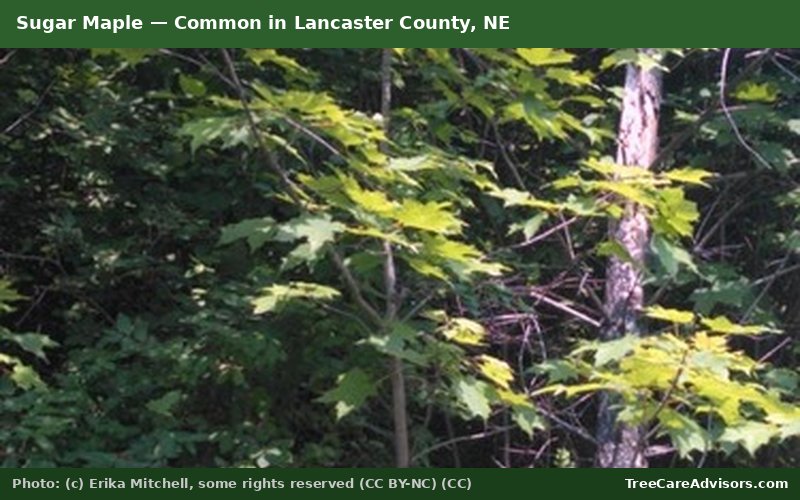
Sugar Maple
Fall color champion, syrup production, but salt-sensitive along roads
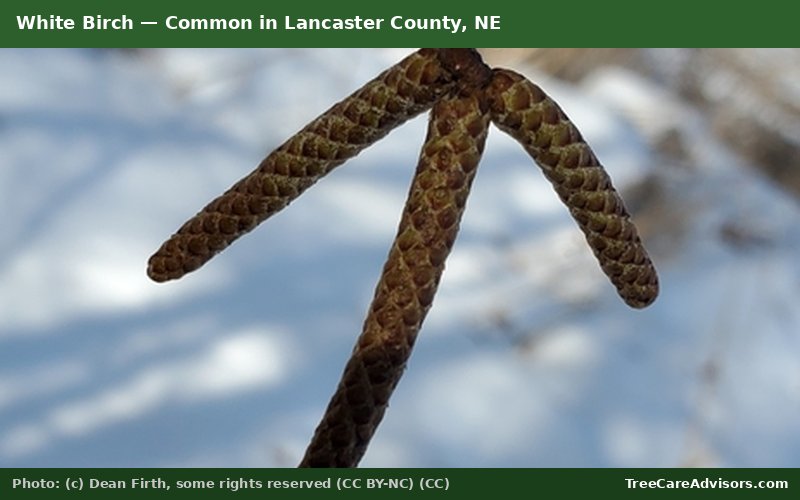
White Birch (Paper Birch)
Iconic white bark, short-lived (40-50 years), bronze birch borer vulnerable
Eastern White Pine
Tall, fast-growing, soft needles - blister rust susceptible
Problem Species to Watch
Green/White Ash
Functionally extinct in urban landscapes due to Emerald Ash Borer
Silver Maple
Weak wood + ice storms = constant cleanup, surface roots destroy lawns
Siberian Elm
Weak, messy, invasive - the tree equivalent of a weed
Tree Removal Cost in Walton
Walton's regional cost multiplier is 1.23x the national average, reflecting higher property values (median $498,000) and labor costs in the Lincoln, NE area. Varies significantly by tree size, species, and access
Tree Services Near Walton
We also cover tree care in these nearby communities:
Freeze Protection for Walton Trees
With January lows averaging 13.8°F in Walton, hard freezes are a serious and recurring threat to trees. Freeze-thaw cycles crack bark, kill cambium tissue, and can split trunks.
Managing Walton's Aging Tree Canopy
~55-year-old trees are in their prime but approaching the age where structural pruning and pest monitoring become essential.
Active Tree Threats in Lancaster County
Mountain Pine Beetle critical
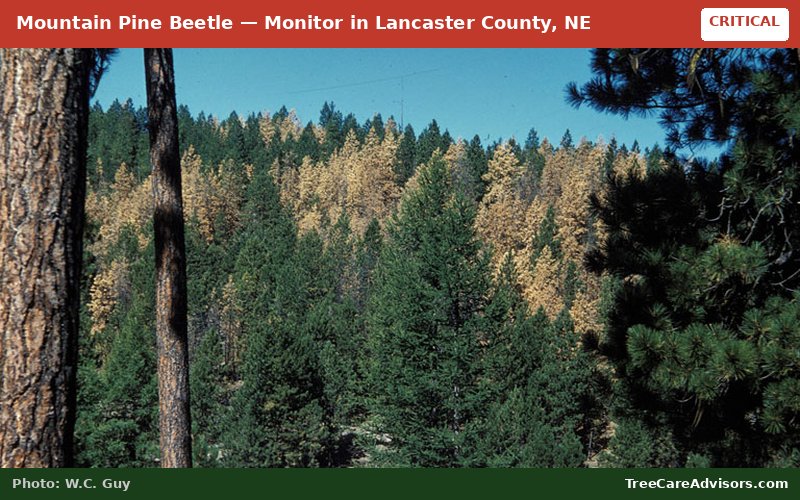
Affects: Lodgepole pine (primary), ponderosa pine, limber pine, whitebark pine
Native bark beetle whose populations have exploded due to drought and warmer winters that no longer kill overwintering larvae. Beetles mass-attack trees, introducing blue-stain fungi that stop water transport. Trees turn red and die within a year.
Emerald Ash Borer critical
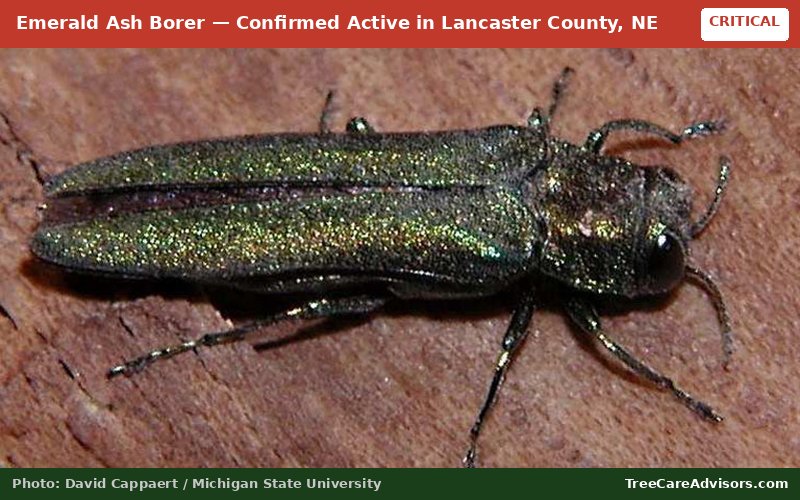
Affects: All ash species - very common urban trees in Front Range CO and Wasatch Front UT
Same devastating beetle as eastern US. Colorado and Utah cities planted heavily in ash - many municipalities have 15-20% ash canopy that will be lost.
Ips Beetle Complex moderate-high
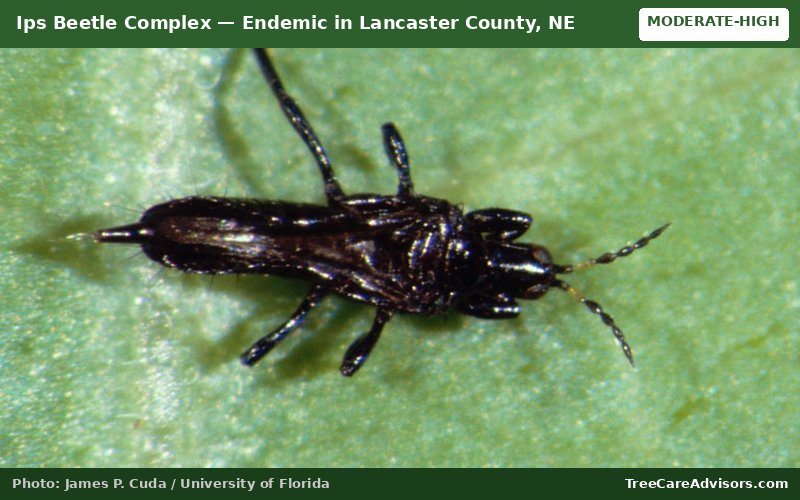
Affects: Spruce, pine - urban and forest settings
Multiple Ips bark beetle species that attack weakened conifers. Unlike mountain pine beetle, Ips can have multiple generations per year and attacks a broader range of species including spruce.
What 1960s-1980s-Era Trees Need in 2026
1960s-1980s Homes (45-65 years old trees)
Larger lot developments, more landscape design consciousness. Introduction of many Asian ornamentals.
Common Issues
- **Green Ash death** - if your home was built in the 1970s and has a large shade tree in front, there's a good chance it's a green ash. These are now being killed by Emerald Ash Borer across the eastern US. Dead ash become brittle hazards within 1-2 years.
- **Dogwood decline** - dogwood anthracnose (Discula destructiva) killed millions of native flowering dogwoods starting in the 1980s. Surviving trees are often weakened.
- **Cherry tree aging** - flowering cherries planted in this era are at or past their 25-40 year lifespan. Bacterial canker and boring insects are common in aging specimens.
Recommended Actions
- Immediate assessment of any Green Ash - decide between treatment (expensive, ongoing) and removal (one-time, plan replacement)
- Replace dead or declining Dogwoods with disease-resistant Kousa Dogwood or native alternatives
- Evaluate Leyland Cypress hedges - thin or replace with smaller alternatives if they're overwhelming the property
Frequently Asked Questions
How much does tree removal cost in Walton?
Do I need a permit to remove a tree in Walton?
How do I know if my 55-year-old tree needs to be removed?
Can freezing temperatures damage my trees in Walton?
How do I find a good arborist in Walton?
Get Tree Removal Quotes in Walton
Compare ISA-certified arborists serving Walton and Lancaster County.
Get Free Quotes