Tree Removal in Aiea, HI
Cost Estimates - Aiea
When Should You Remove a Tree in Aiea?
Not every problem tree needs to come down. But some situations in Very Hot-Humid climates make removal the safest option:
- Dead or dying trees - a dead tree becomes a brittle hazard within 1-2 years, especially with 1 storm events per year in Honolulu County
- Trees with more than 50% crown dieback - recovery is unlikely and the remaining structure is compromised
- Severe lean that developed suddenly - indicates root failure, not natural growth. Urgent removal needed.
- Mushrooms or conks at the base - visible fruiting bodies mean extensive internal decay. The tree may look fine but is structurally hollow.
See full climate profile and risk assessment for Aiea →
Common Trees in Aiea
Native & Adapted Species
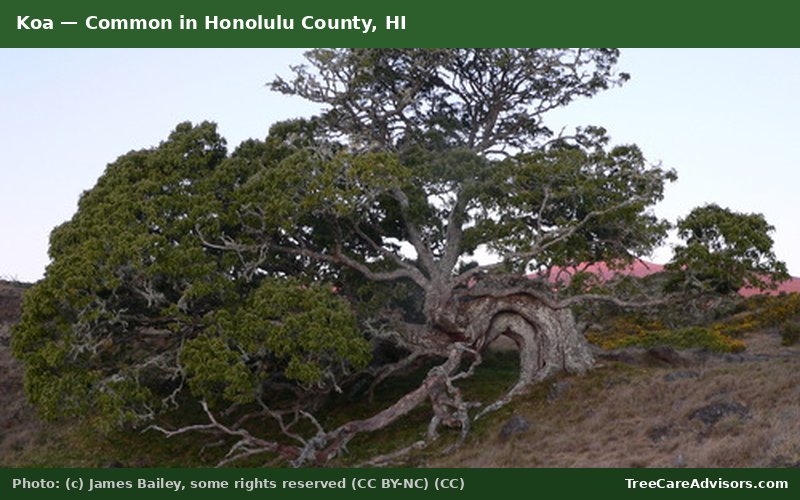
Koa
Hawaii's most valuable native tree - beautiful wood, nitrogen-fixing, reforestation priority
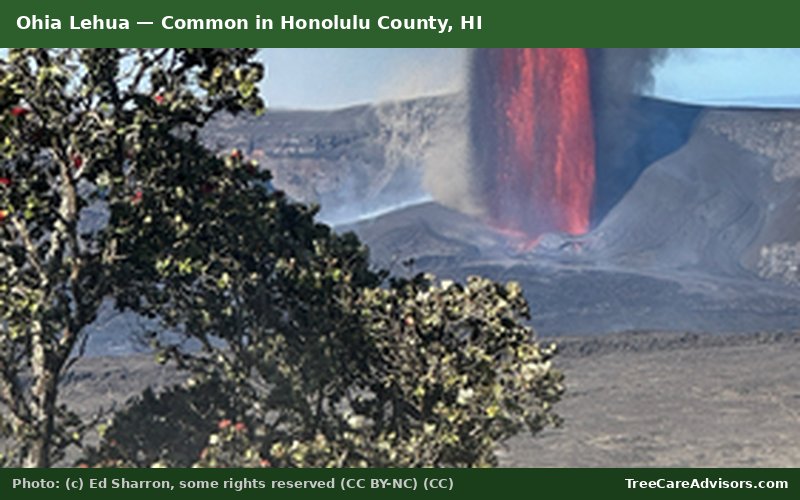
Ohia Lehua
Sacred native tree - threatened by Rapid Ohia Death fungus
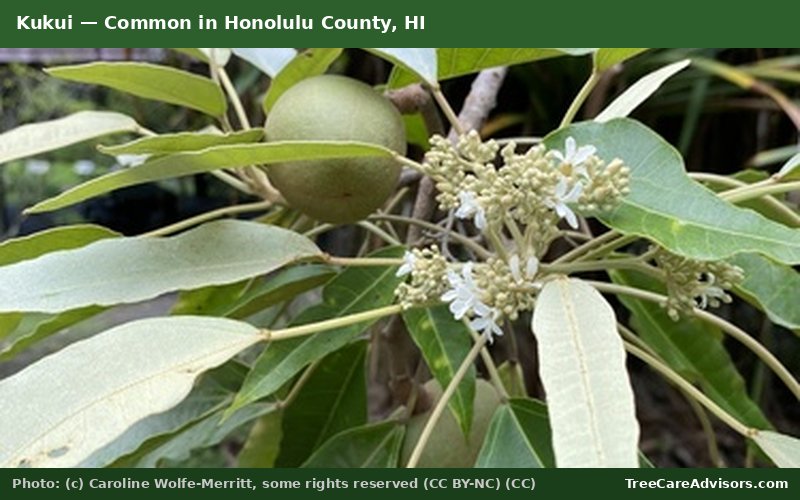
Kukui (Candlenut)
State tree of Hawaii, large spreading canopy, oily nuts
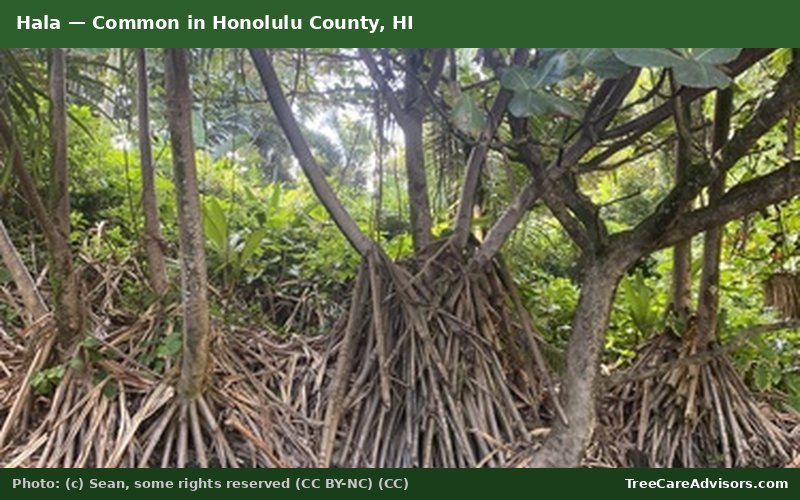
Hala (Pandanus)
Coastal native, prop roots, culturally important for weaving
Problem Species to Watch
Albizia (Falcataria)
Extremely fast-growing, extremely brittle - the #1 hazard tree in Hawaii. Falls in every storm.
Ironwood (Casuarina)
Invasive, displaces native coastal species
Strawberry Guava
Extremely invasive, forms impenetrable thickets in native forests
Tree Removal Cost in Aiea
Aiea's regional cost multiplier is 1.72x the national average, reflecting higher property values (median $954,000) and labor costs in the Urban Honolulu, HI area. Varies significantly by tree size, species, and access
Tree Services Near Aiea
We also cover tree care in these nearby communities:
Managing Aiea's Aging Tree Canopy
~60-year-old trees need regular professional assessment. Watch for crown dieback, deadwood, and root-infrastructure conflicts.
Active Tree Threats in Honolulu County
Rapid Ohia Death (ROD) critical
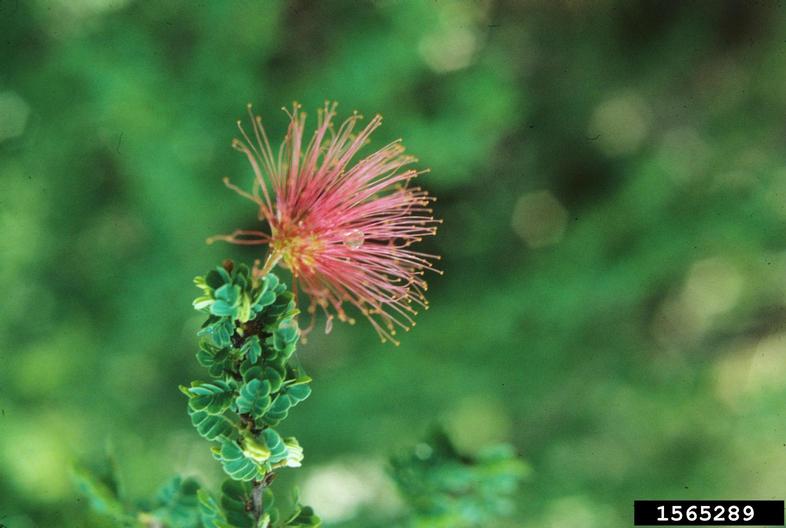
Affects: Ohia Lehua (Metrosideros polymorpha) - the most important native forest tree in Hawaii
Two Ceratocystis fungi that kill ohia trees by clogging their vascular system. Trees can die within weeks. Ohia forms 80% of Hawaii's native forest canopy - its loss would be catastrophic for the ecosystem.
Erythrina Gall Wasp high
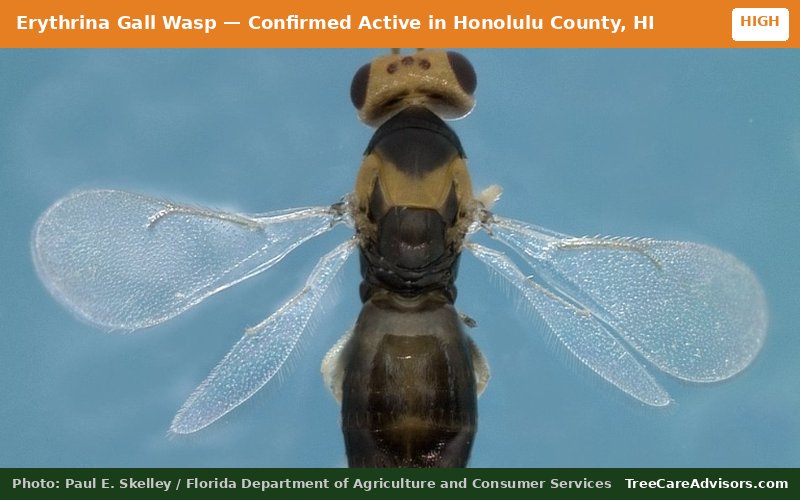
Affects: Erythrina species - wiliwili (native), coral trees (ornamental)
Tiny wasp from Africa that lays eggs in erythrina leaves, causing severe galling that defoliates and can kill trees. Nearly wiped out native wiliwili trees before biological control wasps were released.
Coconut Rhinoceros Beetle high
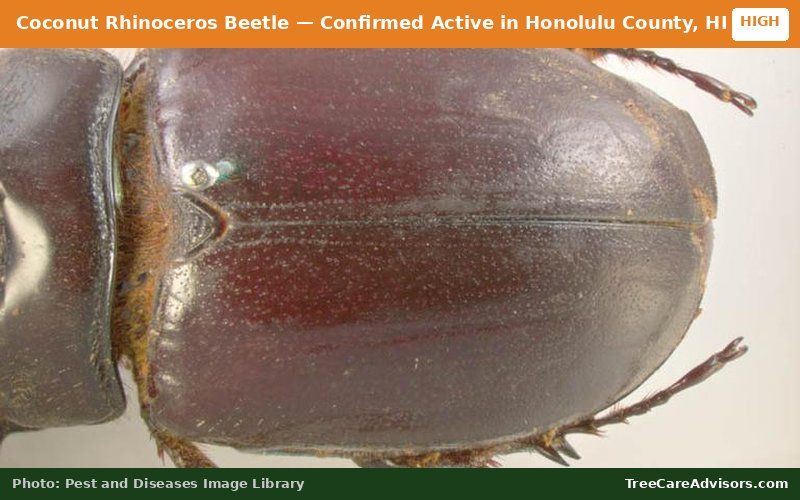
Affects: Coconut palm (primary), other palms, potentially other plants
Large beetle (2 inches) that bores into the crowns of coconut palms to feed on sap. Damages the growing point, reducing coconut production and potentially killing the palm. A serious threat to Hawaii's coconut palms and palm-based landscaping.
What 1960s-1980s-Era Trees Need in 2026
1960s-1980s Homes (45-65 years old trees)
Larger lot developments, more landscape design consciousness. Introduction of many Asian ornamentals.
Common Issues
- **Green Ash death** - if your home was built in the 1970s and has a large shade tree in front, there's a good chance it's a green ash. These are now being killed by Emerald Ash Borer across the eastern US. Dead ash become brittle hazards within 1-2 years.
- **Dogwood decline** - dogwood anthracnose (Discula destructiva) killed millions of native flowering dogwoods starting in the 1980s. Surviving trees are often weakened.
- **Cherry tree aging** - flowering cherries planted in this era are at or past their 25-40 year lifespan. Bacterial canker and boring insects are common in aging specimens.
Recommended Actions
- Immediate assessment of any Green Ash - decide between treatment (expensive, ongoing) and removal (one-time, plan replacement)
- Replace dead or declining Dogwoods with disease-resistant Kousa Dogwood or native alternatives
- Evaluate Leyland Cypress hedges - thin or replace with smaller alternatives if they're overwhelming the property
Frequently Asked Questions
How much does tree removal cost in Aiea?
Do I need a permit to remove a tree in Aiea?
How do I know if my 60-year-old tree needs to be removed?
How do I find a good arborist in Aiea?
Get Tree Removal Quotes in Aiea
Compare ISA-certified arborists serving Aiea and Honolulu County.
Get Free Quotes