Tree Removal in Cave Creek, AZ
Cost Estimates - Cave Creek
When Should You Remove a Tree in Cave Creek?
Not every problem tree needs to come down. But some situations in Hot-Dry climates make removal the safest option:
- Dead or dying trees - a dead tree becomes a brittle hazard within 1-2 years, especially with 76 storm events per year in Maricopa County
- Trees with more than 50% crown dieback - recovery is unlikely and the remaining structure is compromised
- Severe lean that developed suddenly - indicates root failure, not natural growth. Urgent removal needed.
- Mushrooms or conks at the base - visible fruiting bodies mean extensive internal decay. The tree may look fine but is structurally hollow.
Storm damage note: Maricopa County averages 76 storm events per year. If a tree has visible damage after a storm, keep everyone away from the fall zone and call an arborist. Don't try to remove a partially fallen tree yourself.
See full climate profile and risk assessment for Cave Creek →
Storm Damage Risk in Cave Creek
Maricopa County averages 76.5 significant storm events per year, including 68.3 high-wind events.
Wind is the primary threat to trees in Cave Creek. Monsoon season (July-September) brings sudden microbursts that can snap trunks and uproot even healthy trees.
Common Trees in Cave Creek
Native & Adapted Species
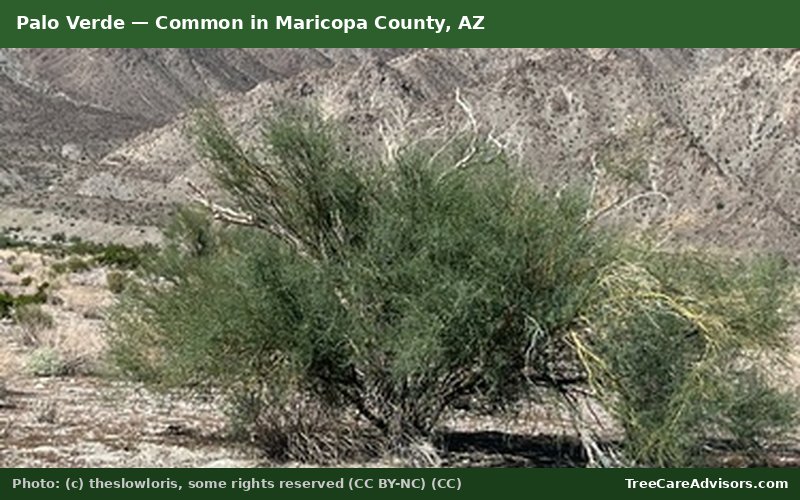
Palo Verde (Blue & Foothills)
State tree of AZ, drought-deciduous, green bark photosynthesizes
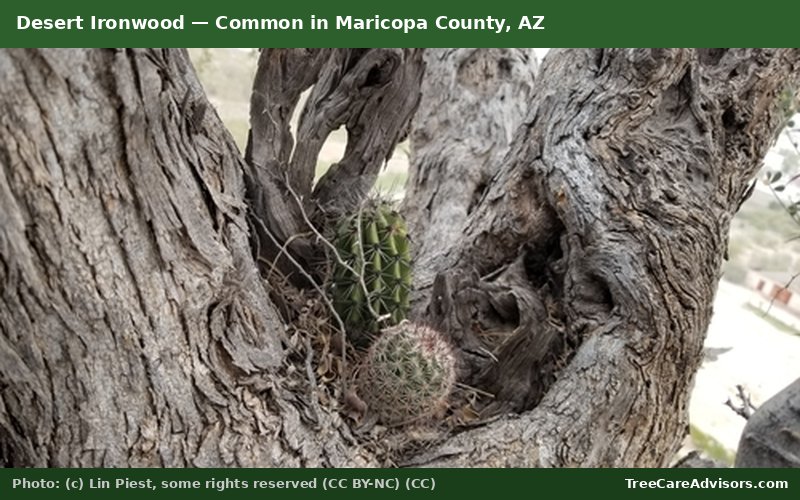
Desert Ironwood
Extremely hard wood, slow-growing, can live 1,500 years
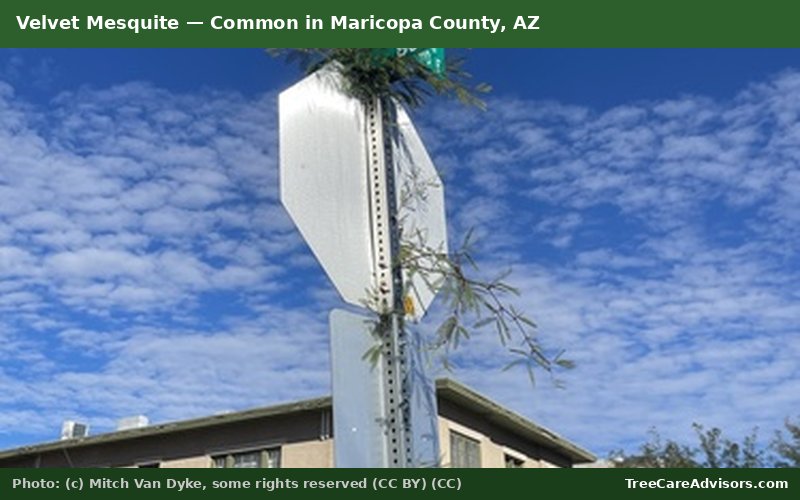
Velvet Mesquite
Deep taproot (50+ ft), nitrogen-fixing, important wildlife habitat
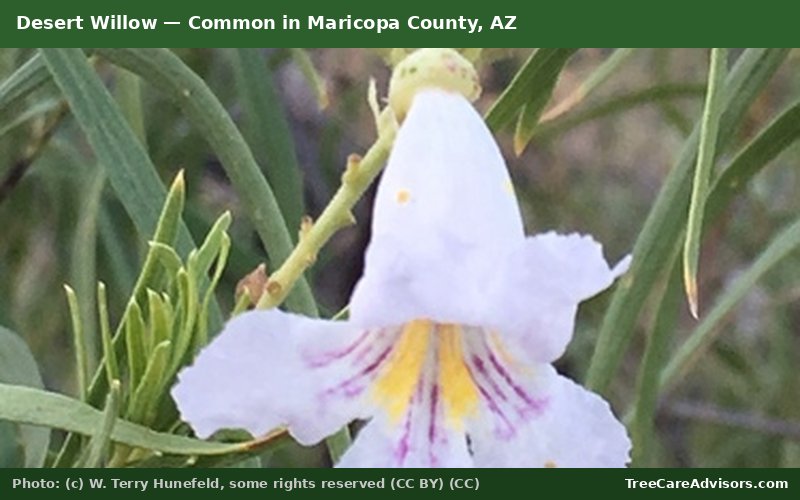
Desert Willow
Not a true willow - showy trumpet flowers, deciduous in winter
Problem Species to Watch
Eucalyptus
Extremely brittle - limbs drop without warning, fire accelerant, shallow roots
Mulberry
Invasive root system, heavy pollen, many cities ban male mulberry plantings
Ficus nitida
Roots destroy sidewalks, foundations, sewer lines - #1 cause of hardscape damage in AZ
Tree Removal Cost in Cave Creek
Cave Creek's regional cost multiplier is 1.48x the national average, reflecting higher property values (median $725,300) and labor costs in the Phoenix-Mesa-Chandler, AZ area. Varies significantly by tree size, species, and access
Tree Services Near Cave Creek
We also cover tree care in these nearby communities:
Drought & Water Stress
Cave Creek receives only 12.6 inches of annual rainfall - well below what most landscape trees need to survive without irrigation. Active growth year-round with slowdown in extreme summer heat (Jun-Aug) and brief winter dormancy
Wildfire & Defensible Space
Dry climate (13" annual rainfall) — defensible space management including tree pruning is recommended.
Key defensible space practices for Cave Creek properties:
- Maintain 30 feet of cleared space immediately around structures
- Remove dead branches, leaf litter, and dry vegetation
- Prune tree canopies to create 10+ feet of clearance between crowns
- Remove highly flammable species (eucalyptus, juniper, ornamental grasses) near structures
Active Tree Threats in Maricopa County
Palo Verde Root Borer moderate
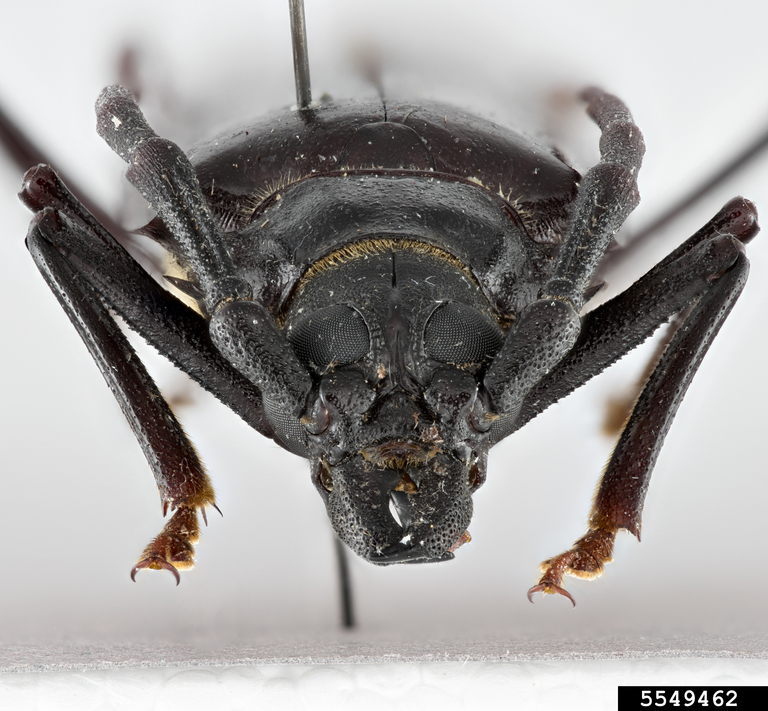
Affects: Palo Verde trees (primary), but larvae found in roots of other desert trees
Spectacular 4-inch beetle with long antennae. Larvae spend 2-3 years feeding on Palo Verde roots underground before emerging as adults in summer monsoon season. Healthy trees can tolerate moderate infestation.
Giant Whitefly moderate
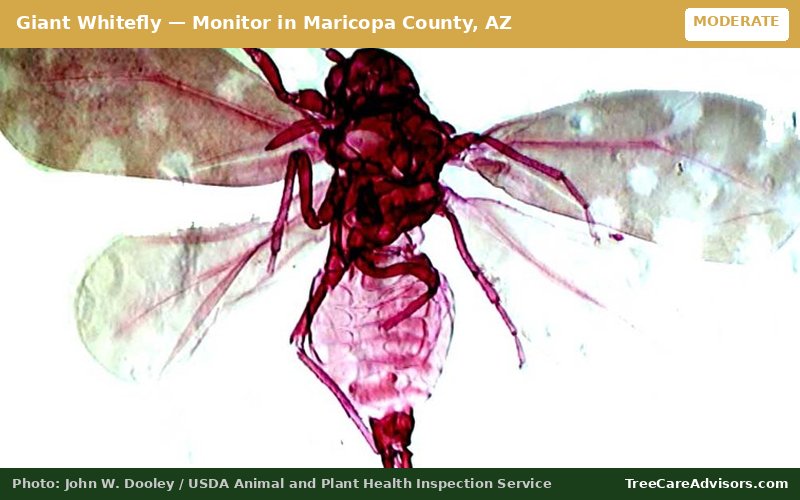
Affects: Ornamental trees and shrubs - hibiscus, ficus, mulberry, citrus
Produces waxy spiral deposits on undersides of leaves and long waxy filaments that look like white beards hanging from trees. Cosmetically alarming but rarely kills trees.
Bark Beetle Complex high at elevation
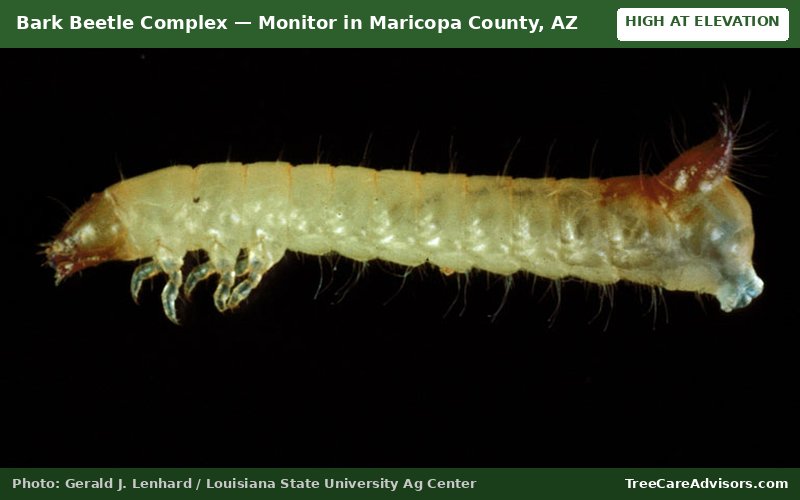
Affects: Ponderosa pine, pinyon pine, and other conifers at higher elevations
Multiple bark beetle species (Ips, Dendroctonus) attack drought-stressed conifers. Trees show fading needles, boring dust at base, and die within weeks. Decades of drought and fire suppression have created vulnerable forests.
What 1980s-2000s-Era Trees Need in 2026
1980s-2000s Homes (25-45 years old trees)
Peak of designed residential landscapes. Professional landscape architects specified diverse palettes. McMansion era brought larger properties with more trees.
Common Issues
- **'Crepe Murder'** - the epidemic of bad pruning (topping crepe myrtles into ugly stubs) has created structurally compromised trees with weak regrowth across the South.
- **Approaching first major maintenance** - trees in this age range are large enough to need professional pruning for the first time. Many homeowners haven't budgeted for it.
- **Raywood Ash decline** - widely planted in California in the 1990s, now showing anthracnose and structural decline
Recommended Actions
- Structural pruning NOW - this is the critical window to establish good branch architecture before trees get too large
- Stop 'crepe murder' - educate on proper crepe myrtle pruning (remove crossing/rubbing branches, not indiscriminate topping)
- Replace short-lived ornamentals (purple-leaf plum, Bradford pear) that are declining
Frequently Asked Questions
How much does tree removal cost in Cave Creek?
Do I need a permit to remove a tree in Cave Creek?
How much water do trees need in Cave Creek's dry climate?
How do I find a good arborist in Cave Creek?
Get Tree Removal Quotes in Cave Creek
Compare ISA-certified arborists serving Cave Creek and Maricopa County.
Get Free Quotes