Tree Health & Disease Treatment in Prairie Grove, IL
Cost Estimates - Prairie Grove
Tree Health in Prairie Grove
In USDA Zone 5b (Cool-Humid), trees face specific health challenges that generic lawn services don't understand.
Current Threats in McHenry County
These are actively affecting trees in your area right now:
Emerald Ash Borer (EAB) critical
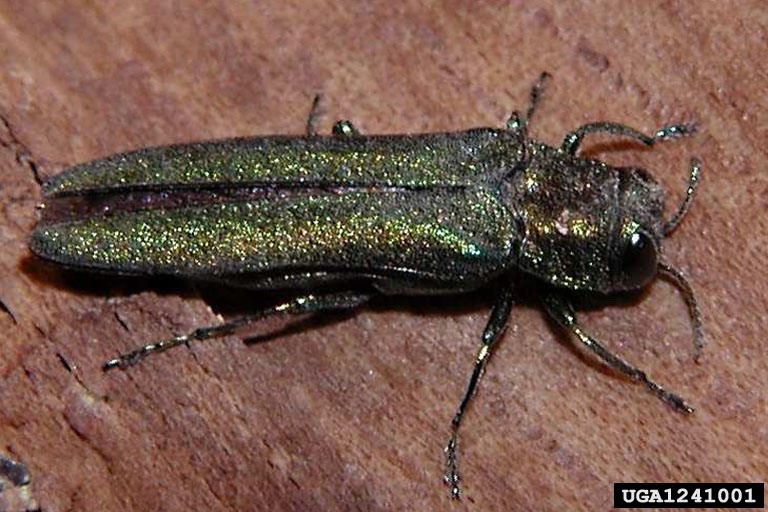
Affects: All ash species (Fraxinus) - green, white, black, blue ash
Metallic green beetle native to Asia. Larvae feed under bark, cutting off water and nutrient transport. Tree dies within 2-5 years of infestation. Has killed hundreds of millions of ash trees in North America since 2002.
Spotted Lanternfly high
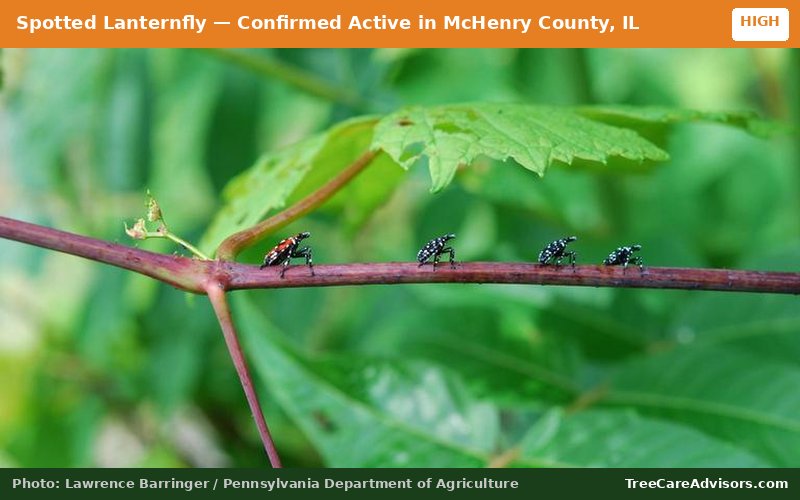
Affects: Tree of Heaven (primary host), but feeds on 70+ species including maples, oaks, walnut, willow, birch, grape
Showy planthopper from Asia. Feeds on sap, excretes honeydew that promotes sooty mold. Doesn't usually kill trees directly but weakens them and creates a mess. Major agricultural pest on grapes and orchards.
Oak Wilt high
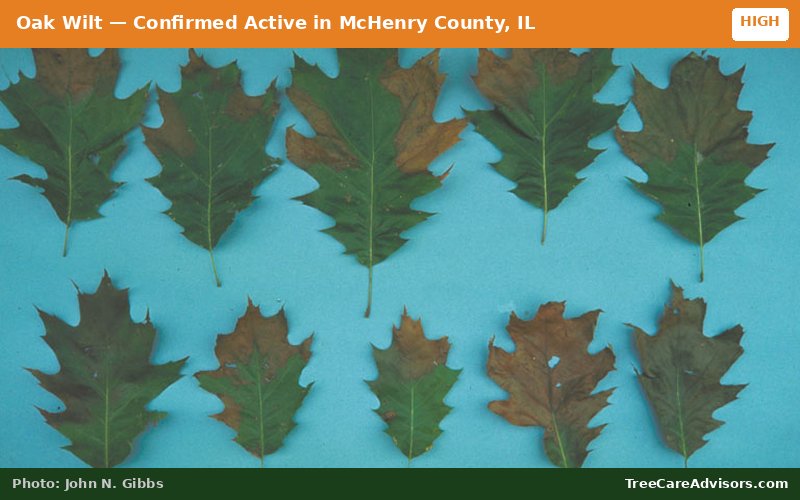
Affects: Red oak group (red, pin, scarlet, black - usually fatal). White oak group (white, bur, swamp white - slower, sometimes survivable).
Fungal disease (Ceratocystis fagacearum) that clogs water-conducting vessels. Red oaks can die within weeks. Spreads through connected root systems between nearby oaks and via beetles attracted to fresh wounds.
Signs Your Tree Needs Help
- Leaf discoloration out of season - yellowing, browning, or spotted leaves during the growing season indicate disease, nutrient deficiency, or root stress
- Premature leaf drop - healthy trees hold leaves until fall. Early drop means something is wrong underground or in the vascular system
- Thinning canopy - if you can see more sky through the crown than you used to, the tree is declining
- Bark abnormalities - oozing sap, cankers (sunken dead patches), or bark falling off in sheets
- Mushrooms at the base - fruiting bodies indicate extensive internal decay. Get a professional assessment immediately.
See full climate profile and risk assessment for Prairie Grove →
Storm Damage Risk in Prairie Grove
McHenry County averages 17.9 significant storm events per year, including 13.4 high-wind events.
Wind is the primary threat to trees in Prairie Grove. Severe thunderstorms and nor'easters cause the most tree failures.
Common Trees in Prairie Grove
Native & Adapted Species
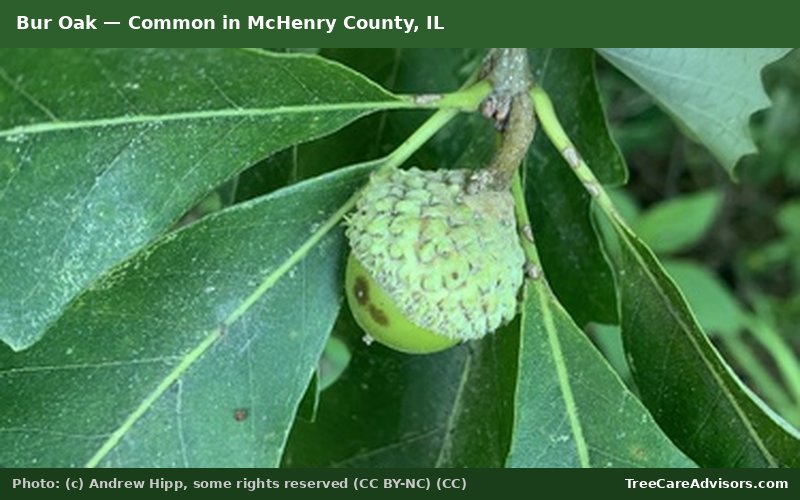
Bur Oak
Toughest native oak - drought, cold, and wind tolerant. Massive specimens
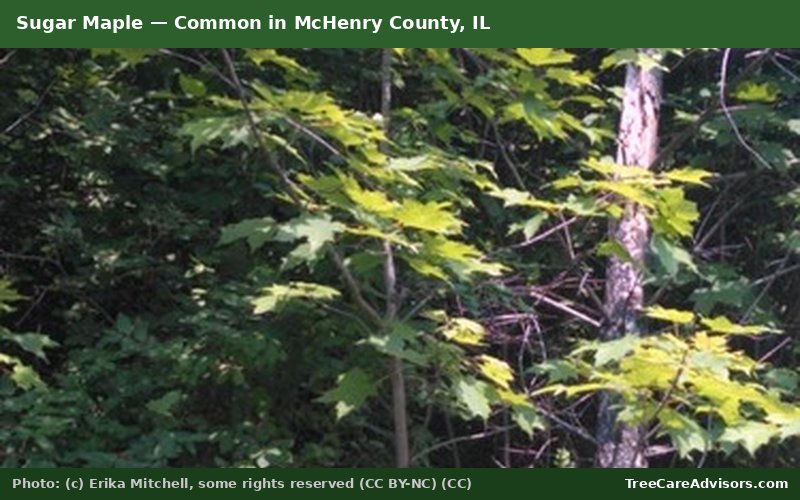
Sugar Maple
Fall color champion, syrup production, but salt-sensitive along roads
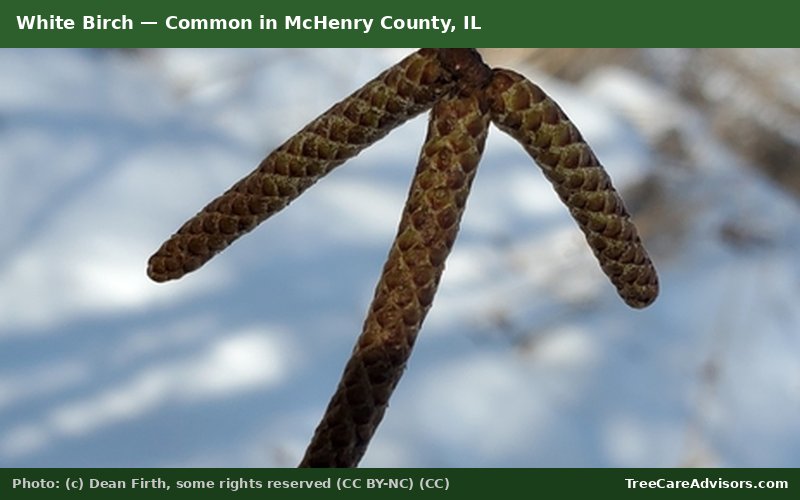
White Birch (Paper Birch)
Iconic white bark, short-lived (40-50 years), bronze birch borer vulnerable
Eastern White Pine
Tall, fast-growing, soft needles - blister rust susceptible
Problem Species to Watch
Green/White Ash
Functionally extinct in urban landscapes due to Emerald Ash Borer
Silver Maple
Weak wood + ice storms = constant cleanup, surface roots destroy lawns
Siberian Elm
Weak, messy, invasive - the tree equivalent of a weed
Tree Health & Disease Treatment Cost in Prairie Grove
Prairie Grove's regional cost multiplier is 1.16x the national average, reflecting higher property values (median $425,200) and labor costs in the Chicago-Naperville-Elgin, IL-IN area. Varies significantly by tree size, species, and access
Tree Services Near Prairie Grove
We also cover tree care in these nearby communities:
Freeze Protection for Prairie Grove Trees
With January lows averaging 12.9°F in Prairie Grove, hard freezes are a serious and recurring threat to trees. Freeze-thaw cycles crack bark, kill cambium tissue, and can split trunks.
What 2000s-2015-Era Trees Need in 2026
2000s-2015 Homes (10-25 years old trees)
Water-wise landscaping trend, especially in the West. 'Right tree, right place' philosophy gaining traction. More native species in designs.
Common Issues
- **Establishment failures** - container-grown trees sometimes develop circling roots that girdle the trunk years later. Trees planted 10-20 years ago may now be showing girdling root symptoms (trunk flare is buried or absent).
- **Stake dependency** - trees left staked too long (common with builder landscapes) develop weak trunks that can't support their own canopy.
- **Builder-grade landscaping** - mass-planted builder landscapes used whatever was cheap and available, not what was appropriate for the site. Many are now failing.
Recommended Actions
- Check for girdling roots - if the trunk goes straight into the ground with no visible root flare, excavate the base to check
- Remove any remaining stakes and guy wires (should have been removed 1 year after planting)
- First structural pruning to establish dominant central leader and remove co-dominant stems
Frequently Asked Questions
How much does tree health & disease treatment cost in Prairie Grove?
What is Emerald Ash Borer (EAB) and should I be worried in Prairie Grove?
Can freezing temperatures damage my trees in Prairie Grove?
How do I find a good arborist in Prairie Grove?
Get Tree Health & Disease Treatment Quotes in Prairie Grove
Compare ISA-certified arborists serving Prairie Grove and McHenry County.
Get Free Quotes