Tree Health & Disease Treatment in Kaiminani, HI
Cost Estimates - Kaiminani
Tree Health in Kaiminani
In USDA Zone 11a (Very Hot-Humid), trees face specific health challenges that generic lawn services don't understand.
Current Threats in Hawaii County
These are actively affecting trees in your area right now:
Rapid Ohia Death (ROD) critical
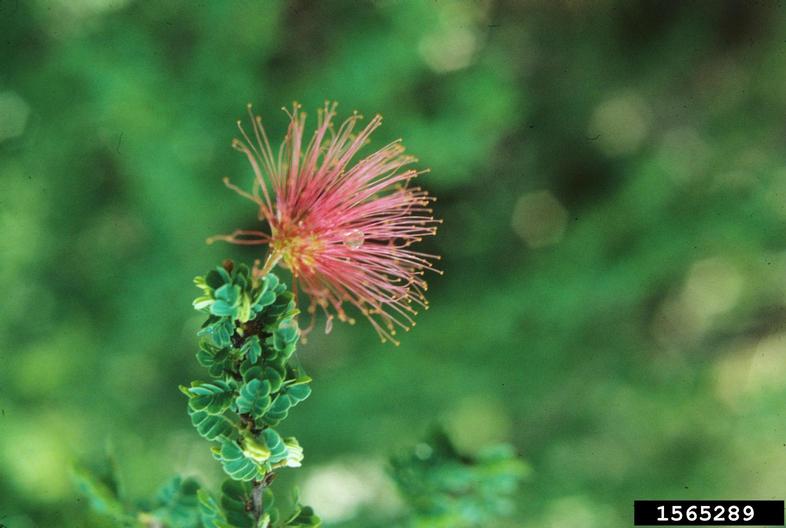
Affects: Ohia Lehua (Metrosideros polymorpha) - the most important native forest tree in Hawaii
Two Ceratocystis fungi that kill ohia trees by clogging their vascular system. Trees can die within weeks. Ohia forms 80% of Hawaii's native forest canopy - its loss would be catastrophic for the ecosystem.
Erythrina Gall Wasp high
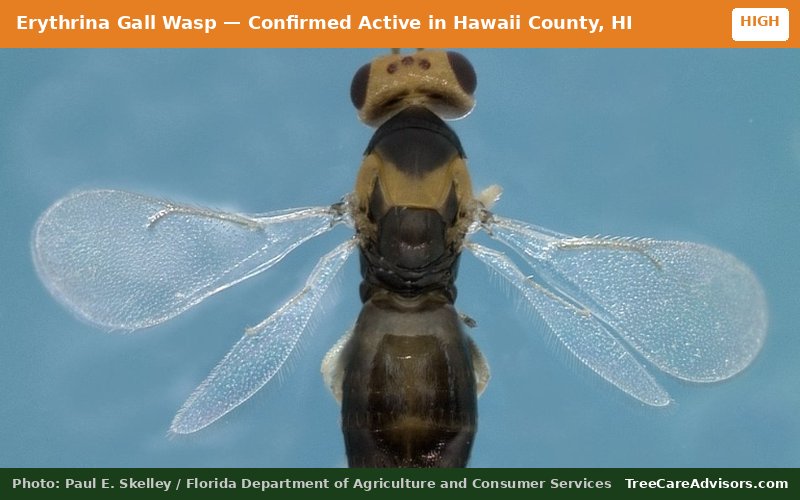
Affects: Erythrina species - wiliwili (native), coral trees (ornamental)
Tiny wasp from Africa that lays eggs in erythrina leaves, causing severe galling that defoliates and can kill trees. Nearly wiped out native wiliwili trees before biological control wasps were released.
Coconut Rhinoceros Beetle high
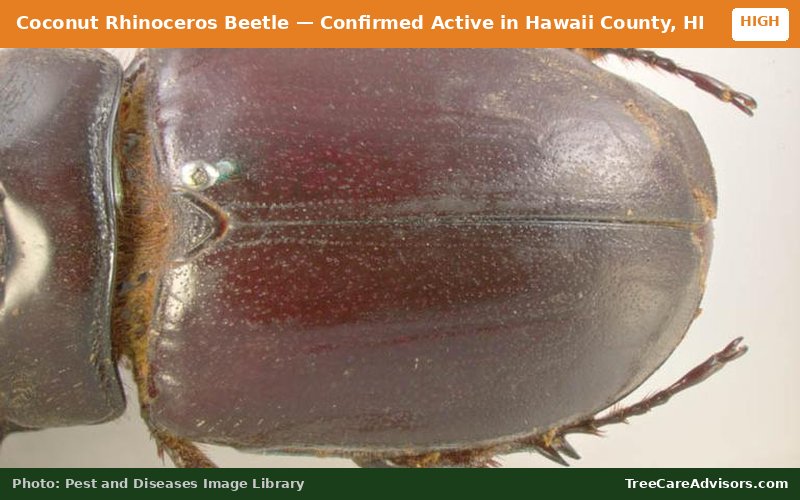
Affects: Coconut palm (primary), other palms, potentially other plants
Large beetle (2 inches) that bores into the crowns of coconut palms to feed on sap. Damages the growing point, reducing coconut production and potentially killing the palm. A serious threat to Hawaii's coconut palms and palm-based landscaping.
Signs Your Tree Needs Help
- Leaf discoloration out of season - yellowing, browning, or spotted leaves during the growing season indicate disease, nutrient deficiency, or root stress
- Premature leaf drop - healthy trees hold leaves until fall. Early drop means something is wrong underground or in the vascular system
- Thinning canopy - if you can see more sky through the crown than you used to, the tree is declining
- Bark abnormalities - oozing sap, cankers (sunken dead patches), or bark falling off in sheets
- Mushrooms at the base - fruiting bodies indicate extensive internal decay. Get a professional assessment immediately.
See full climate profile and risk assessment for Kaiminani →
Common Trees in Kaiminani
Native & Adapted Species
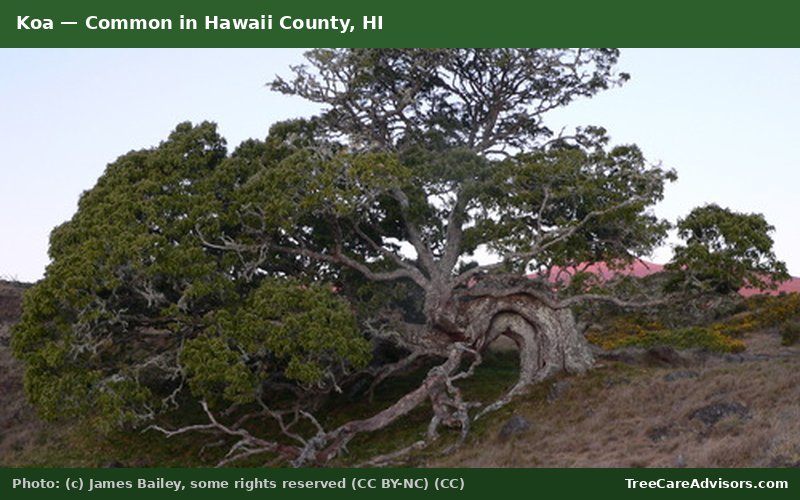
Koa
Hawaii's most valuable native tree - beautiful wood, nitrogen-fixing, reforestation priority
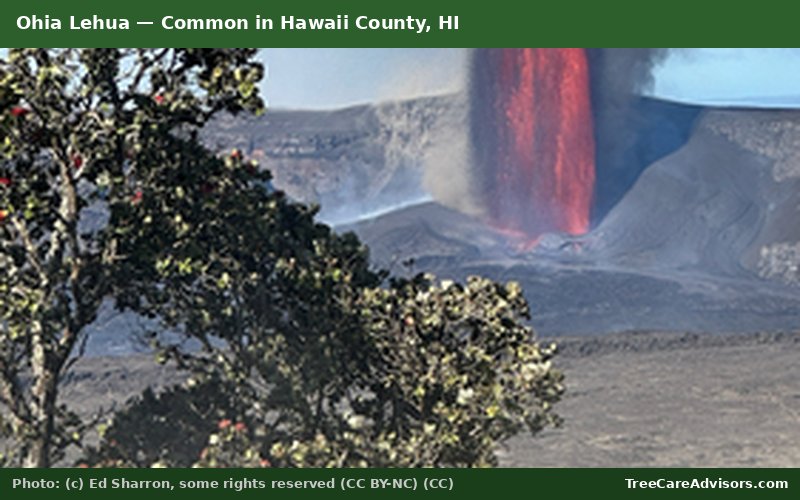
Ohia Lehua
Sacred native tree - threatened by Rapid Ohia Death fungus
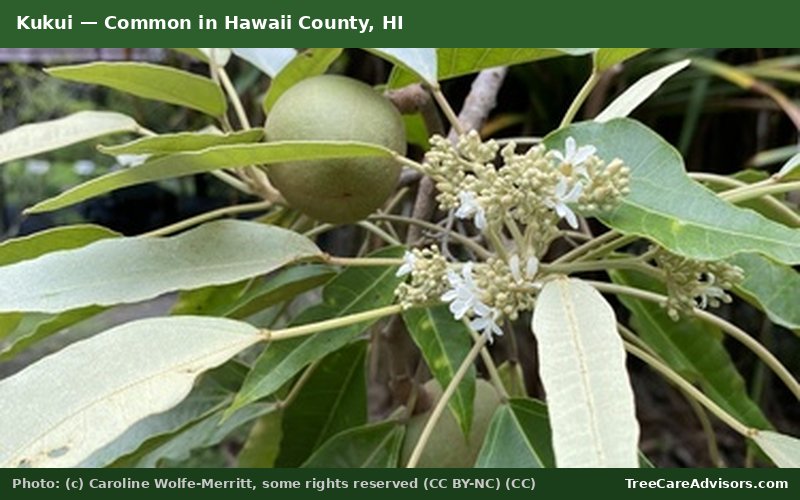
Kukui (Candlenut)
State tree of Hawaii, large spreading canopy, oily nuts
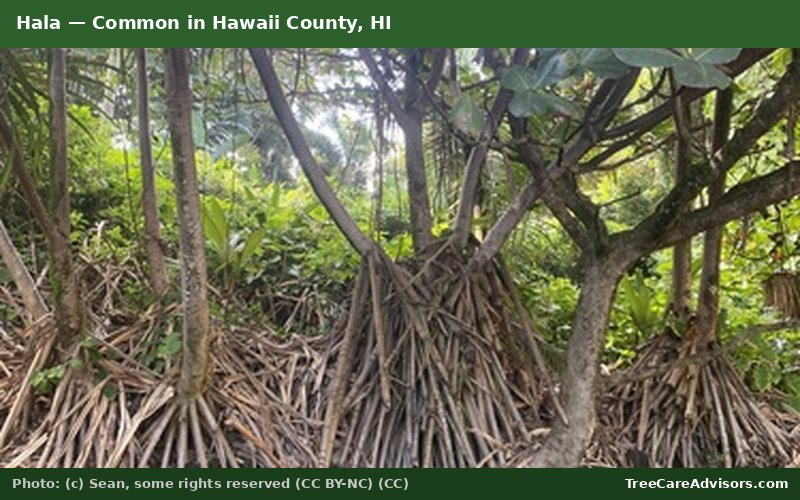
Hala (Pandanus)
Coastal native, prop roots, culturally important for weaving
Problem Species to Watch
Albizia (Falcataria)
Extremely fast-growing, extremely brittle - the #1 hazard tree in Hawaii. Falls in every storm.
Ironwood (Casuarina)
Invasive, displaces native coastal species
Strawberry Guava
Extremely invasive, forms impenetrable thickets in native forests
Tree Health & Disease Treatment Cost in Kaiminani
Kaiminani's regional cost multiplier is 1.43x the national average, reflecting higher property values (median $677,600) and labor costs in the Hilo-Kailua, HI area. Varies significantly by tree size, species, and access
Tree Services Near Kaiminani
We also cover tree care in these nearby communities:
What 1980s-2000s-Era Trees Need in 2026
1980s-2000s Homes (25-45 years old trees)
Peak of designed residential landscapes. Professional landscape architects specified diverse palettes. McMansion era brought larger properties with more trees.
Common Issues
- **'Crepe Murder'** - the epidemic of bad pruning (topping crepe myrtles into ugly stubs) has created structurally compromised trees with weak regrowth across the South.
- **Approaching first major maintenance** - trees in this age range are large enough to need professional pruning for the first time. Many homeowners haven't budgeted for it.
- **Raywood Ash decline** - widely planted in California in the 1990s, now showing anthracnose and structural decline
Recommended Actions
- Structural pruning NOW - this is the critical window to establish good branch architecture before trees get too large
- Stop 'crepe murder' - educate on proper crepe myrtle pruning (remove crossing/rubbing branches, not indiscriminate topping)
- Replace short-lived ornamentals (purple-leaf plum, Bradford pear) that are declining
Frequently Asked Questions
How much does tree health & disease treatment cost in Kaiminani?
What is Rapid Ohia Death (ROD) and should I be worried in Kaiminani?
How do I find a good arborist in Kaiminani?
Get Tree Health & Disease Treatment Quotes in Kaiminani
Compare ISA-certified arborists serving Kaiminani and Hawaii County.
Get Free Quotes