Tree Health & Disease Treatment in Silver Plume, CO
Cost Estimates - Silver Plume
Tree Health in Silver Plume
In USDA Zone 5a (Very Cold), trees face specific health challenges that generic lawn services don't understand.
Current Threats in Clear Creek County
These are actively affecting trees in your area right now:
Mountain Pine Beetle critical
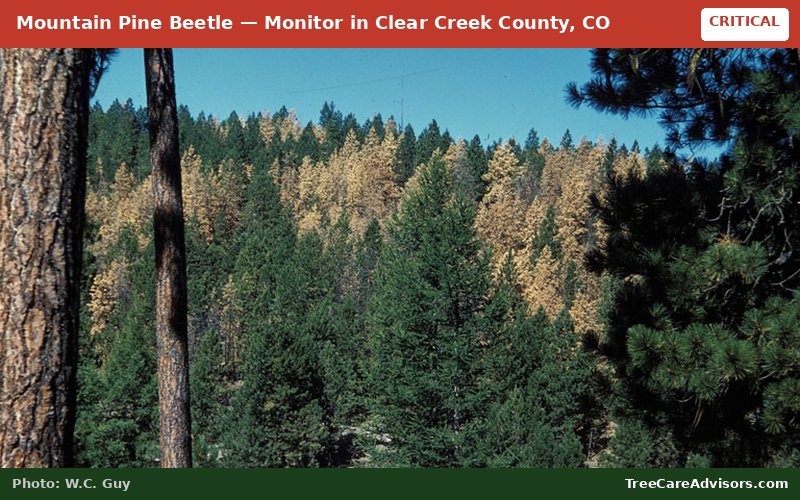
Affects: Lodgepole pine (primary), ponderosa pine, limber pine, whitebark pine
Native bark beetle whose populations have exploded due to drought and warmer winters that no longer kill overwintering larvae. Beetles mass-attack trees, introducing blue-stain fungi that stop water transport. Trees turn red and die within a year.
Emerald Ash Borer critical
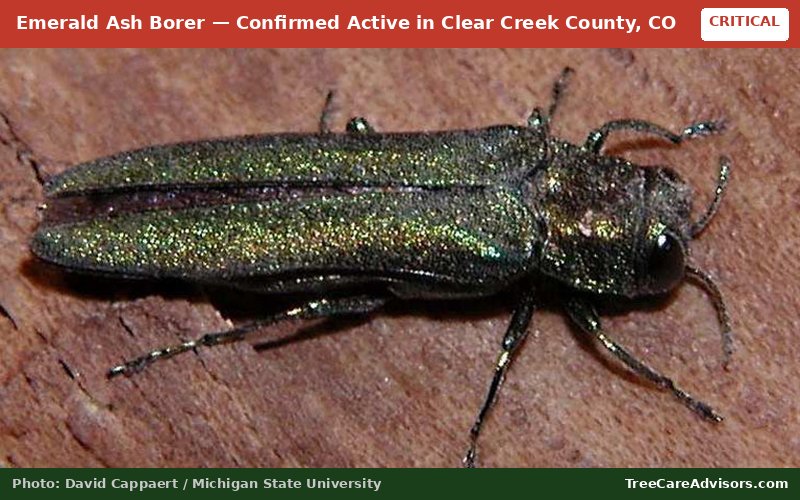
Affects: All ash species - very common urban trees in Front Range CO and Wasatch Front UT
Same devastating beetle as eastern US. Colorado and Utah cities planted heavily in ash - many municipalities have 15-20% ash canopy that will be lost.
Ips Beetle Complex moderate-high
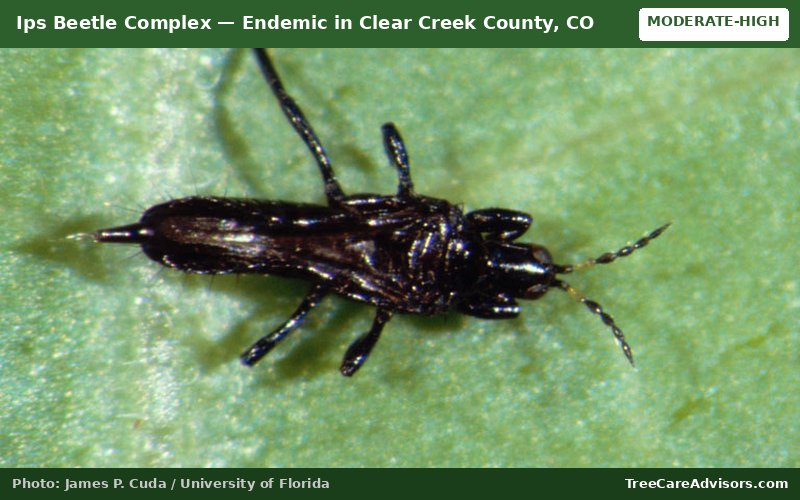
Affects: Spruce, pine - urban and forest settings
Multiple Ips bark beetle species that attack weakened conifers. Unlike mountain pine beetle, Ips can have multiple generations per year and attacks a broader range of species including spruce.
Signs Your Tree Needs Help
- Leaf discoloration out of season - yellowing, browning, or spotted leaves during the growing season indicate disease, nutrient deficiency, or root stress
- Premature leaf drop - healthy trees hold leaves until fall. Early drop means something is wrong underground or in the vascular system
- Thinning canopy - if you can see more sky through the crown than you used to, the tree is declining
- Bark abnormalities - oozing sap, cankers (sunken dead patches), or bark falling off in sheets
- Mushrooms at the base - fruiting bodies indicate extensive internal decay. Get a professional assessment immediately.
See full climate profile and risk assessment for Silver Plume →
Common Trees in Silver Plume
Native & Adapted Species
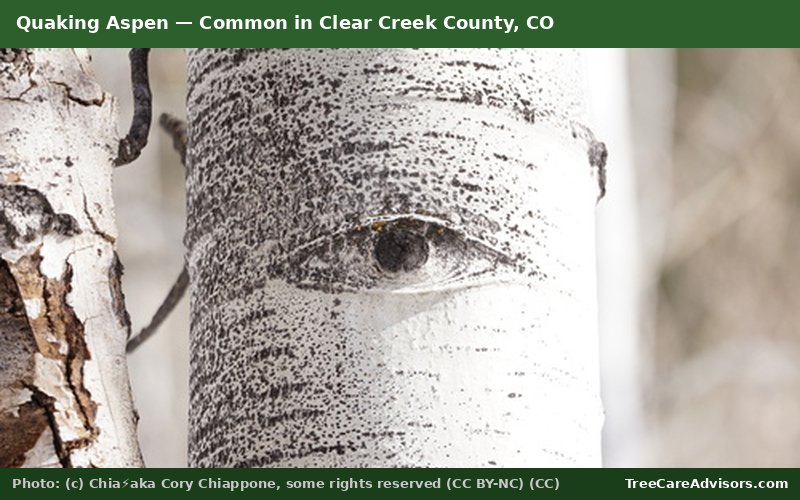
Quaking Aspen
The iconic mountain tree - actually a clonal organism, golden fall color, short-lived individually (40-60 yrs)
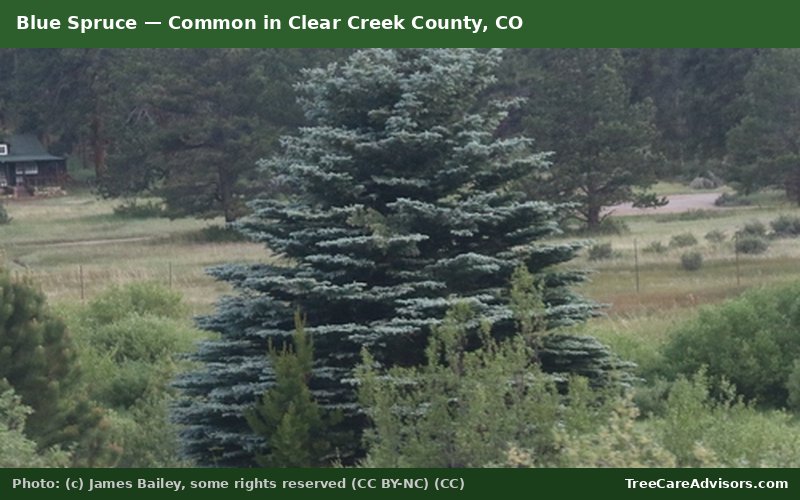
Blue Spruce
Colorado's state tree, stiff blue needles - but needle cast disease is epidemic
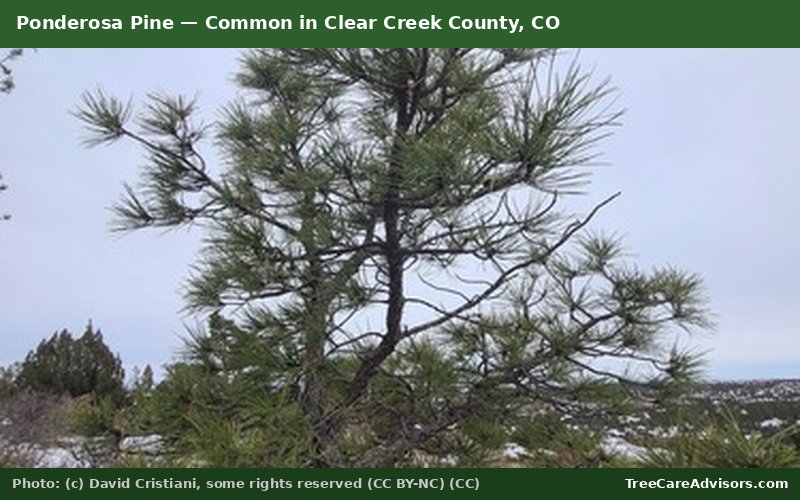
Ponderosa Pine
Tall, open-crowned, butterscotch-scented bark, fire-adapted
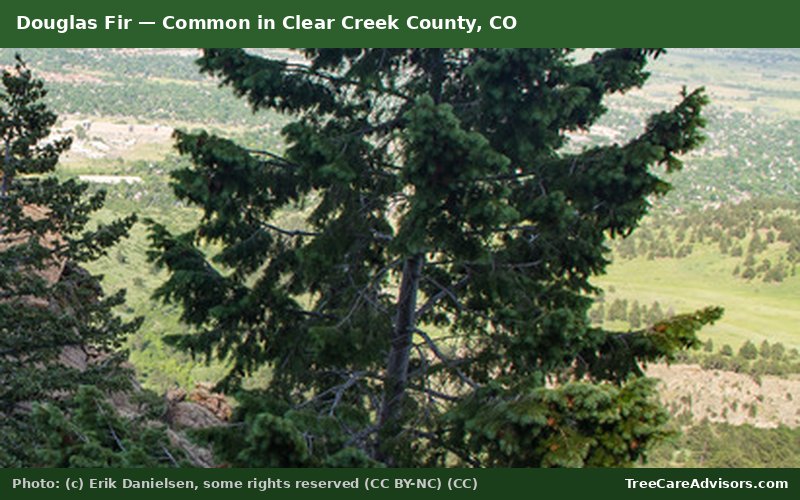
Douglas Fir
Not a true fir - tall, pyramidal, important timber species
Problem Species to Watch
Russian Olive
Extremely invasive in riparian areas, thorny, now illegal to plant in CO
Siberian Elm
Invasive, weak wood, constant branch failure
Green Ash
EAB has arrived in Front Range Colorado and Utah - die-off beginning
Tree Health & Disease Treatment Cost in Silver Plume
Silver Plume's regional cost multiplier is 1.25x the national average, reflecting higher property values (median $509,300) and labor costs in the Denver-Aurora-Centennial, CO area. Varies significantly by tree size, species, and access
Tree Services Near Silver Plume
We also cover tree care in these nearby communities:
Drought & Water Stress
Silver Plume receives only 18.3 inches of annual rainfall - not enough for most non-native species without supplemental irrigation. Active May through September, dormant October through April
Freeze Protection for Silver Plume Trees
With January lows averaging 15.5°F in Silver Plume, freezing temperatures can damage non-native and marginally hardy species. Tropical and semi-tropical plantings are particularly vulnerable.
Managing Silver Plume's Aging Tree Canopy
~88-year-old trees are at or past typical lifespan for many species. Structural decline, internal decay, and catastrophic failure risk.
Tree Care for Seasonal Properties
39% of Silver Plume homes are used seasonally. Trees on unoccupied properties still need maintenance:
- Before closing: Dead limb removal, hazard assessment, storm-prep pruning
- While vacant: Arrange for storm-check visits, ensure irrigation is set or winterized
- Before opening: Full property inspection for winter/storm damage, pest check
What Pre-1940-Era Trees Need in 2026
Pre-1940 Homes (85+ years old trees)
Original plantings are now massive, legacy specimens. Many are second or third-generation replacements.
Common Issues
- **Structural decline** - trees this age are at or past the typical lifespan for many species. Internal decay is common even when the exterior looks healthy.
- **Massive root systems** - 85+ years of root growth means roots have invaded every pipe, foundation, walkway, and utility line nearby.
- **Canopy weight** - enormous canopies with potential for catastrophic limb failure. One limb from an 85-year-old oak can weigh thousands of pounds.
Recommended Actions
- Annual or biannual inspection by a certified arborist (ISA credentials) with resistograph or sonic tomography for internal decay assessment
- Structural pruning to reduce canopy weight and wind resistance (crown reduction, NOT topping)
- Cable and brace systems for co-dominant stems on high-value trees
Frequently Asked Questions
How much does tree health & disease treatment cost in Silver Plume?
What is Mountain Pine Beetle and should I be worried in Silver Plume?
How much water do trees need in Silver Plume's dry climate?
Can freezing temperatures damage my trees in Silver Plume?
How do I find a good arborist in Silver Plume?
Get Tree Health & Disease Treatment Quotes in Silver Plume
Compare ISA-certified arborists serving Silver Plume and Clear Creek County.
Get Free Quotes