Tree Health & Disease Treatment in Benicia, CA
Cost Estimates - Benicia
Tree Health in Benicia
In USDA Zone 9b (Warm-Dry), trees face specific health challenges that generic lawn services don't understand.
Current Threats in Solano County
These are actively affecting trees in your area right now:
Sudden Oak Death (SOD) critical in coastal areas
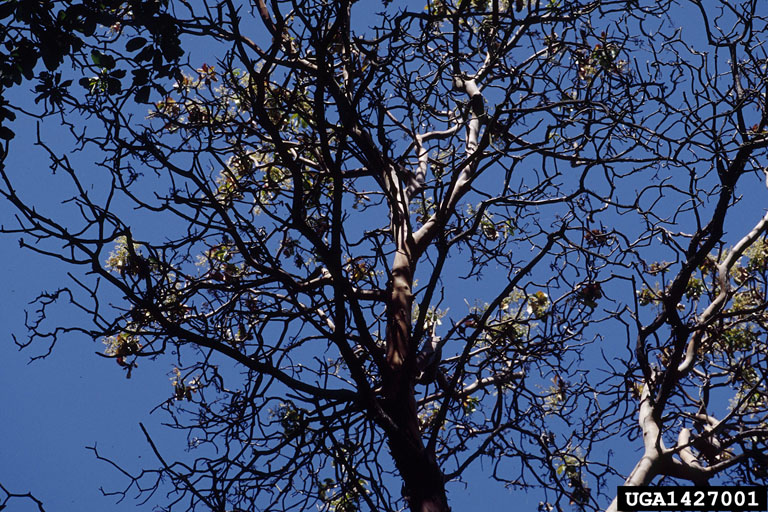
Affects: Tanoak (most lethal), coast live oak, California black oak, Shreve oak, and 100+ other species as carriers
Water mold (Phytophthora ramorum) that causes cankers on oak trunks, leading to rapid death. Spread by rain splash from infected bay laurel leaves. Has killed millions of oaks and tanoaks since 1990s.
Invasive Shot Hole Borers (ISHB/KSHB) high
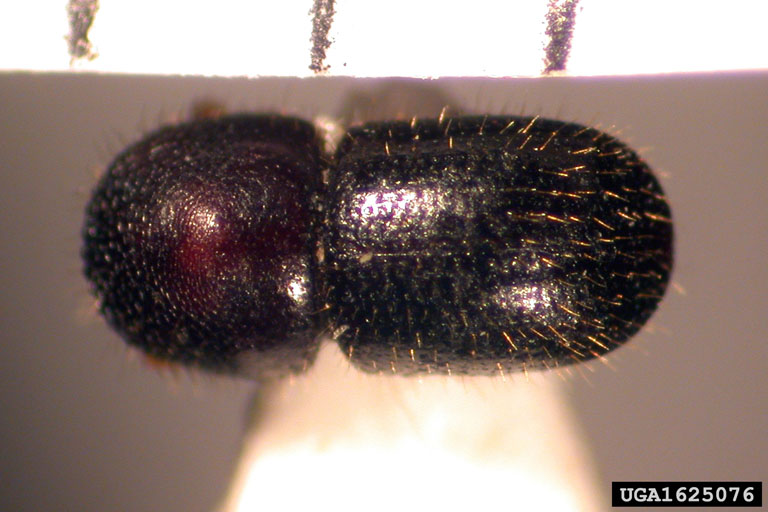
Affects: 100+ species - sycamores, box elder, coast live oak, avocado, willows, maples most affected
Tiny ambrosia beetles that bore into trees and introduce a Fusarium fungus they farm for food. The fungus clogs the tree's vascular system (Fusarium dieback). Entry holes are tiny (< 1mm) but staining on bark is visible.
Goldspotted Oak Borer high in San Diego
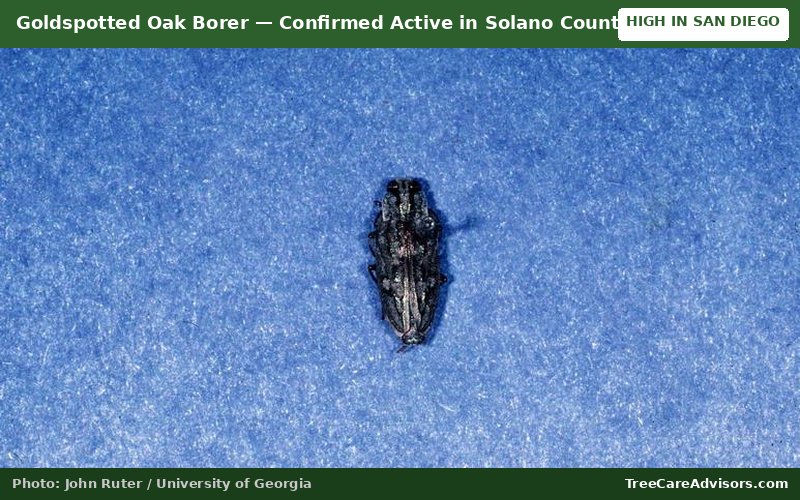
Affects: Coast live oak, California black oak, canyon live oak
Beetle native to Arizona/Mexico that has established in Southern California. Larvae bore under bark of oaks, killing branches and eventually the tree. First detected 2004, has killed >80,000 oaks in San Diego.
Signs Your Tree Needs Help
- Leaf discoloration out of season - yellowing, browning, or spotted leaves during the growing season indicate disease, nutrient deficiency, or root stress
- Premature leaf drop - healthy trees hold leaves until fall. Early drop means something is wrong underground or in the vascular system
- Thinning canopy - if you can see more sky through the crown than you used to, the tree is declining
- Bark abnormalities - oozing sap, cankers (sunken dead patches), or bark falling off in sheets
- Mushrooms at the base - fruiting bodies indicate extensive internal decay. Get a professional assessment immediately.
See full climate profile and risk assessment for Benicia →
Drought & Water Stress
Benicia receives only 21.5 inches of annual rainfall - not enough for most non-native species without supplemental irrigation. Year-round growth with acceleration in spring after winter rains
Common Trees in Benicia
Native & Adapted Species
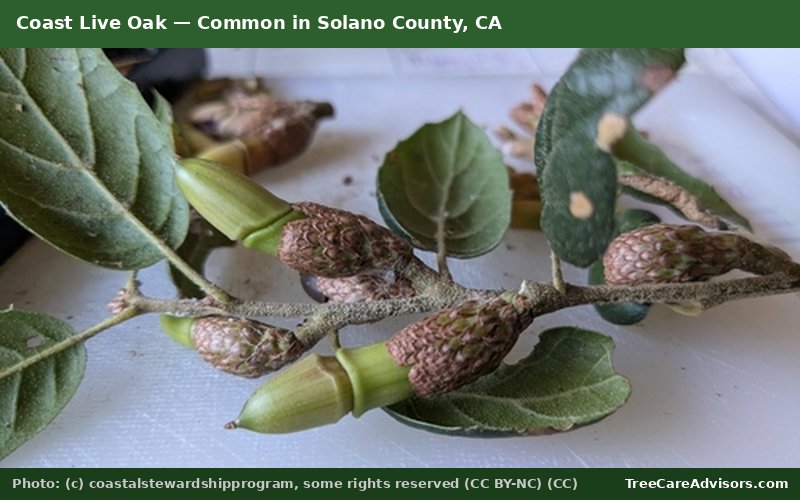
Coast Live Oak
Evergreen oak, iconic California species, protected in most jurisdictions
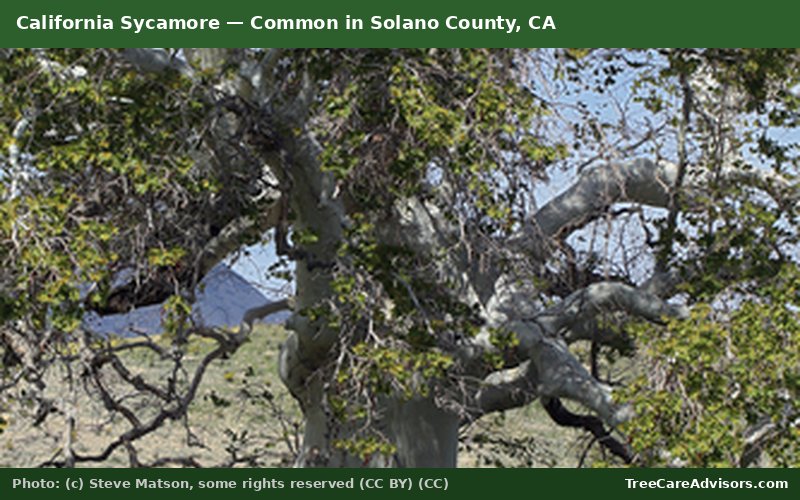
California Sycamore
Large deciduous, peeling bark, needs space - can reach 80ft
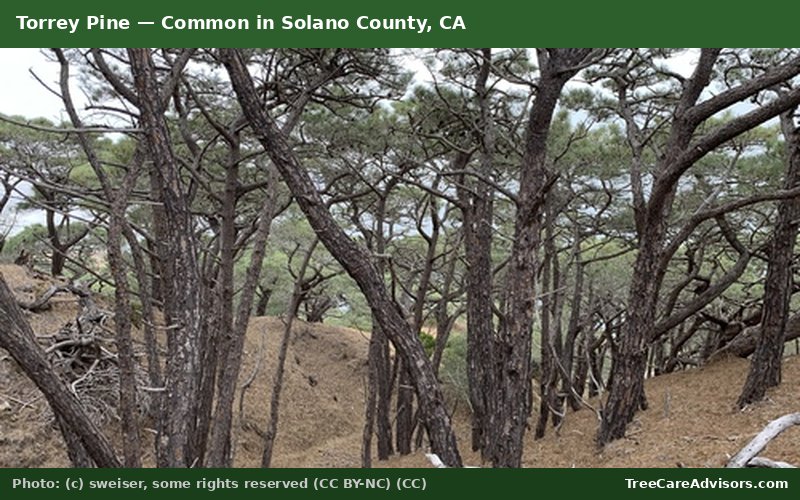
Torrey Pine
Rarest pine in US, native only to San Diego coast
California Bay Laurel
Aromatic evergreen, good shade, slow-growing
Problem Species to Watch
Ficus (all species)
Massive root systems destroy infrastructure - the #1 urban tree problem in SoCal
Eucalyptus (Blue Gum)
Extremely tall, brittle, limb drop, fire hazard in canyons
Mexican Fan Palm
Dead frond drop hazard, rat harborage, no shade value, fire risk
Tree Health & Disease Treatment Cost in Benicia
Benicia's regional cost multiplier is 1.49x the national average, reflecting higher property values (median $736,500) and labor costs in the Vallejo, CA area. Varies significantly by tree size, species, and access
Tree Services Near Benicia
We also cover tree care in these nearby communities:
Wildfire & Defensible Space
Dry climate (22" annual rainfall) — defensible space management including tree pruning is recommended.
Key defensible space practices for Benicia properties:
- Maintain 30 feet of cleared space immediately around structures
- Remove dead branches, leaf litter, and dry vegetation
- Prune tree canopies to create 10+ feet of clearance between crowns
- Remove highly flammable species (eucalyptus, juniper, ornamental grasses) near structures
What 1980s-2000s-Era Trees Need in 2026
1980s-2000s Homes (25-45 years old trees)
Peak of designed residential landscapes. Professional landscape architects specified diverse palettes. McMansion era brought larger properties with more trees.
Common Issues
- **'Crepe Murder'** - the epidemic of bad pruning (topping crepe myrtles into ugly stubs) has created structurally compromised trees with weak regrowth across the South.
- **Approaching first major maintenance** - trees in this age range are large enough to need professional pruning for the first time. Many homeowners haven't budgeted for it.
- **Raywood Ash decline** - widely planted in California in the 1990s, now showing anthracnose and structural decline
Recommended Actions
- Structural pruning NOW - this is the critical window to establish good branch architecture before trees get too large
- Stop 'crepe murder' - educate on proper crepe myrtle pruning (remove crossing/rubbing branches, not indiscriminate topping)
- Replace short-lived ornamentals (purple-leaf plum, Bradford pear) that are declining
Frequently Asked Questions
How much does tree health & disease treatment cost in Benicia?
What is Sudden Oak Death (SOD) and should I be worried in Benicia?
How much water do trees need in Benicia's dry climate?
How do I find a good arborist in Benicia?
Get Tree Health & Disease Treatment Quotes in Benicia
Compare ISA-certified arborists serving Benicia and Solano County.
Get Free Quotes