Stump Grinding & Removal in Mill Creek, WA
Cost Estimates - Mill Creek
Why Remove the Stump?
After tree removal, the stump isn't just ugly - it's a problem:
- Root sprouting - many species (especially Douglas Fir) send up aggressive shoots from the stump. You'll be cutting sprouts for years.
- Pest habitat - decaying stumps attract termites, carpenter ants, and beetles.
- Fungal spread - root rot fungi like Armillaria can spread from a dead stump to living trees through root contact underground.
- Tripping hazard and lawn care headache - can't mow over it, grass doesn't grow around it, and it takes 10-15 years to decompose naturally.
Grinding vs Chemical Removal
Grinding is the standard method - a machine chews the stump down 6-12 inches below grade. Takes 30-90 minutes for a typical stump. You're left with a pile of wood chips that makes decent mulch. This is what most arborists recommend.
Chemical removal (potassium nitrate) accelerates decomposition over 4-6 weeks, then you can break up the softened wood. Cheaper but slower, and doesn't address the root system.
See full climate profile and risk assessment for Mill Creek →
Common Trees in Mill Creek
Native & Adapted Species
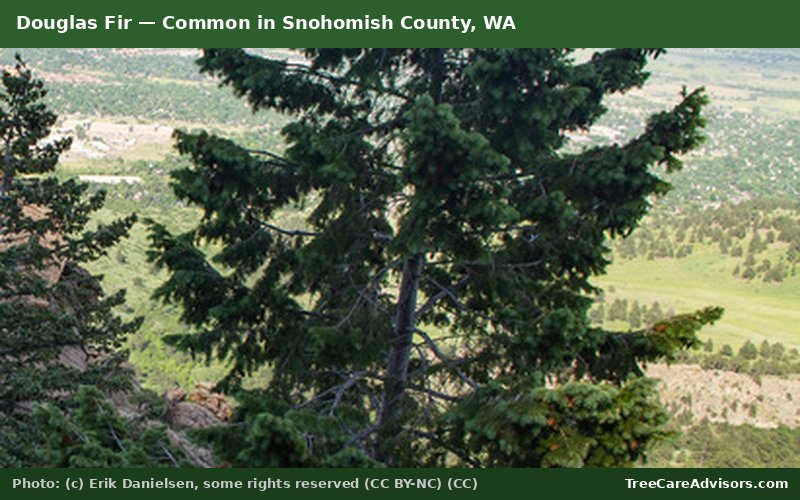
Douglas Fir
The defining tree of the PNW - can reach 250ft, dominant timber species
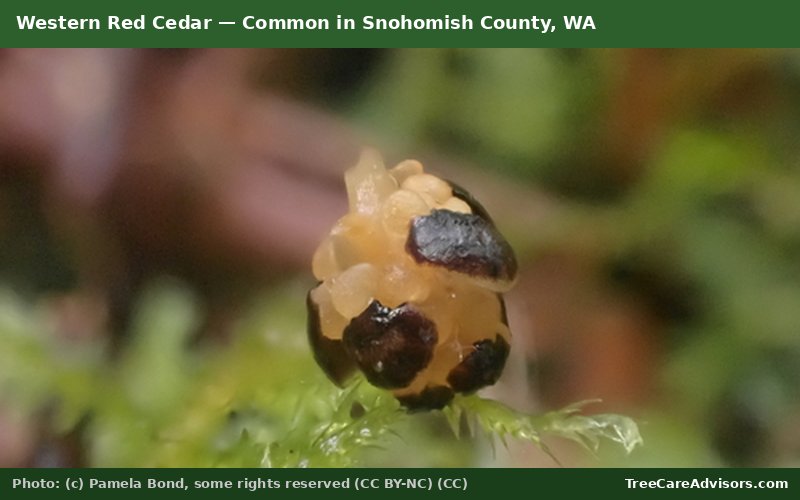
Western Red Cedar
Long-lived evergreen, naturally rot-resistant wood, cultural significance
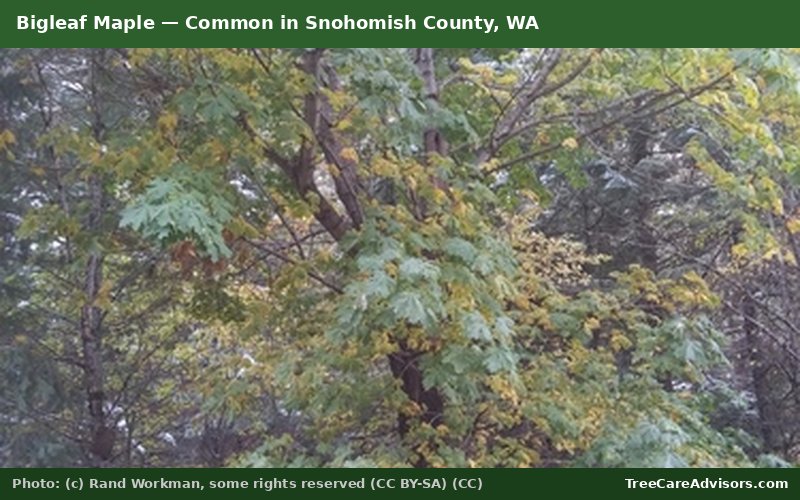
Bigleaf Maple
Massive spreading maple, moss-draped in wet climates, golden fall color
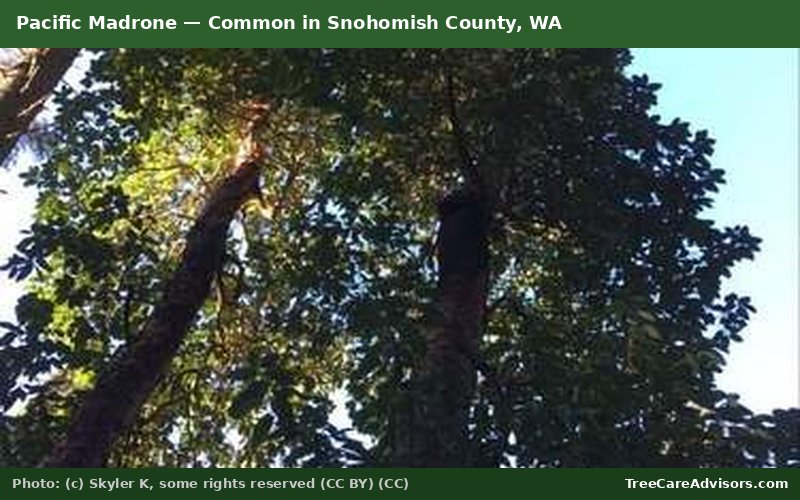
Pacific Madrone
Beautiful peeling red bark, evergreen broadleaf, difficult to transplant
Problem Species to Watch
English Ivy (on trees)
Not a tree but the #1 tree killer in PNW - smothers and topples trees
Black Locust
Invasive suckering, thorny, displaces native understory
English Holly
Invasive, spread by birds, forms dense thickets
Stump Grinding & Removal Cost in Mill Creek
Mill Creek's regional cost multiplier is 1.53x the national average, reflecting higher property values (median $777,500) and labor costs in the Seattle-Tacoma-Bellevue, WA area. Varies significantly by tree size, species, and access
Tree Services Near Mill Creek
We also cover tree care in these nearby communities:
Active Tree Threats in Snohomish County
Laminated Root Rot high
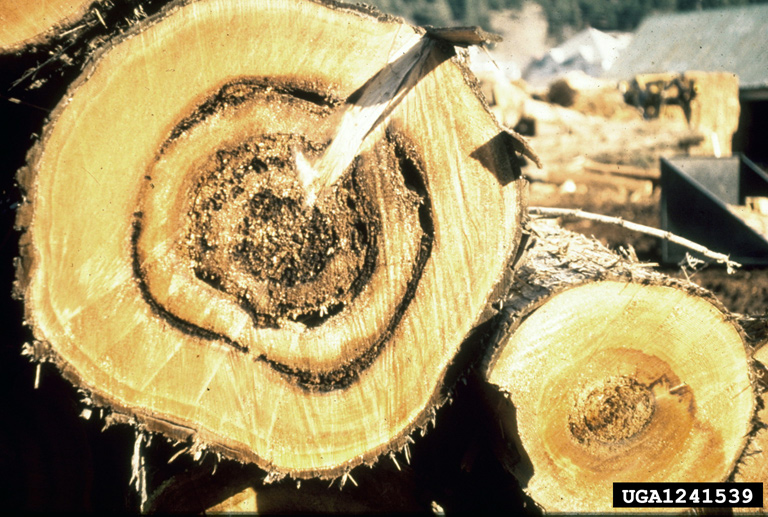
Affects: Douglas fir (primary), grand fir, mountain hemlock - the dominant conifers of the PNW
Soil fungus (Phellinus sulphurascens) that spreads through root contact. Infected trees show reduced growth, thinning crown, and eventually blow over in wind because roots are rotted. Spreads slowly but persistently through stands.
Swiss Needle Cast moderate-high
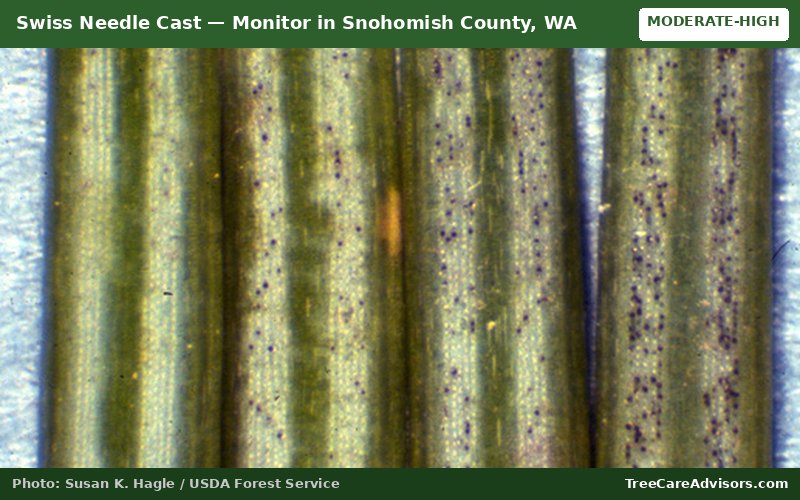
Affects: Douglas fir - the most common tree in PNW landscapes
Fungal disease that causes Douglas fir to shed needles prematurely. Trees look thin and yellow. Fog and moisture promote the fungus. Coastal areas worst affected.
Bronze Birch Borer moderate
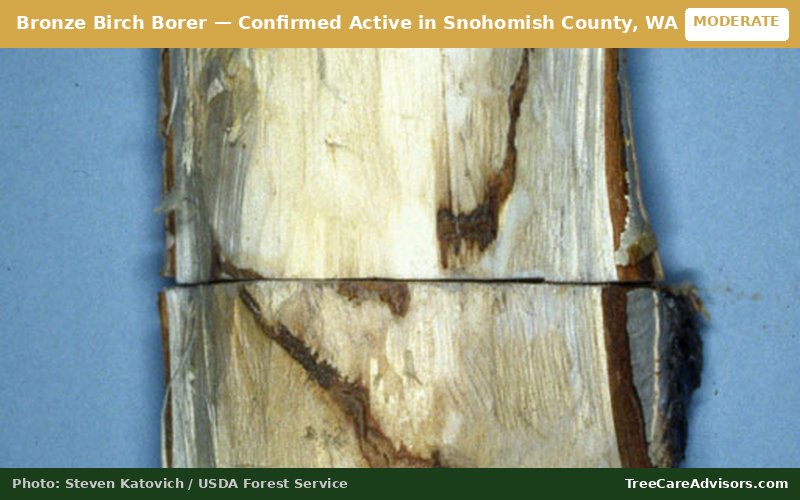
Affects: European white birch (highly susceptible), paper birch, other birch species
Native beetle that attacks stressed birch trees. Larvae bore under bark, killing branches from top down. European white birch (the popular ornamental) is far more susceptible than native species.
What 1980s-2000s-Era Trees Need in 2026
1980s-2000s Homes (25-45 years old trees)
Peak of designed residential landscapes. Professional landscape architects specified diverse palettes. McMansion era brought larger properties with more trees.
Common Issues
- **'Crepe Murder'** - the epidemic of bad pruning (topping crepe myrtles into ugly stubs) has created structurally compromised trees with weak regrowth across the South.
- **Approaching first major maintenance** - trees in this age range are large enough to need professional pruning for the first time. Many homeowners haven't budgeted for it.
- **Raywood Ash decline** - widely planted in California in the 1990s, now showing anthracnose and structural decline
Recommended Actions
- Structural pruning NOW - this is the critical window to establish good branch architecture before trees get too large
- Stop 'crepe murder' - educate on proper crepe myrtle pruning (remove crossing/rubbing branches, not indiscriminate topping)
- Replace short-lived ornamentals (purple-leaf plum, Bradford pear) that are declining
Frequently Asked Questions
How much does stump grinding & removal cost in Mill Creek?
How do I find a good arborist in Mill Creek?
Get Stump Grinding & Removal Quotes in Mill Creek
Compare ISA-certified arborists serving Mill Creek and Snohomish County.
Get Free Quotes