Stump Grinding & Removal in Mountain Plains, SD
Cost Estimates - Mountain Plains
Why Remove the Stump?
After tree removal, the stump isn't just ugly - it's a problem:
- Root sprouting - many species (especially Bur Oak) send up aggressive shoots from the stump. You'll be cutting sprouts for years.
- Pest habitat - decaying stumps attract termites, carpenter ants, and beetles.
- Fungal spread - root rot fungi like Armillaria can spread from a dead stump to living trees through root contact underground.
- Tripping hazard and lawn care headache - can't mow over it, grass doesn't grow around it, and it takes 10-15 years to decompose naturally.
Grinding vs Chemical Removal
Grinding is the standard method - a machine chews the stump down 6-12 inches below grade. Takes 30-90 minutes for a typical stump. You're left with a pile of wood chips that makes decent mulch. This is what most arborists recommend.
Chemical removal (potassium nitrate) accelerates decomposition over 4-6 weeks, then you can break up the softened wood. Cheaper but slower, and doesn't address the root system.
See full climate profile and risk assessment for Mountain Plains →
Storm Damage Risk in Mountain Plains
Lawrence County averages 25.2 significant storm events per year, including 6.5 high-wind events.
Common Trees in Mountain Plains
Native & Adapted Species
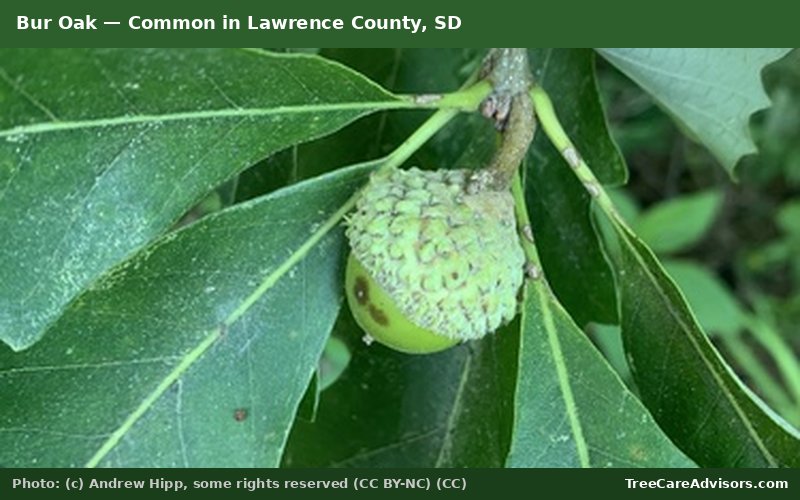
Bur Oak
Toughest native oak - drought, cold, and wind tolerant. Massive specimens
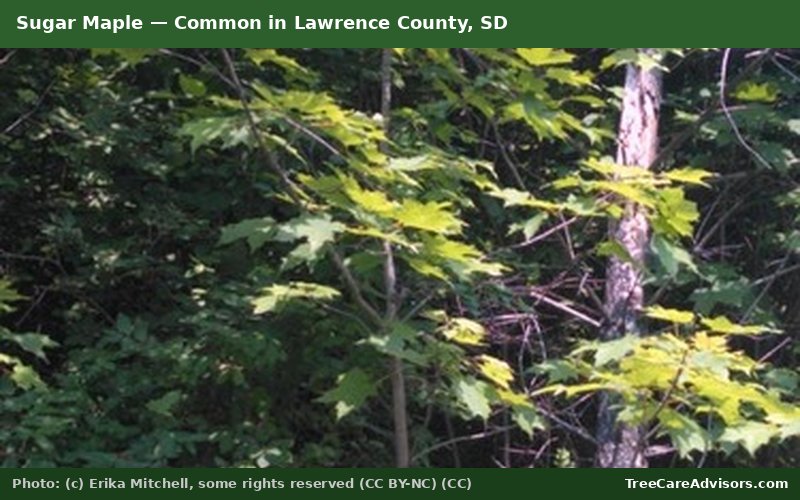
Sugar Maple
Fall color champion, syrup production, but salt-sensitive along roads
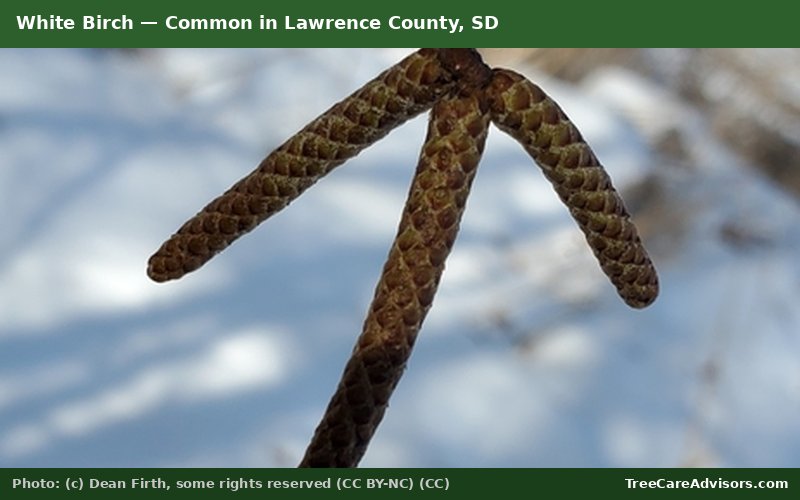
White Birch (Paper Birch)
Iconic white bark, short-lived (40-50 years), bronze birch borer vulnerable
Eastern White Pine
Tall, fast-growing, soft needles - blister rust susceptible
Problem Species to Watch
Green/White Ash
Functionally extinct in urban landscapes due to Emerald Ash Borer
Silver Maple
Weak wood + ice storms = constant cleanup, surface roots destroy lawns
Siberian Elm
Weak, messy, invasive - the tree equivalent of a weed
Stump Grinding & Removal Cost in Mountain Plains
Mountain Plains's regional cost multiplier is 1.34x the national average, reflecting higher property values (median $600,200) and labor costs in the Spearfish, SD area. Varies significantly by tree size, species, and access
Tree Services Near Mountain Plains
We also cover tree care in these nearby communities:
Drought & Water Stress
Mountain Plains receives only 21.3 inches of annual rainfall - not enough for most non-native species without supplemental irrigation. Active May through September, fully dormant October through April
Freeze Protection for Mountain Plains Trees
With January lows averaging 15.1°F in Mountain Plains, freezing temperatures can damage non-native and marginally hardy species. Tropical and semi-tropical plantings are particularly vulnerable.
Active Tree Threats in Lawrence County
Mountain Pine Beetle critical
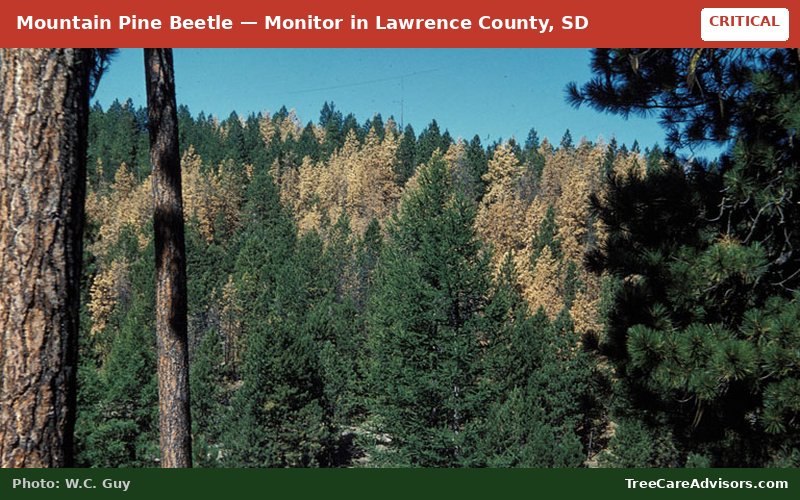
Affects: Lodgepole pine (primary), ponderosa pine, limber pine, whitebark pine
Native bark beetle whose populations have exploded due to drought and warmer winters that no longer kill overwintering larvae. Beetles mass-attack trees, introducing blue-stain fungi that stop water transport. Trees turn red and die within a year.
Emerald Ash Borer critical
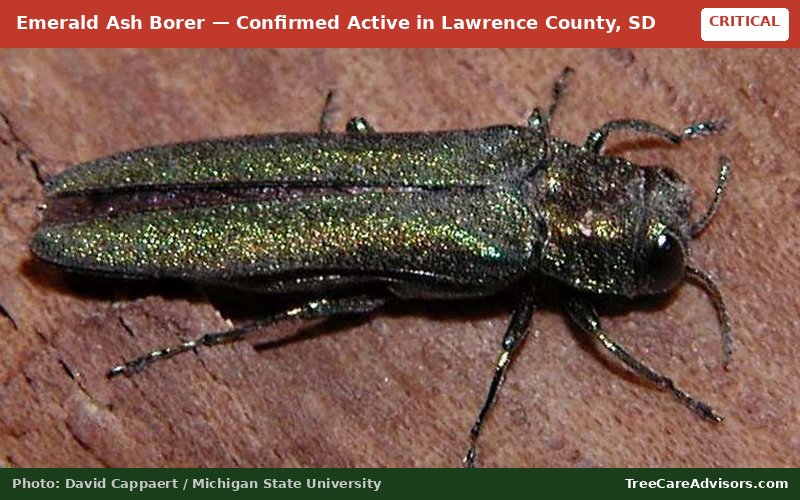
Affects: All ash species - very common urban trees in Front Range CO and Wasatch Front UT
Same devastating beetle as eastern US. Colorado and Utah cities planted heavily in ash - many municipalities have 15-20% ash canopy that will be lost.
Ips Beetle Complex moderate-high

Affects: Spruce, pine - urban and forest settings
Multiple Ips bark beetle species that attack weakened conifers. Unlike mountain pine beetle, Ips can have multiple generations per year and attacks a broader range of species including spruce.
What 2000s-2015-Era Trees Need in 2026
2000s-2015 Homes (10-25 years old trees)
Water-wise landscaping trend, especially in the West. 'Right tree, right place' philosophy gaining traction. More native species in designs.
Common Issues
- **Establishment failures** - container-grown trees sometimes develop circling roots that girdle the trunk years later. Trees planted 10-20 years ago may now be showing girdling root symptoms (trunk flare is buried or absent).
- **Stake dependency** - trees left staked too long (common with builder landscapes) develop weak trunks that can't support their own canopy.
- **Builder-grade landscaping** - mass-planted builder landscapes used whatever was cheap and available, not what was appropriate for the site. Many are now failing.
Recommended Actions
- Check for girdling roots - if the trunk goes straight into the ground with no visible root flare, excavate the base to check
- Remove any remaining stakes and guy wires (should have been removed 1 year after planting)
- First structural pruning to establish dominant central leader and remove co-dominant stems
Frequently Asked Questions
How much does stump grinding & removal cost in Mountain Plains?
How much water do trees need in Mountain Plains's dry climate?
Can freezing temperatures damage my trees in Mountain Plains?
How do I find a good arborist in Mountain Plains?
Get Stump Grinding & Removal Quotes in Mountain Plains
Compare ISA-certified arborists serving Mountain Plains and Lawrence County.
Get Free Quotes