Soil Compaction: The Silent Tree Killer
Why parking on your lawn once can start a decline that kills your tree in 5 years
What Compaction Does Underground
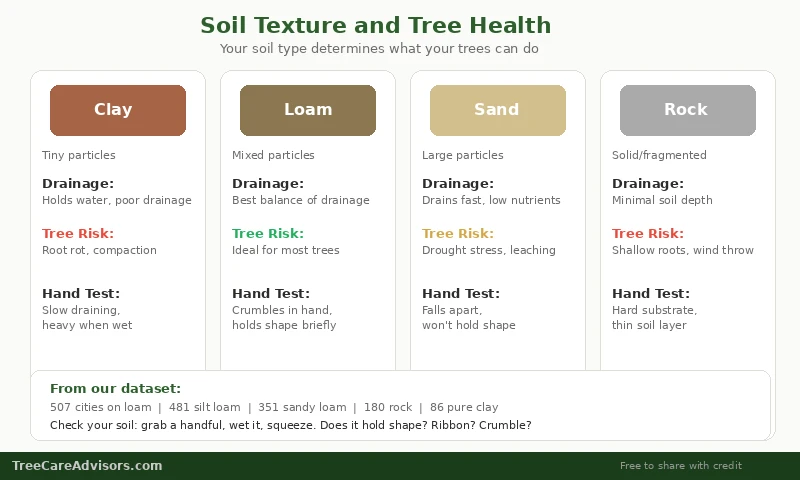
Healthy forest soil is roughly half solid material and half air space. That air is what tree roots breathe. Roots take in oxygen and release carbon dioxide just like you do. Without air space in the soil, roots suffocate.
Compacted soil can drop below 10% air space. At that point, roots stop growing into the compacted zone. Existing feeder roots die. Water can't percolate through, so it runs off or pools on the surface. The tree's access to water and nutrients shrinks even though both are still in the soil. It just can't reach them.
The cruel thing about compaction damage is the delay. A tree can lose 40% of its functional root system and still look fine for a year or two because it's burning through stored energy reserves. By the time the crown starts thinning and branches start dying back at the tips, the damage is 2-3 years old and much harder to reverse.
Common Causes Most People Don't Think About
The obvious one is construction equipment. A single pass with a loaded dump truck compresses soil more than a decade of foot traffic. But homeowners cause compaction in less obvious ways every day.
Parking a car, boat, or RV on the grass over a tree's root zone. Even a few months of a parked vehicle creates enough compaction to kill feeder roots underneath. The tree starts declining 1-2 years after the vehicle is moved, and the homeowner never connects the two events.
Worn foot paths. If you can see a trail across your yard where grass is thin and soil is hard, roots underneath that path are struggling. This is especially common between driveways and back doors, across shortcuts between houses, and around play areas.
Stacking firewood, construction materials, or mulch delivery piles on the root zone. Anything heavy sitting on soil for weeks compacts it.
Even repeated lawn mower traffic follows the same paths each week and creates gradual compaction over years.
Signs Your Tree Is Suffering From Compaction
Leaves smaller than normal. When roots can't absorb enough nutrients, the tree produces undersized leaves. Compare leaf size to the same species in a less trafficked area.
Early fall color. A stressed tree starts shutting down before its neighbors. If one tree on your street turns color two weeks before the others, something is wrong underground.
Branch dieback starting at the tips. The tree can't supply water to the farthest points, so twig tips die first. You'll see clusters of dead twigs at the ends of branches while the interior still looks green.
Slow wound closure. A healthy tree closes a pruning wound at about 1 inch of new growth per year. If old cuts from 3-4 years ago are still open with no visible callus tissue rolling over the edges, root function is compromised.
Standing water after rain. If water pools on the soil surface over the root zone instead of soaking in, the soil is too compacted to absorb it.
What You Can Do About It
Prevention is 10x easier than treatment. Keep vehicles off root zones. Route foot traffic away from trees. If you're storing anything heavy on your property, don't put it under a tree canopy.
The single best preventive measure is a proper mulch ring. 2-4 inches of wood chip mulch over the root zone, extending as far out from the trunk as you're willing to maintain. Mulch prevents compaction from rain impact, moderates soil temperature, retains moisture, feeds beneficial soil organisms, and discourages foot traffic. Keep mulch 6 inches away from the trunk to prevent bark rot.
For existing compaction, vertical mulching helps. An arborist drills 2-inch holes 12-18 inches deep throughout the root zone on a grid pattern and fills them with compost or a porous amendment. This creates channels for air and water to reach roots. It's not a quick fix. Recovery takes 2-5 years depending on the severity.
Radial trenching is more aggressive. Narrow trenches are dug radiating outward from the trunk (avoiding major structural roots) and filled with amended soil. This is typically done during construction to mitigate damage rather than after the fact.
What doesn't work: surface aeration (the kind lawn services do). Those little holes are 3-4 inches deep. Tree roots are 12-18 inches down. Lawn aeration does nothing for trees.
Related Guides
Cabling and Bracing: Saving Trees That Can't Save Themselves Protecting Trees During Construction How to Hire a Tree Care Professional How Trees Actually Fail Mulching: The Best Thing You Can Do for Your Tree (If You Do It Right) How to Plant a Tree (And Not Kill It) How to Make a Proper Pruning Cut How Tree Root Systems Actually Work Structural Pruning: Shaping Young Trees to Prevent Future Problems Tree Emergencies: What to Do First How to Identify a Tree Tree Troubleshooting: What's Wrong With My Tree? What Your Trees Are Actually Worth How to Water Trees (Most People Get It Wrong) Why Topping Destroys TreesFind an Arborist in Your Area
Enter your zip code to see local tree species, pest threats, and certified professionals.
Search by Zip Code