Tree Care in Lance Creek, WY
Why Tree Care Matters in Lance Creek
Professional tree care here isn't just about aesthetics; it's about risk management. Our specific storm patterns, with sustained winds that can suddenly shift, fatigue trees and exploit structural flaws. A Bradford pear is almost guaranteed to split after 15-20 years, and that time has long passed for any planted decades ago. Proactive care from a certified arborist focuses on identifying these inherent weaknesses. We use techniques like sounding the trunk with a mallet to listen for hollow spots, a simple but critical tool to assess internal decay you can't see. This prevents catastrophic failures before they happen.
Your Tree's History
The age of your home directly dictates your tree problems. With homes built around 1938, the landscaping choices from that pre-1940 era are now liabilities. Fast-growing species like silver maple were popular for their quick shade, but they have weak wood and aggressive surface roots that damage foundations and sidewalks. Russian Olive, another common choice from that time, is now an invasive problem. These trees have reached the end of their typical structural lifespan and are declining just as drought stress and pest pressures are increasing, creating a perfect storm for failure.
Lance Creek Climate Profile
Risk Assessment
Growing & Pruning
Tree Services in Lance Creek
Tree Removal
Safe removal of dead, dying, hazardous, or unwanted trees
Tree Trimming & Pruning
Professional pruning for health, safety, and appearance
Stump Grinding & Removal
Complete stump removal after tree cutting
Emergency Tree Service
24/7 response for storm damage, fallen trees, and hazardous situations
Tree Health & Disease Treatment
Diagnosis and treatment of tree pests, diseases, and nutrient deficiencies
Common Trees in Lance Creek
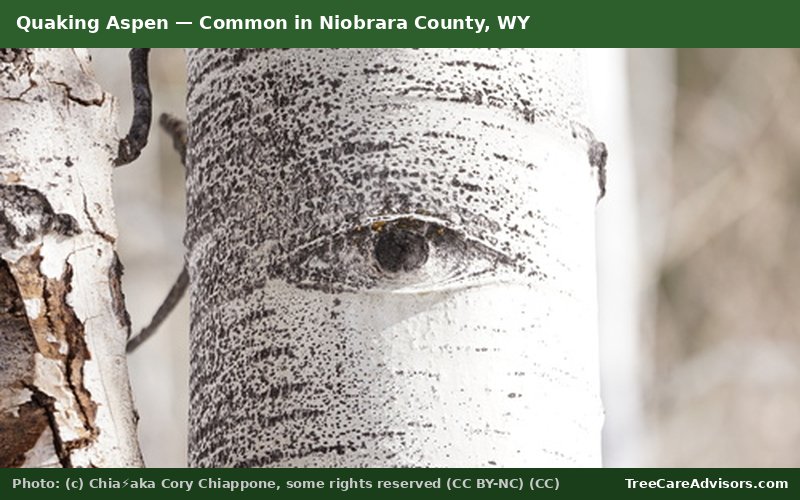
Quaking Aspen
The iconic mountain tree - actually a clonal organism, golden fall color, short-lived individually (40-60 yrs)
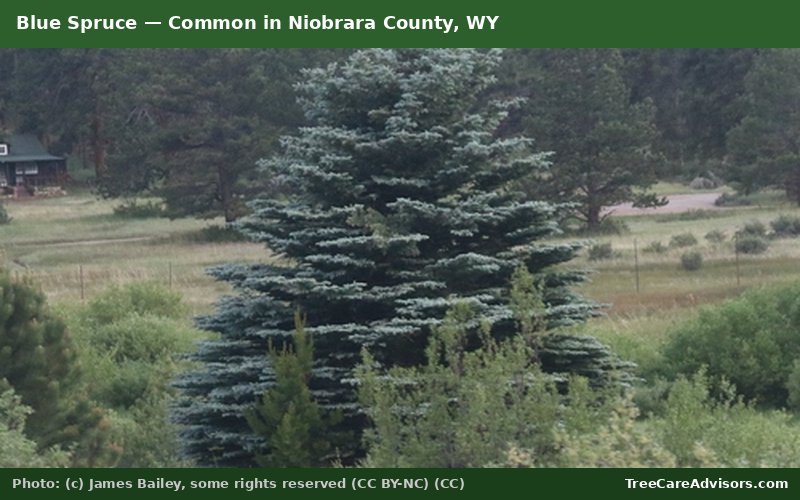
Blue Spruce
Colorado's state tree, stiff blue needles - but needle cast disease is epidemic
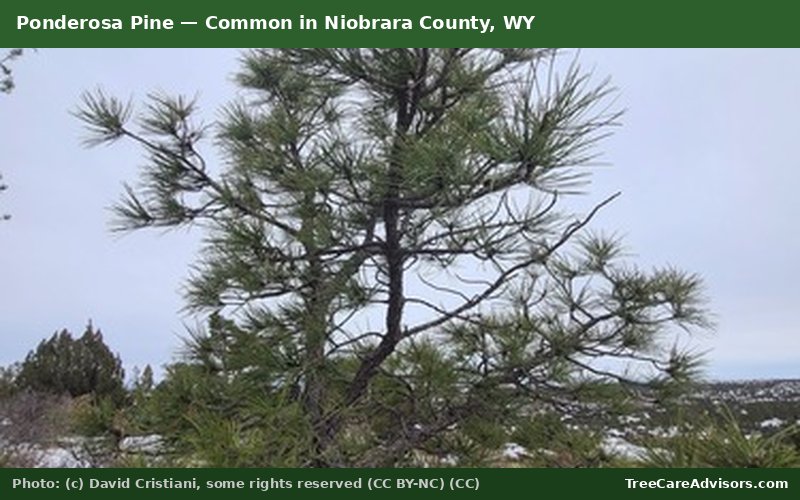
Ponderosa Pine
Tall, open-crowned, butterscotch-scented bark, fire-adapted
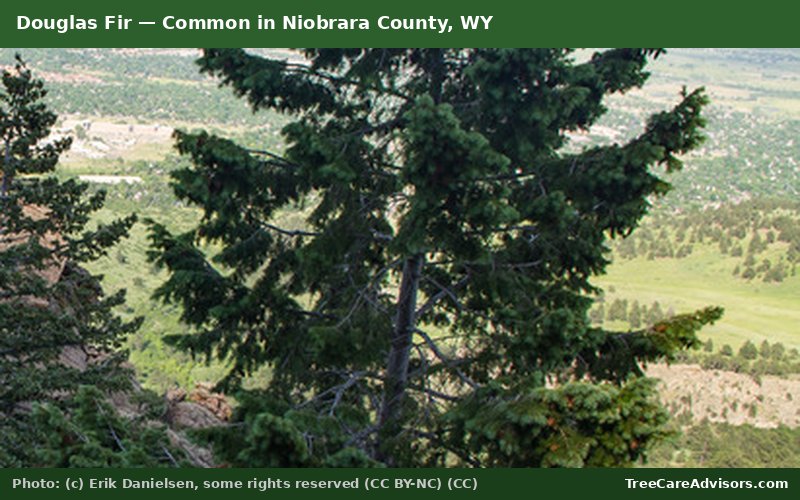
Douglas Fir
Not a true fir - tall, pyramidal, important timber species
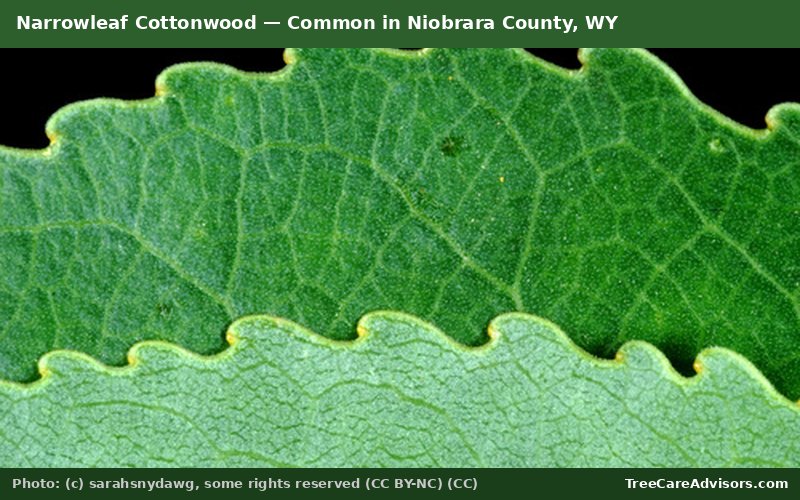
Narrowleaf Cottonwood
Riparian species, fast-growing, brilliant yellow fall color
Active Tree Threats in Niobrara County
Mountain Pine Beetle critical
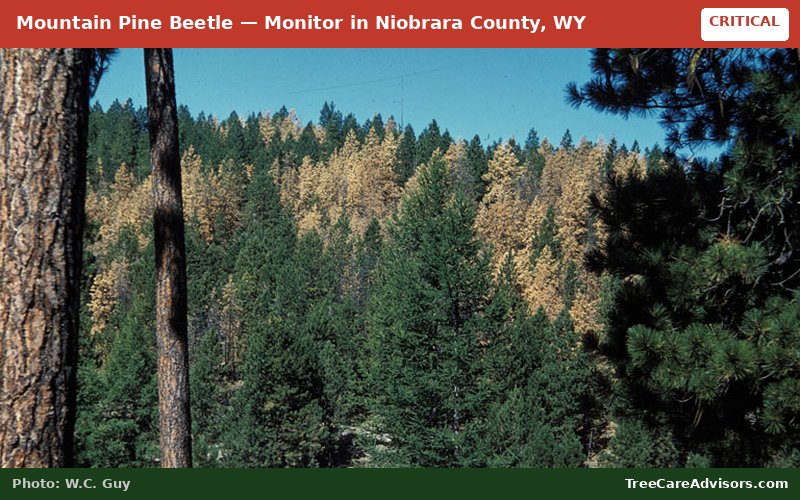
Affects: Lodgepole pine (primary), ponderosa pine, limber pine, whitebark pine
Native bark beetle whose populations have exploded due to drought and warmer winters that no longer kill overwintering larvae. Beetles mass-attack trees, introducing blue-stain fungi that stop water transport. Trees turn red and die within a year.
Emerald Ash Borer critical
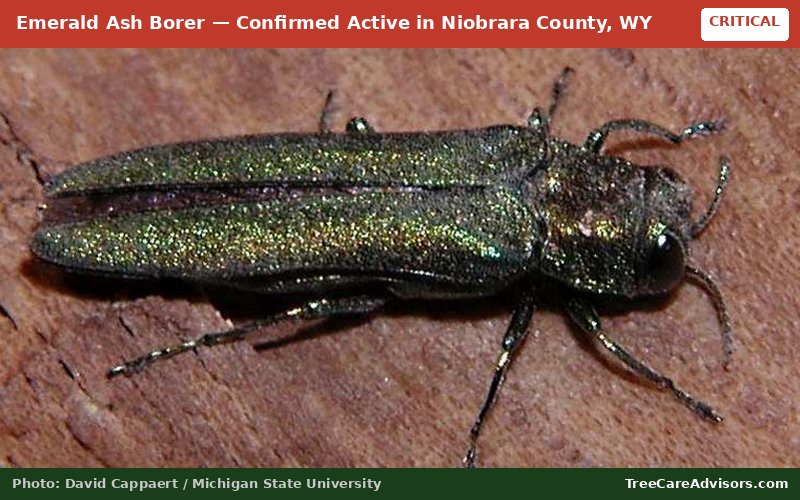
Affects: All ash species - very common urban trees in Front Range CO and Wasatch Front UT
Same devastating beetle as eastern US. Colorado and Utah cities planted heavily in ash - many municipalities have 15-20% ash canopy that will be lost.
Ips Beetle Complex moderate-high
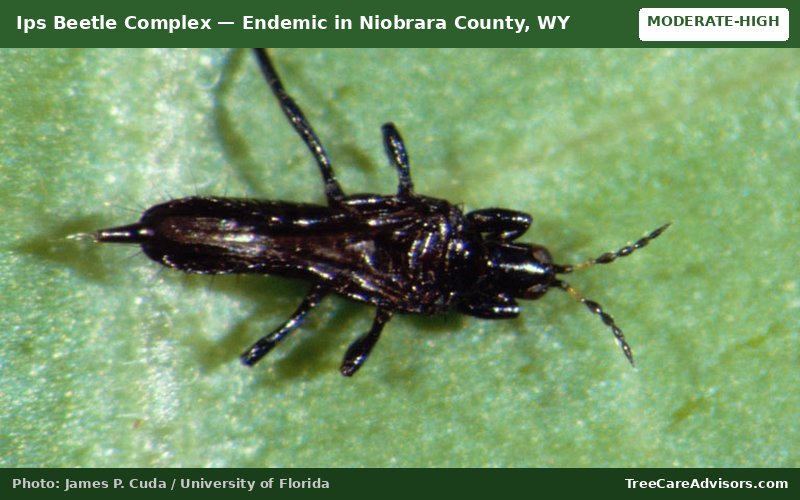
Affects: Spruce, pine - urban and forest settings
Multiple Ips bark beetle species that attack weakened conifers. Unlike mountain pine beetle, Ips can have multiple generations per year and attacks a broader range of species including spruce.
Lance Creek Tree Data
Hiring a Tree Service in Lance Creek
In Niobrara County, you won't find big landscaping companies. You need to look for a certified arborist, specifically one with experience in our Zone 4b cold-dry climate and native pests like Mountain Pine Beetle. Ask for proof of insurance and their specific plan for your trees, which should include evaluating for included bark unions and root plate stability, our most common failure points. A true professional will explain the 'why' behind every recommendation.
Get Tree Care Quotes in Lance Creek
Compare ISA-certified arborists serving Lance Creek and Niobrara County.
Get Free Quotes