Tree Care in Highland Park, TX
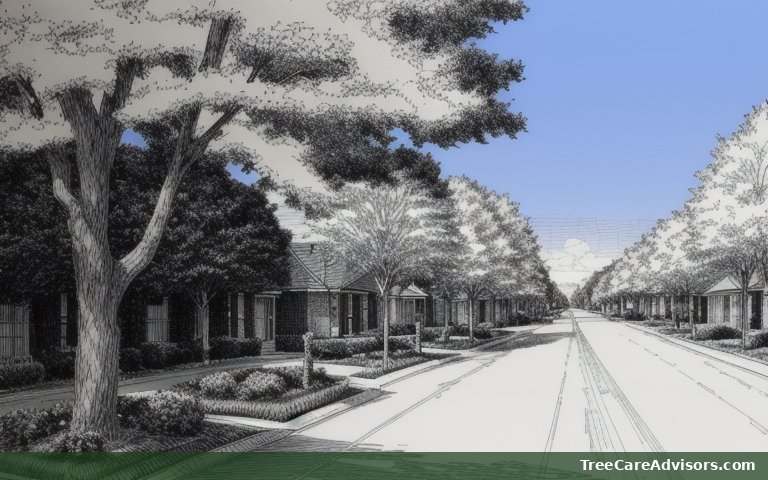
Why Tree Care Matters in Highland Park
Professional tree care here is about risk management and preserving significant property value. A mature Southern Live Oak or Bald Cypress in good condition isn't just beautiful. It's a major asset, valued using a standardized method that considers its species, size, and health. Neglect turns that asset into a liability. Our specific pest threats, like the invasive Formosan termite that attacks live trees or Laurel Wilt disease, require proactive monitoring. Proper pruning and health care prevent the uprooting and branch failures we see after our 34 annual storm events.
Your Tree's History
The era your Highland Park home was built, primarily the 1960s through 1980s, directly explains your tree issues today. Builders and landscapers planted species like Bradford pear, camphor, and Chinese tallow for instant effect. These trees have predictable lifespans and failure modes. We are now in the window where those biological timers are going off. The tree in your front yard isn't failing randomly. It's likely failing exactly as its species tends to do after 40 to 50 years in our climate, which is why a species-specific assessment is crucial.
Highland Park Climate Profile
Risk Assessment
Growing & Pruning
Tree Services in Highland Park
Tree Removal
Safe removal of dead, dying, hazardous, or unwanted trees
Tree Trimming & Pruning
Professional pruning for health, safety, and appearance
Stump Grinding & Removal
Complete stump removal after tree cutting
Emergency Tree Service
24/7 response for storm damage, fallen trees, and hazardous situations
Tree Health & Disease Treatment
Diagnosis and treatment of tree pests, diseases, and nutrient deficiencies
Common Trees in Highland Park
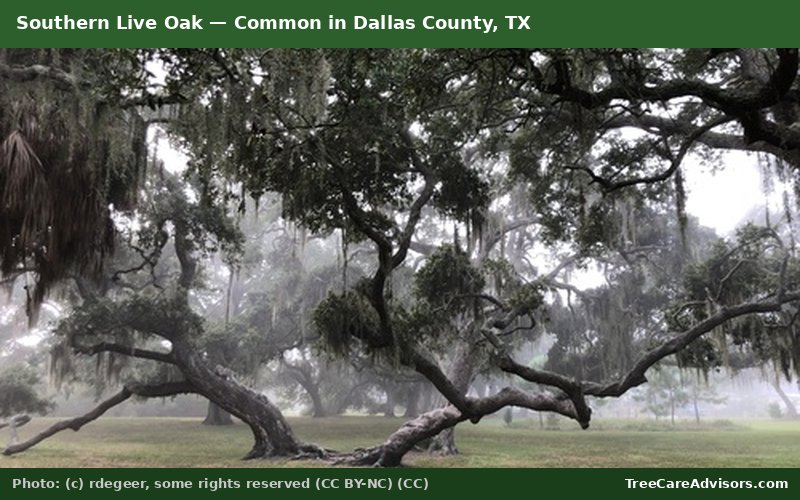
Southern Live Oak
The iconic spreading oak of the South - can live 500+ years, massive canopy
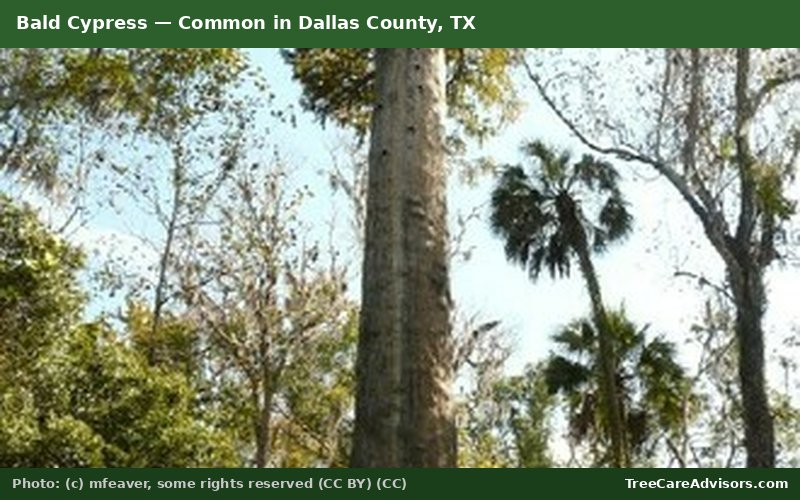
Bald Cypress
Deciduous conifer, swamp-adapted, distinctive knees, excellent longevity
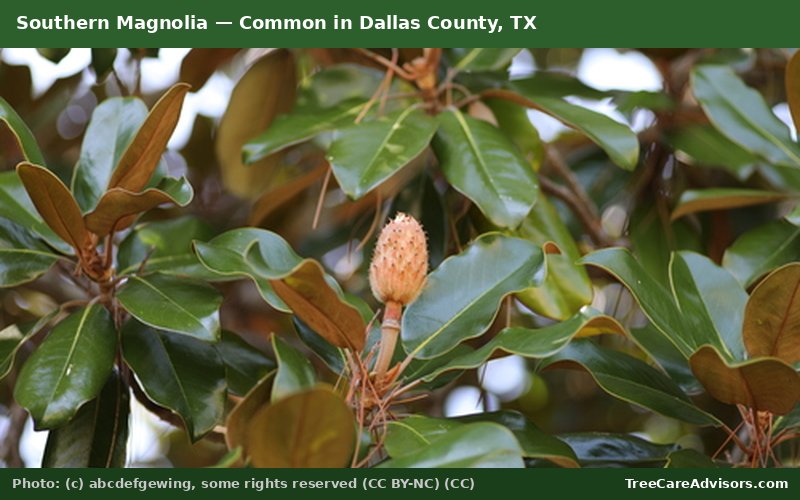
Southern Magnolia
Evergreen, large fragrant white flowers, heavy leaf drop
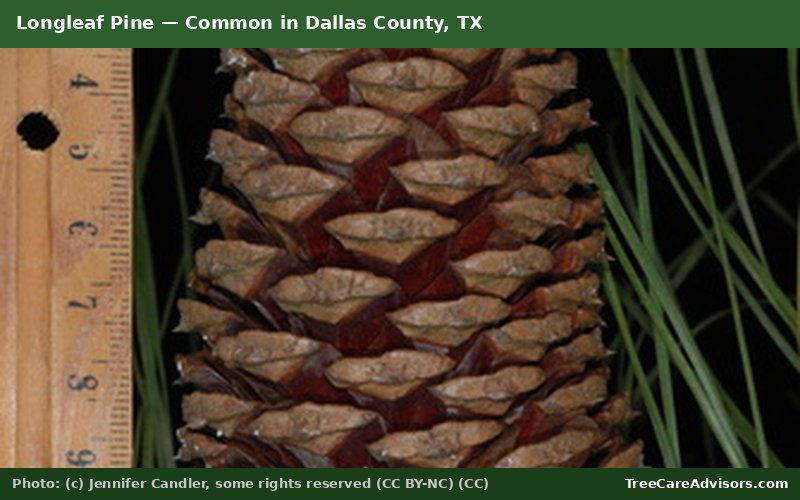
Longleaf Pine
Historic timber species, fire-adapted, slow-starting growth
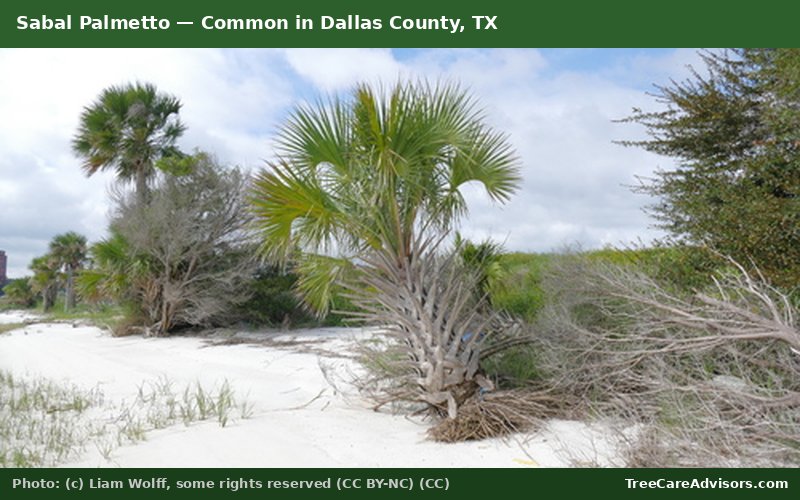
Sabal Palmetto
State tree of SC and FL - hurricane-resistant due to flexible trunk
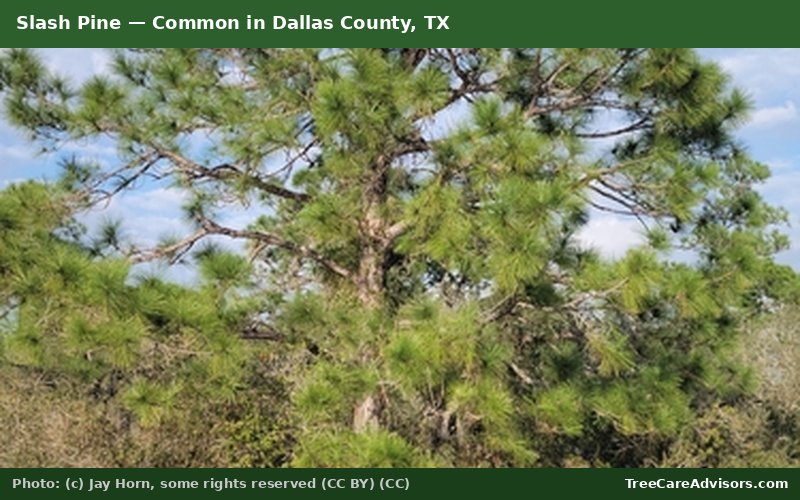
Slash Pine
Fast-growing coastal pine, important for windbreaks
Active Tree Threats in Dallas County
Formosan Subterranean Termites critical
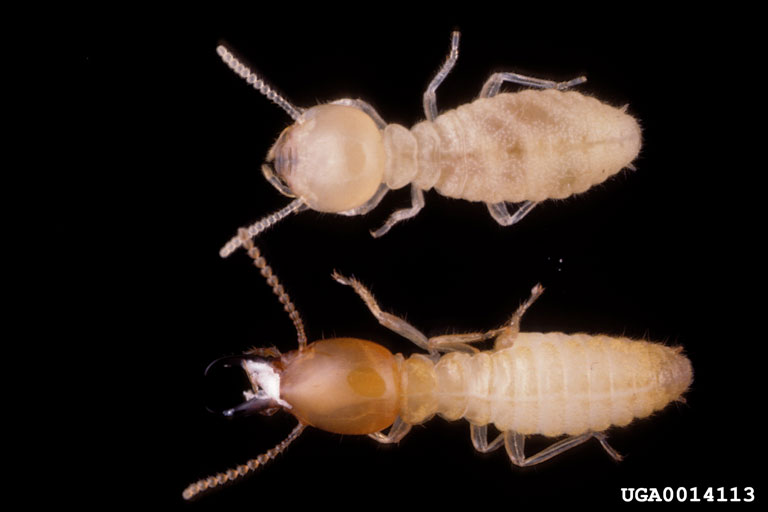
Affects: Both dead wood and living trees - will hollow out live oaks and other species from the inside
The most destructive termite species in the US. Colonies can contain millions of individuals. Unlike native termites, Formosans build above-ground carton nests IN living trees, consuming heartwood while the tree appears healthy from outside.
Laurel Wilt critical
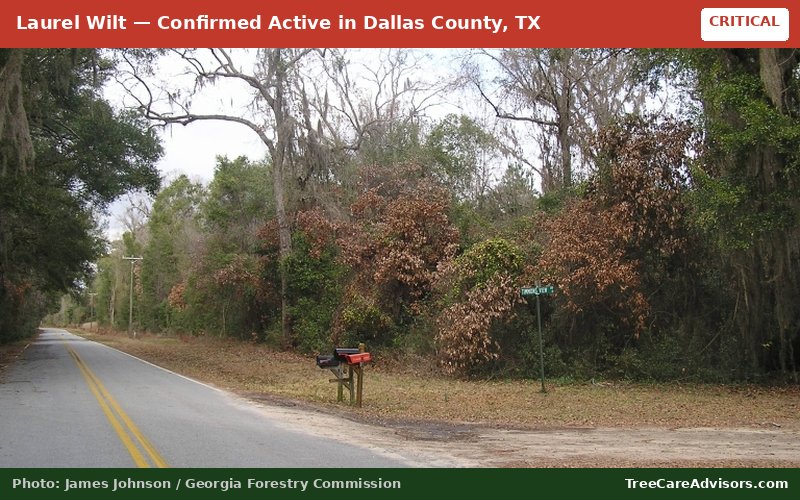
Affects: Redbay, sassafras, swamp bay, avocado, pondspice
Fungal disease spread by the redbay ambrosia beetle (invasive from Asia). The beetle introduces the fungus when it bores into the tree to farm. Has killed over 300 million redbays and threatens the avocado industry.
Southern Pine Beetle high
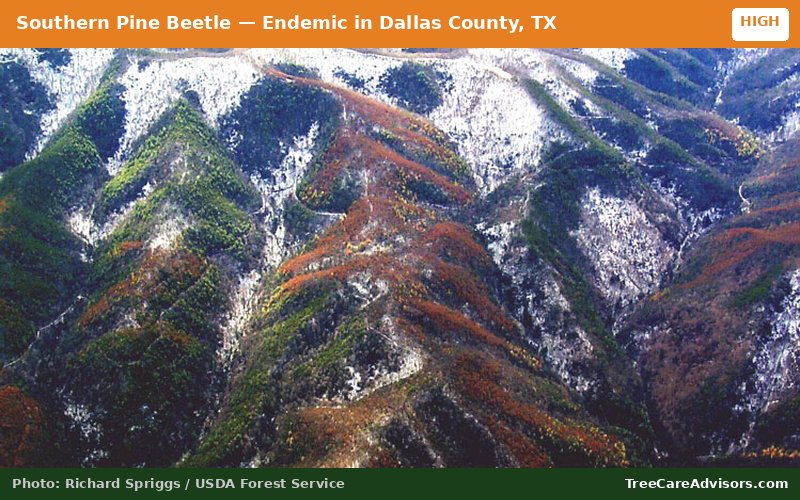
Affects: Loblolly, shortleaf, Virginia, pitch, and other southern pines
Small bark beetle (size of a grain of rice) that mass-attacks stressed pines. Trees die rapidly when beetle populations overwhelm defenses. Outbreaks can kill thousands of acres of pine.
Highland Park Tree Data
Hiring a Tree Service in Highland Park
With nearly 500 landscaping companies in Dallas County, you must verify an arborist's credentials. Look for an ISA Certified Arborist who is insured and can provide local references. Ask specifically about their experience with our common problems: structural pruning on mature oaks, safe removal of failing Bradford pears, and soil management for our heavy clay. A true professional will diagnose based on species and local conditions, not just offer a generic trimming service.
Nearby Areas We Serve
Get Tree Care Quotes in Highland Park
Compare ISA-certified arborists serving Highland Park and Dallas County.
Get Free Quotes