Tree Care in Rivergrove, OR
Why Tree Care Matters in Rivergrove
Professional tree care in Rivergrove isn't just about aesthetics. It's about risk management and protecting your investment. We use the Council of Tree and Landscape Appraisers method to quantify a tree's value, considering its species, size, and condition. A healthy, mature native Douglas Fir or Bigleaf Maple adds significant monetary value to your property. Conversely, a neglected silver maple with decayed limbs over your roof is a quantifiable liability. Our mixed-marine climate with 42 inches of annual rain promotes fungal issues like Laminated Root Rot, which a trained arborist can spot long before you see canopy dieback. Proactive care preserves value and prevents costly emergency removals.
Your Tree's History
The 1960s to 1980s development era created a specific set of tree problems we see on every Rivergrove street. The landscaping philosophy favored fast, cheap, and showy. This led to widespread planting of structurally weak or invasive species that are now failing. We're dealing with the consequences of those choices today. Alongside the Bradford pears and silver maples, you'll find English Holly and Black Locust, which spread aggressively and crowd out native plants. The eight-month growing season allowed these trees to get big quickly, but now their inherent weaknesses are catching up with them just as they reach full maturity.
Rivergrove Climate Profile
Risk Assessment
Growing & Pruning
Typical Tree Care Costs in Rivergrove
Tree Removal
When a tree should come down, and what removal runs here
Trimming & Pruning
Which pruning your trees need and when to do it
$234-$935 per tree
Stump Grinding
Grinding vs chemical removal
priced by stump diameter
Storm Damage
What to do first, and what emergency work costs
emergency removal, 50-100% over normal rates
Tree Health
Warning signs and local threats
annual care plan: pruning, health check, pest monitoring
These are estimates, not quotes: national price ranges adjusted by Rivergrove's regional cost multiplier (1.56x), which reflects local home values (median $801,000) and labor costs. Tree size, species, access and cleanup move the real price more than location does.
Common Trees in Rivergrove
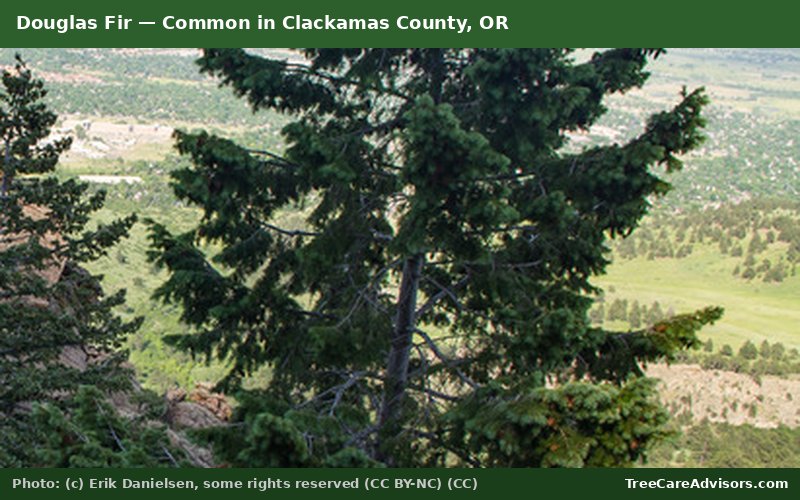
Douglas Fir
The defining tree of the PNW - can reach 250ft, dominant timber species
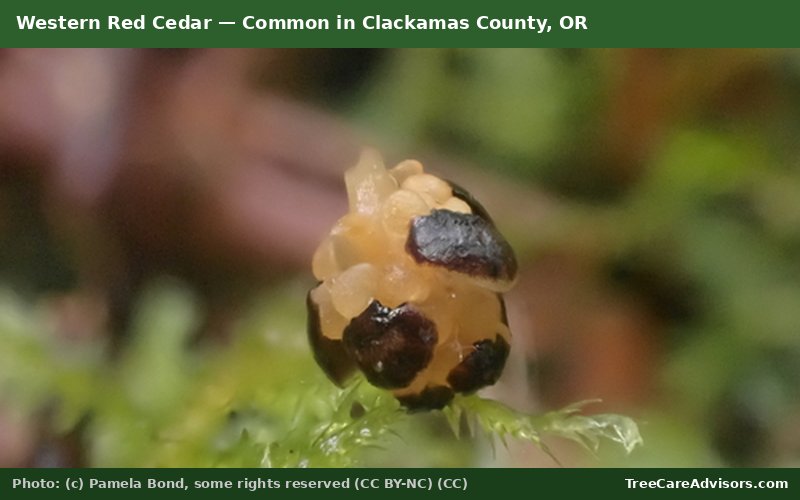
Western Red Cedar
Long-lived evergreen, naturally rot-resistant wood, cultural significance
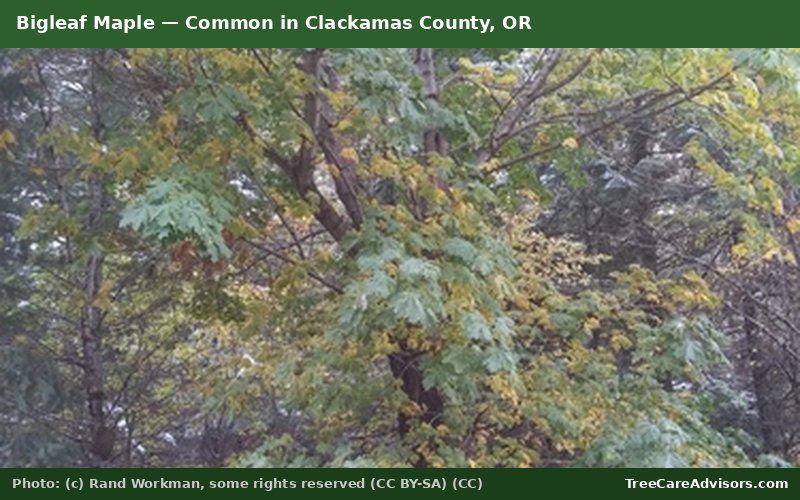
Bigleaf Maple
Massive spreading maple, moss-draped in wet climates, golden fall color
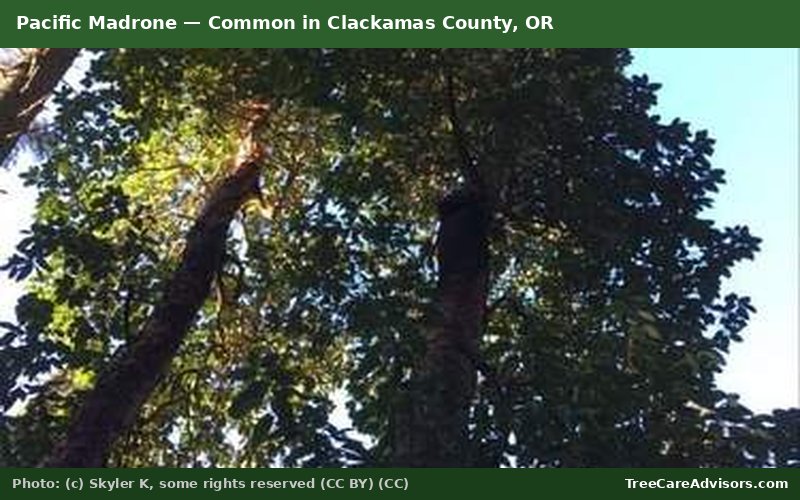
Pacific Madrone
Beautiful peeling red bark, evergreen broadleaf, difficult to transplant
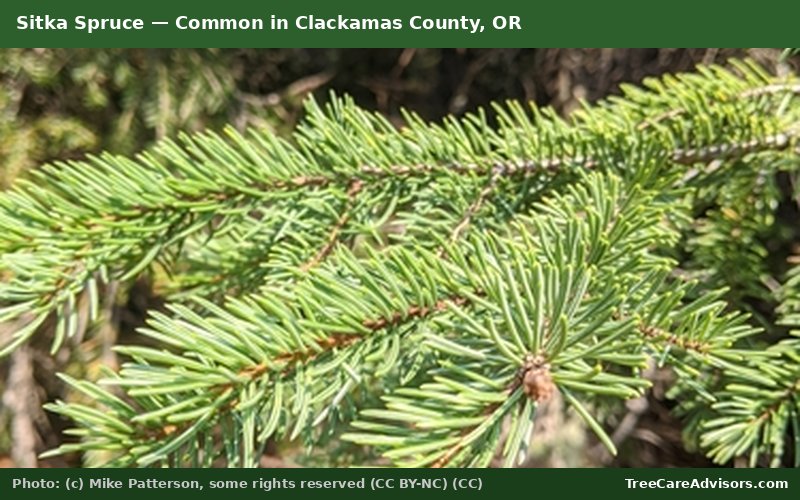
Sitka Spruce
Coastal giant, salt-tolerant, important wildlife habitat
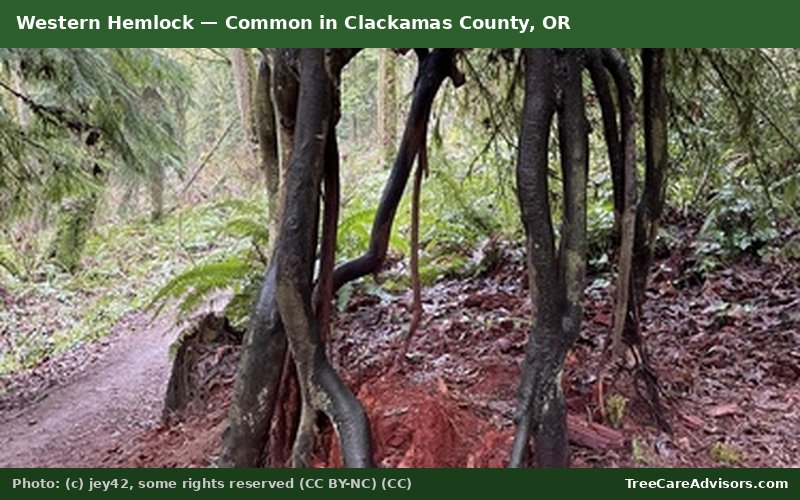
Western Hemlock
State tree of WA - graceful drooping tips, shade-tolerant
Problem Species to Watch
English Ivy (on trees)
Not a tree but the #1 tree killer in PNW - smothers and topples trees
Black Locust
Invasive suckering, thorny, displaces native understory
English Holly
Invasive, spread by birds, forms dense thickets
Active Tree Threats in Clackamas County
Laminated Root Rot high
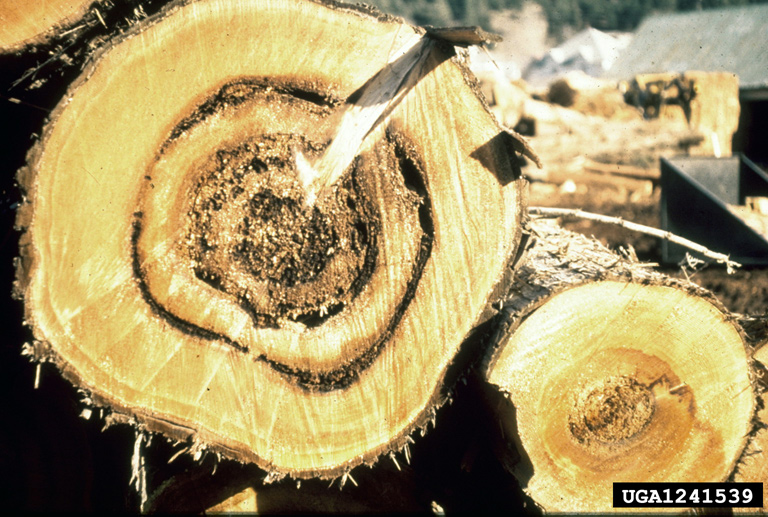
Affects: Douglas fir (primary), grand fir, mountain hemlock - the dominant conifers of the PNW
Soil fungus (Phellinus sulphurascens) that spreads through root contact. Infected trees show reduced growth, thinning crown, and eventually blow over in wind because roots are rotted. Spreads slowly but persistently through stands.
Swiss Needle Cast moderate-high
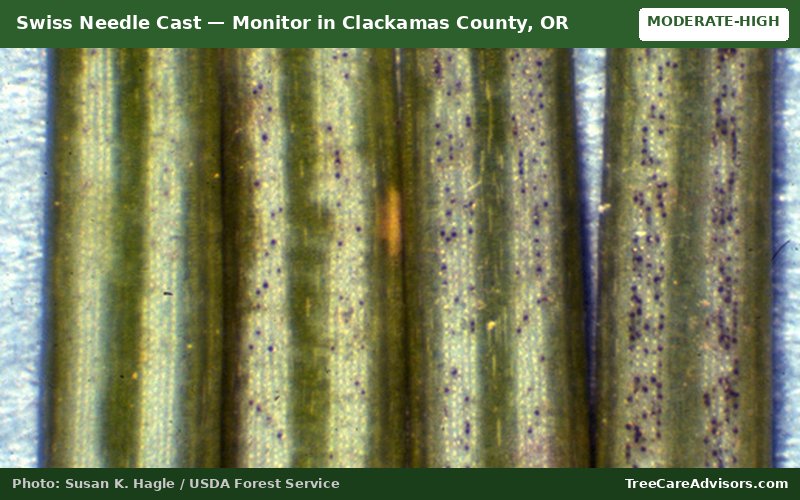
Affects: Douglas fir - the most common tree in PNW landscapes
Fungal disease that causes Douglas fir to shed needles prematurely. Trees look thin and yellow. Fog and moisture promote the fungus. Coastal areas worst affected.
Bronze Birch Borer moderate
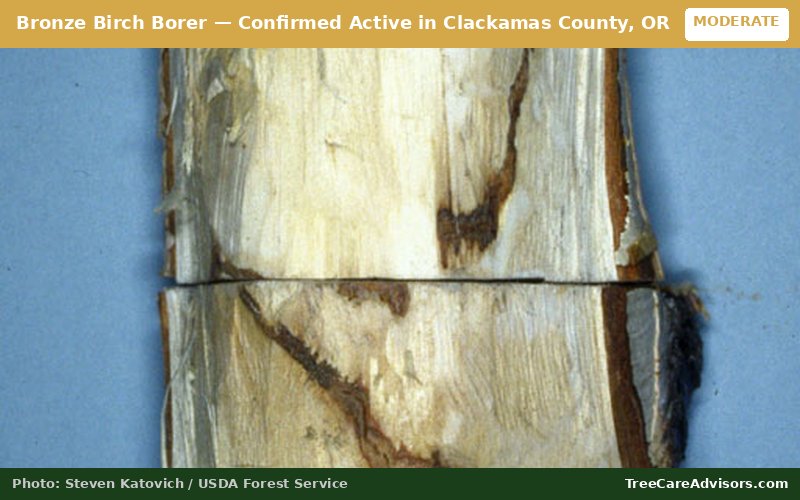
Affects: European white birch (highly susceptible), paper birch, other birch species
Native beetle that attacks stressed birch trees. Larvae bore under bark, killing branches from top down. European white birch (the popular ornamental) is far more susceptible than native species.
When Should You Remove a Tree in Rivergrove?
Not every problem tree needs to come down. But some situations in Mixed-Marine climates make removal the safest option:
- Dead or dying trees - a dead tree becomes a brittle hazard within 1-2 years
- Trees with more than 50% crown dieback - recovery is unlikely and the remaining structure is compromised
- Severe lean that developed suddenly - indicates root failure, not natural growth. Urgent removal needed.
- Mushrooms or conks at the base - visible fruiting bodies mean extensive internal decay. The tree may look fine but is structurally hollow.
Many communities in Oregon regulate removal of large trees. Check with Clackamas County planning before taking down anything big.
Pruning Trees in Rivergrove
In a Mixed-Marine climate (Zone 9a), timing matters. Pruning at the wrong time can stress trees, invite disease, or kill them outright. The pruning calendar in the climate profile above shows the best and worst months here.
Pruning season: October through March during dormancy. Conifers: year-round for deadwood removal
What Type of Pruning Do Your Trees Need?
- Crown cleaning - removing dead, diseased, and crossing branches. The most common and important job. Most trees benefit from this every 2-3 years.
- Crown thinning - selectively removing interior branches to reduce wind resistance and improve light penetration. Important for dense canopy species like Douglas Fir.
- Crown raising - removing lower branches for clearance over sidewalks, driveways, and structures. Especially needed for ~57-year-old trees that have grown into walkways.
- Crown reduction - reducing overall canopy size. Only appropriate when trees have outgrown their space. Proper reduction cuts back to lateral branches.
What NOT to Do
Never "top" a tree (cutting all branches back to stubs). Topping destroys the tree's structure, causes rapid weak regrowth, and creates a more dangerous tree than you started with. Any company that recommends topping isn't worth hiring.
Should You Remove the Stump?
After a tree comes down, the stump isn't just ugly - it can cause problems:
- Root sprouting - many species (especially Douglas Fir) send up aggressive shoots from the stump. You'll be cutting sprouts for years.
- Pest habitat - decaying stumps attract termites, carpenter ants, and beetles.
- Fungal spread - root rot fungi like Armillaria can spread from a dead stump to living trees through root contact underground.
- Tripping hazard and lawn care headache - can't mow over it, grass doesn't grow around it, and it takes 10-15 years to decompose naturally.
Grinding vs Chemical Removal
Grinding is the standard method - a machine chews the stump down 6-12 inches below grade. Takes 30-90 minutes for a typical stump. You're left with a pile of wood chips that makes decent mulch. This is what most arborists recommend.
Chemical removal (potassium nitrate) accelerates decomposition over 4-6 weeks, then you can break up the softened wood. Cheaper but slower, and doesn't address the root system.
What to Do After Storm Damage
- Stay away - keep everyone out of the fall zone. If a tree is leaning on a power line, call the utility company first, not a tree service.
- Document the damage - take photos from a safe distance before anything is touched. Your insurance company will want these.
- Don't DIY - storm-damaged trees are under tension. Cutting the wrong branch releases stored energy and can kill you. This is not a chainsaw-on-the-weekend job.
- Call a certified arborist - not just "a guy with a truck." Storm chasers flood into areas after major storms, do bad work, and disappear. ISA certification matters more after a storm than any other time.
Emergency pricing: expect to pay 50-100% more for emergency response than for scheduled work. In Rivergrove, that puts emergency tree removal at roughly $2,056 to $11,998. After major storms, demand spikes and prices go higher. If you can safely wait 48-72 hours, the premium usually drops.
Signs Your Tree Needs Help
In USDA Zone 9a (Mixed-Marine), these are the warning signs worth acting on, alongside the local threats listed above:
- Leaf discoloration out of season - yellowing, browning, or spotted leaves during the growing season indicate disease, nutrient deficiency, or root stress
- Premature leaf drop - healthy trees hold leaves until fall. Early drop means something is wrong underground or in the vascular system
- Thinning canopy - if you can see more sky through the crown than you used to, the tree is declining
- Bark abnormalities - oozing sap, cankers (sunken dead patches), or bark falling off in sheets
- Mushrooms at the base - fruiting bodies indicate extensive internal decay. Get a professional assessment immediately.
Managing Rivergrove's Aging Tree Canopy
~57-year-old trees are in their prime but approaching the age where structural pruning and pest monitoring become essential.
What 1960s-1980s-Era Trees Need in 2026
1960s-1980s Homes (45-65 years old trees)
Larger lot developments, more landscape design consciousness. Introduction of many Asian ornamentals.
Common Issues
- **Green Ash death** - if your home was built in the 1970s and has a large shade tree in front, there's a good chance it's a green ash. These are now being killed by Emerald Ash Borer across the eastern US. Dead ash become brittle hazards within 1-2 years.
- **Dogwood decline** - dogwood anthracnose (Discula destructiva) killed millions of native flowering dogwoods starting in the 1980s. Surviving trees are often weakened.
- **Cherry tree aging** - flowering cherries planted in this era are at or past their 25-40 year lifespan. Bacterial canker and boring insects are common in aging specimens.
Recommended Actions
- Immediate assessment of any Green Ash - decide between treatment (expensive, ongoing) and removal (one-time, plan replacement)
- Replace dead or declining Dogwoods with disease-resistant Kousa Dogwood or native alternatives
- Evaluate Leyland Cypress hedges - thin or replace with smaller alternatives if they're overwhelming the property
Rivergrove Tree Data
Hiring a Tree Service in Rivergrove
With 231 landscaping companies in Clackamas County, choosing the right one is critical. For tree work, always hire a certified arborist. Ask for proof of insurance and their specific plan for your trees. A reputable professional will explain why a procedure is needed, whether it's crown cleaning for a Western Redcedar or a root collar excavation for a maple. They should be familiar with local threats like Swiss Needle Cast on Douglas Firs. Get everything in writing, including cleanup details, and never agree to tree topping, which is harmful and unprofessional.
Frequently Asked Questions
How much does tree removal cost in Rivergrove?
How much does tree trimming & pruning cost in Rivergrove?
How much does stump grinding & removal cost in Rivergrove?
Do I need a permit to remove a tree in Rivergrove?
How do I know if my 57-year-old tree needs to be removed?
How do I find a good arborist in Rivergrove?
When is the best time to prune trees in Rivergrove?
How often should trees be trimmed in Rivergrove?
What is Laminated Root Rot and should I be worried in Rivergrove?
Nearby Areas We Serve
Get Tree Care Quotes in Rivergrove
Compare ISA-certified arborists serving Rivergrove and Clackamas County.
Get Free Quotes