Tree Care in Clayton, MO
Why Tree Care Matters in Clayton
Professional tree care here is about managing inherited risk. With our mixed-humid climate and 43 inches of annual rain, soils get saturated. In a storm, that leads to uprooting, especially for shallow-rooted species. Wind from one direction followed by a sudden shift fatigues trees, and you often can't see the internal decay that makes them fail. A certified arborist uses tools like sounding with a mallet to check for hollow spots a homeowner would miss. It's preventative medicine for your property's largest, most valuable assets.
Your Tree's History
The timeline explains a lot. Most Clayton homes were built in the 1940s through 1960s, meaning the trees are now 60 to 80 years old. That's the full lifespan for many of the problem species chosen by builders, like silver maple, Siberian elm, and green ash. They're all entering a period of predictable decline. The issues you see today - cracking trunks, heavy deadwood, heaving sidewalks - aren't random. They are the direct result of species selection made decades ago, based on growth speed, not longevity or safety.
Clayton Climate Profile
Risk Assessment
Growing & Pruning
Tree Services in Clayton
Tree Removal
Safe removal of dead, dying, hazardous, or unwanted trees
Tree Trimming & Pruning
Professional pruning for health, safety, and appearance
Stump Grinding & Removal
Complete stump removal after tree cutting
Emergency Tree Service
24/7 response for storm damage, fallen trees, and hazardous situations
Tree Health & Disease Treatment
Diagnosis and treatment of tree pests, diseases, and nutrient deficiencies
Common Trees in Clayton
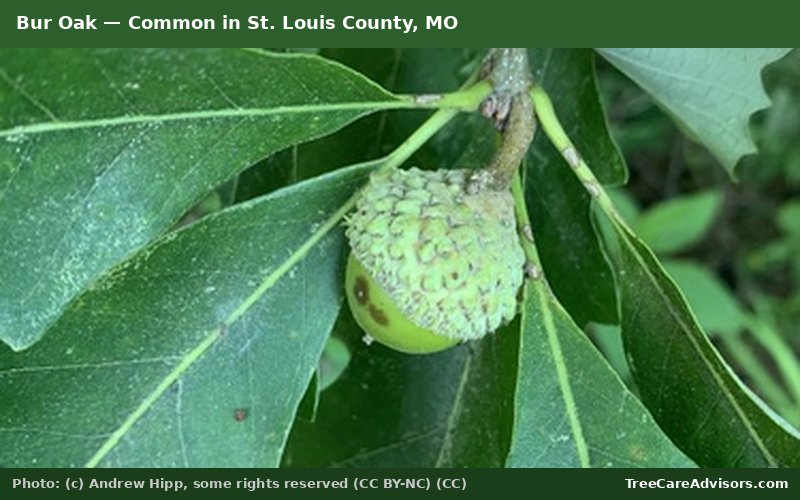
Bur Oak
Toughest native oak - drought, cold, and wind tolerant. Massive specimens
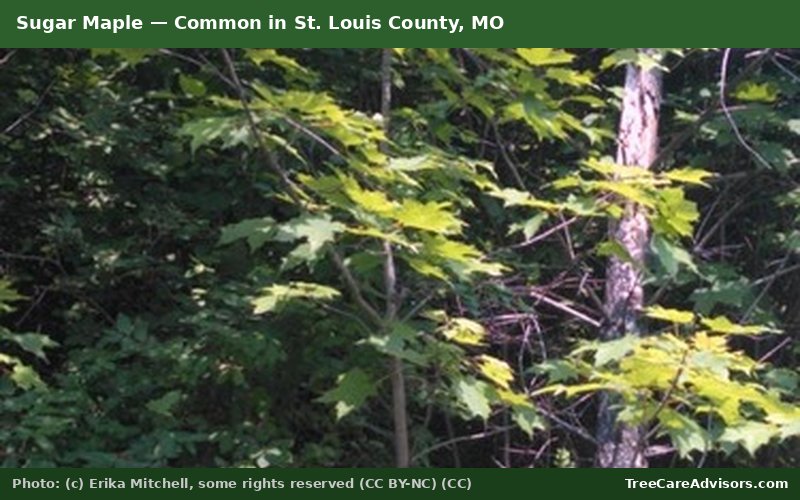
Sugar Maple
Fall color champion, syrup production, but salt-sensitive along roads
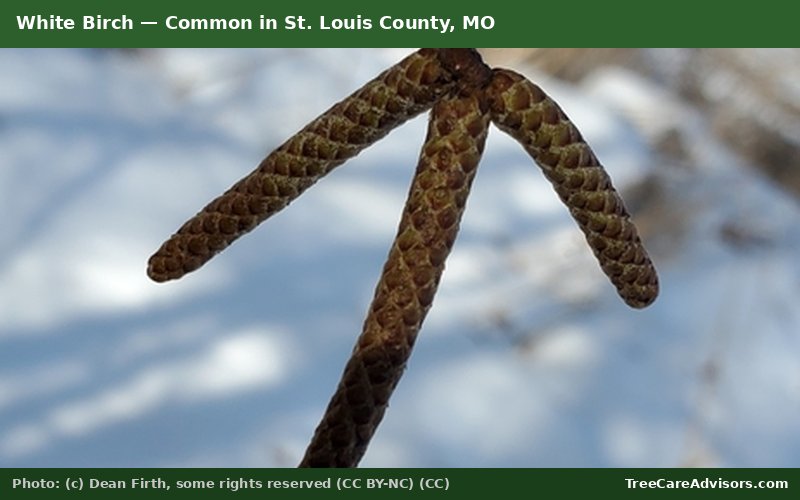
White Birch (Paper Birch)
Iconic white bark, short-lived (40-50 years), bronze birch borer vulnerable
Eastern White Pine
Tall, fast-growing, soft needles - blister rust susceptible
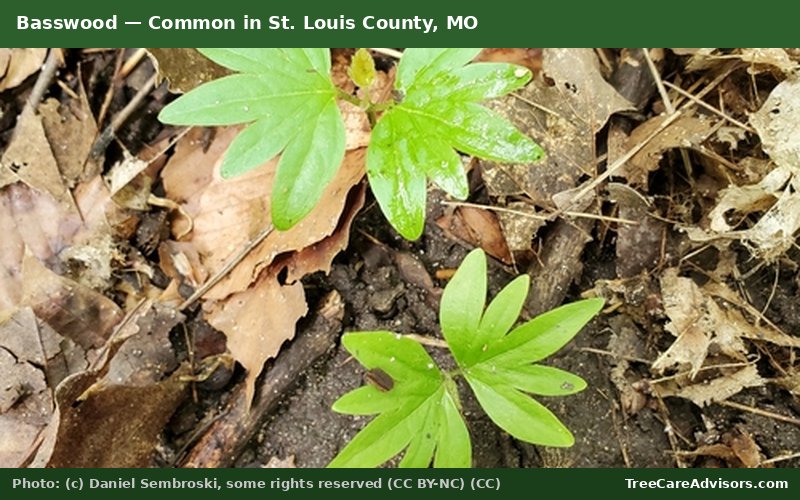
Basswood (American Linden)
Excellent shade, fragrant flowers, attracts pollinators
Active Tree Threats in St. Louis County
Formosan Subterranean Termites critical
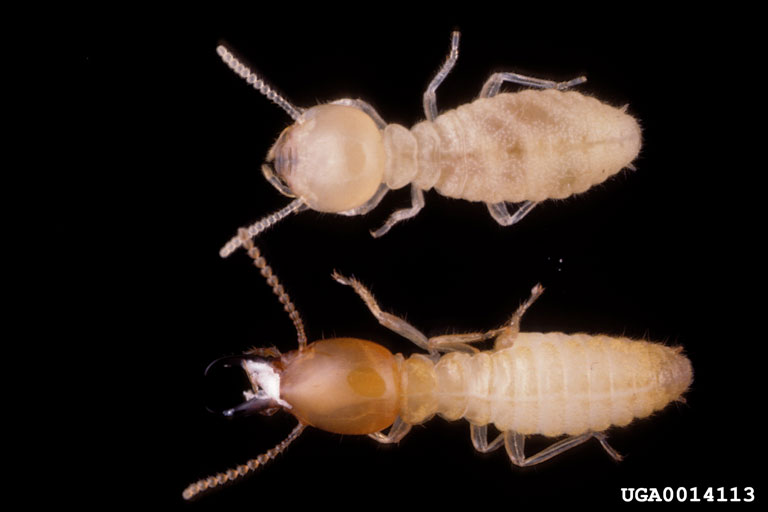
Affects: Both dead wood and living trees - will hollow out live oaks and other species from the inside
The most destructive termite species in the US. Colonies can contain millions of individuals. Unlike native termites, Formosans build above-ground carton nests IN living trees, consuming heartwood while the tree appears healthy from outside.
Laurel Wilt critical
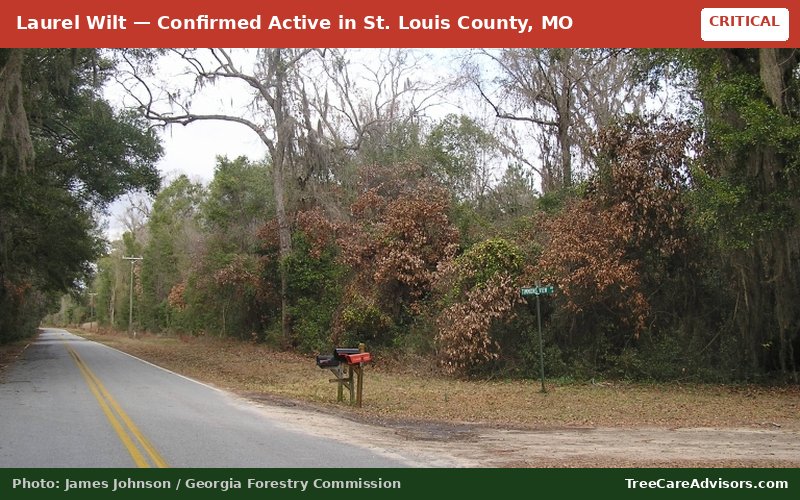
Affects: Redbay, sassafras, swamp bay, avocado, pondspice
Fungal disease spread by the redbay ambrosia beetle (invasive from Asia). The beetle introduces the fungus when it bores into the tree to farm. Has killed over 300 million redbays and threatens the avocado industry.
Southern Pine Beetle high
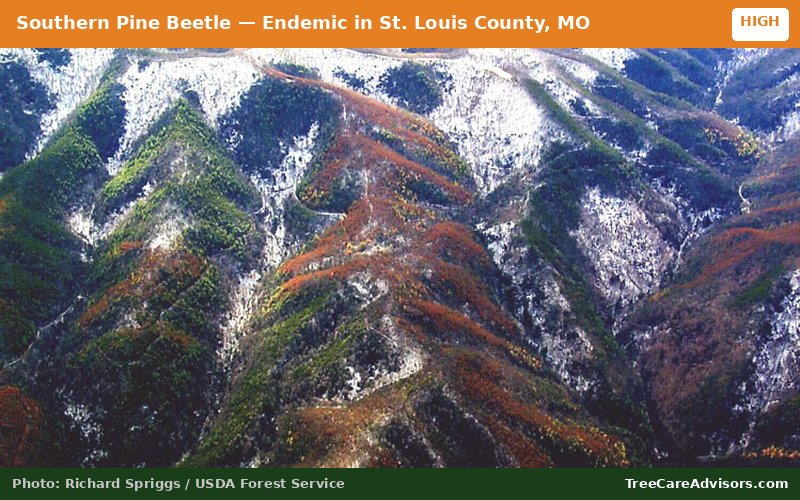
Affects: Loblolly, shortleaf, Virginia, pitch, and other southern pines
Small bark beetle (size of a grain of rice) that mass-attacks stressed pines. Trees die rapidly when beetle populations overwhelm defenses. Outbreaks can kill thousands of acres of pine.
Clayton Tree Data
Hiring a Tree Service in Clayton
With 359 landscaping companies in St. Louis County, verification is key. For major pruning or removal, always hire an ISA Certified Arborist. Ask for proof of insurance and specifically for their assessment process on mature trees. A true professional will explain how they evaluate hidden decay and root plate stability, not just quote a price. This protects you from liability and ensures the job addresses the real risks, not just the visible symptoms.
Nearby Areas We Serve
Get Tree Care Quotes in Clayton
Compare ISA-certified arborists serving Clayton and St. Louis County.
Get Free Quotes