Tree Care in Rockford Bay, ID
Why Tree Care Matters in Rockford Bay
Professional tree care here is about risk management and preservation. Our moderate drought stress and nearly one significant storm event per year can push a compromised tree to failure. The Mountain Pine Beetle and Ips Beetle complex are active threats in Kootenai County, and Emerald Ash Borer is a looming danger for any Green Ash on your land. A certified arborist doesn't just trim; we perform health assessments to spot early signs of these pests or structural weaknesses. Proactive care protects your home from storm damage and prevents the complete loss of a tree's value, which can be substantial for a specimen approaching its prime.
Your Tree's History
The 1990s construction boom here often meant quick, dense plantings without considering a tree's mature size. It's common to see Siberian Elms or Russian Olives, which were popular then but are now considered problem species, planted too close to foundations and power lines. These trees are now large enough to cause significant structural conflict or harbor pests. Furthermore, landscape choices from that era didn't always account for our Zone 6b winters and dry summers, leaving some non-native trees stressed and vulnerable. An arborist can identify which trees from that planting period need intervention, removal, or replacement with a more suitable native species.
Rockford Bay Climate Profile
Risk Assessment
Growing & Pruning
Typical Tree Care Costs in Rockford Bay
Tree Removal
When a tree should come down, and what removal runs here
Trimming & Pruning
Which pruning your trees need and when to do it
$244-$974 per tree
Stump Grinding
Grinding vs chemical removal
priced by stump diameter
Storm Damage
What to do first, and what emergency work costs
emergency removal, 50-100% over normal rates
Tree Health
Warning signs and local threats
annual care plan: pruning, health check, pest monitoring
These are estimates, not quotes: national price ranges adjusted by Rockford Bay's regional cost multiplier (1.62x), which reflects local home values (median $862,100) and labor costs. Tree size, species, access and cleanup move the real price more than location does.
Common Trees in Rockford Bay
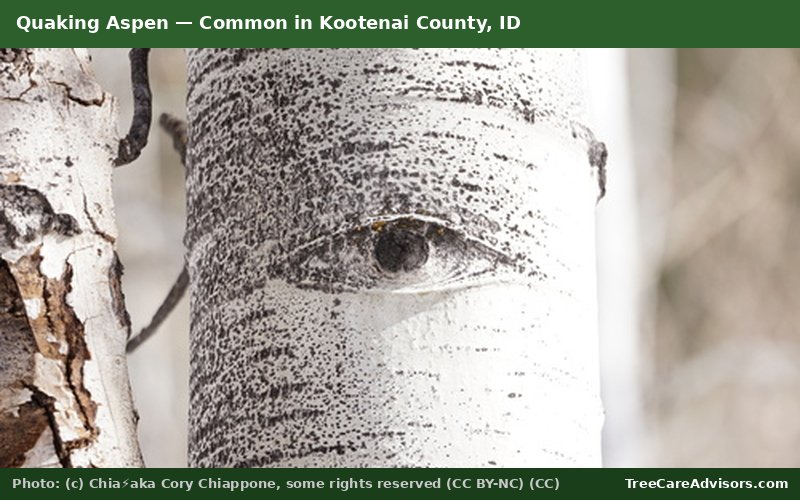
Quaking Aspen
The iconic mountain tree - actually a clonal organism, golden fall color, short-lived individually (40-60 yrs)
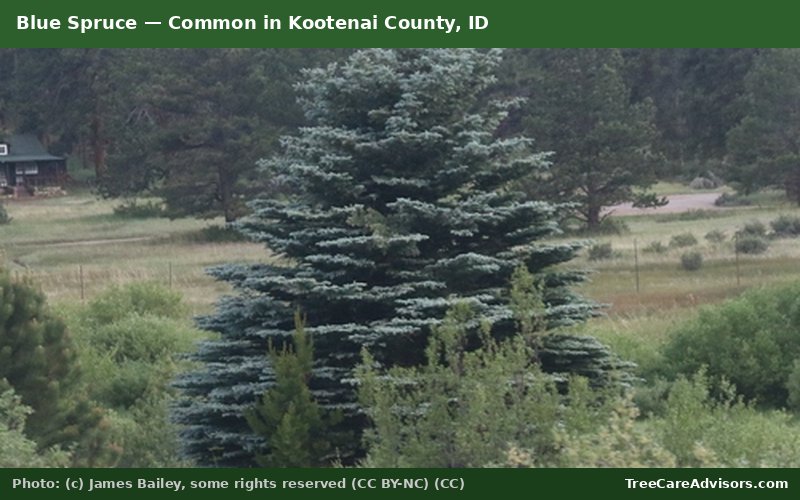
Blue Spruce
Colorado's state tree, stiff blue needles - but needle cast disease is epidemic
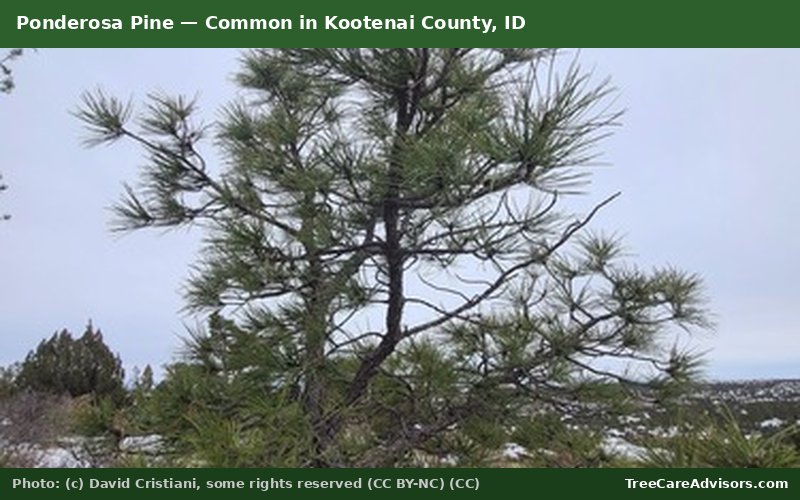
Ponderosa Pine
Tall, open-crowned, butterscotch-scented bark, fire-adapted
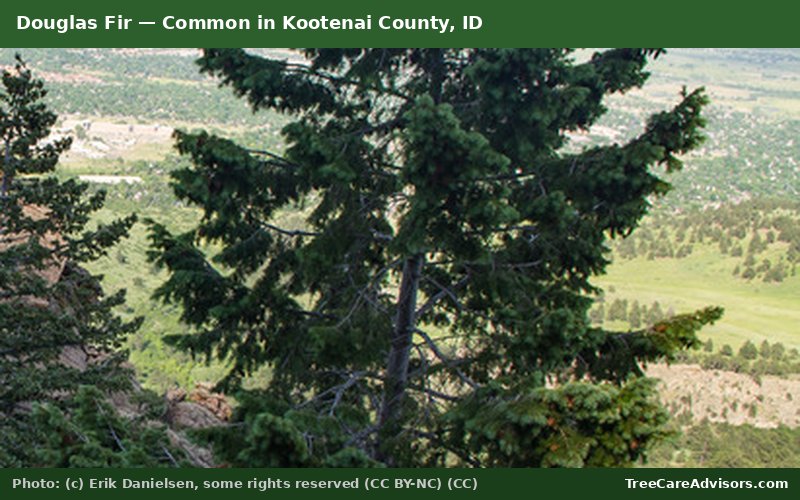
Douglas Fir
Not a true fir - tall, pyramidal, important timber species
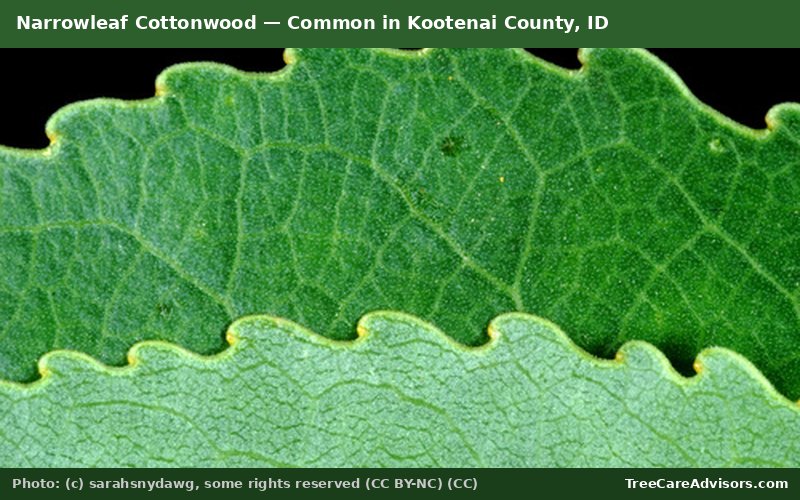
Narrowleaf Cottonwood
Riparian species, fast-growing, brilliant yellow fall color
Problem Species to Watch
Russian Olive
Extremely invasive in riparian areas, thorny, now illegal to plant in CO
Siberian Elm
Invasive, weak wood, constant branch failure
Green Ash
EAB has arrived in Front Range Colorado and Utah - die-off beginning
Active Tree Threats in Kootenai County
Mountain Pine Beetle critical
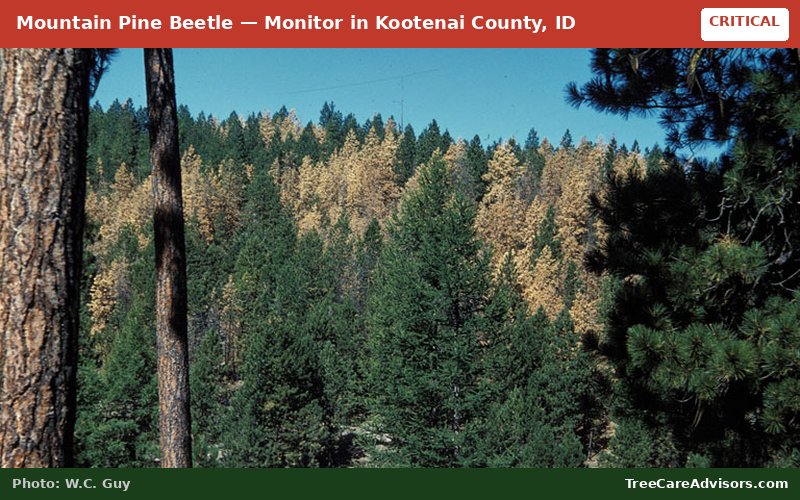
Affects: Lodgepole pine (primary), ponderosa pine, limber pine, whitebark pine
Native bark beetle whose populations have exploded due to drought and warmer winters that no longer kill overwintering larvae. Beetles mass-attack trees, introducing blue-stain fungi that stop water transport. Trees turn red and die within a year.
Emerald Ash Borer critical
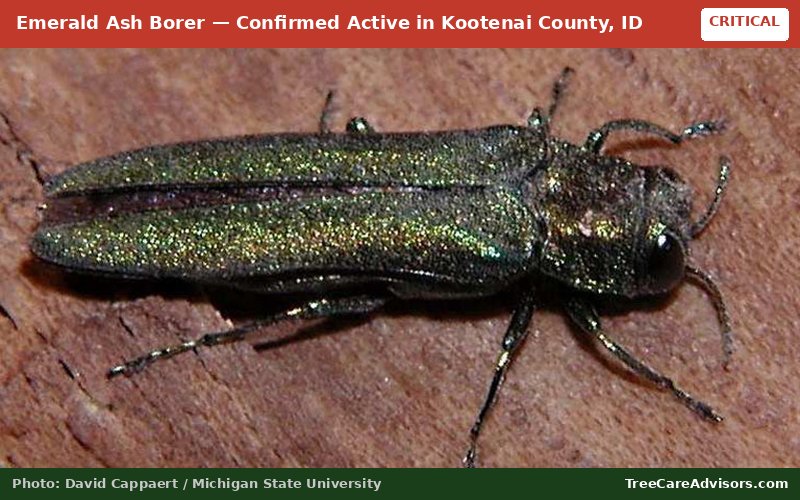
Affects: All ash species - very common urban trees in Front Range CO and Wasatch Front UT
Same devastating beetle as eastern US. Colorado and Utah cities planted heavily in ash - many municipalities have 15-20% ash canopy that will be lost.
Ips Beetle Complex moderate-high
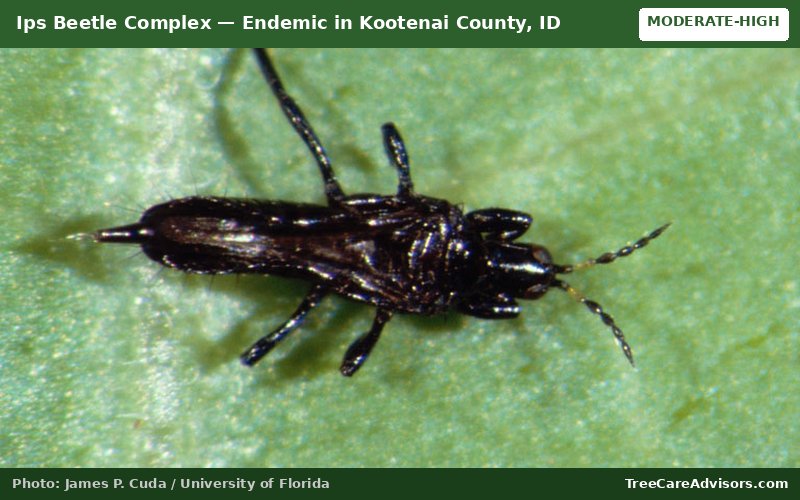
Affects: Spruce, pine - urban and forest settings
Multiple Ips bark beetle species that attack weakened conifers. Unlike mountain pine beetle, Ips can have multiple generations per year and attacks a broader range of species including spruce.
When Should You Remove a Tree in Rockford Bay?
Not every problem tree needs to come down. But some situations in Cool-Dry climates make removal the safest option:
- Dead or dying trees - a dead tree becomes a brittle hazard within 1-2 years
- Trees with more than 50% crown dieback - recovery is unlikely and the remaining structure is compromised
- Severe lean that developed suddenly - indicates root failure, not natural growth. Urgent removal needed.
- Mushrooms or conks at the base - visible fruiting bodies mean extensive internal decay. The tree may look fine but is structurally hollow.
Many communities in Idaho regulate removal of large trees. Check with Kootenai County planning before taking down anything big.
Pruning Trees in Rockford Bay
In a Cool-Dry climate (Zone 6b), timing matters. Pruning at the wrong time can stress trees, invite disease, or kill them outright. The pruning calendar in the climate profile above shows the best and worst months here.
Pruning season: Late winter (February-March) for most. Avoid fall pruning - doesn't heal before winter
What Type of Pruning Do Your Trees Need?
- Crown cleaning - removing dead, diseased, and crossing branches. The most common and important job. Most trees benefit from this every 2-3 years.
- Crown thinning - selectively removing interior branches to reduce wind resistance and improve light penetration. Important for dense canopy species like Quaking Aspen.
- Crown raising - removing lower branches for clearance over sidewalks, driveways, and structures. Especially needed for ~33-year-old trees that have grown into walkways.
- Crown reduction - reducing overall canopy size. Only appropriate when trees have outgrown their space. Proper reduction cuts back to lateral branches.
What NOT to Do
Never "top" a tree (cutting all branches back to stubs). Topping destroys the tree's structure, causes rapid weak regrowth, and creates a more dangerous tree than you started with. Any company that recommends topping isn't worth hiring.
Should You Remove the Stump?
After a tree comes down, the stump isn't just ugly - it can cause problems:
- Root sprouting - many species (especially Quaking Aspen) send up aggressive shoots from the stump. You'll be cutting sprouts for years.
- Pest habitat - decaying stumps attract termites, carpenter ants, and beetles.
- Fungal spread - root rot fungi like Armillaria can spread from a dead stump to living trees through root contact underground.
- Tripping hazard and lawn care headache - can't mow over it, grass doesn't grow around it, and it takes 10-15 years to decompose naturally.
Grinding vs Chemical Removal
Grinding is the standard method - a machine chews the stump down 6-12 inches below grade. Takes 30-90 minutes for a typical stump. You're left with a pile of wood chips that makes decent mulch. This is what most arborists recommend.
Chemical removal (potassium nitrate) accelerates decomposition over 4-6 weeks, then you can break up the softened wood. Cheaper but slower, and doesn't address the root system.
What to Do After Storm Damage
- Stay away - keep everyone out of the fall zone. If a tree is leaning on a power line, call the utility company first, not a tree service.
- Document the damage - take photos from a safe distance before anything is touched. Your insurance company will want these.
- Don't DIY - storm-damaged trees are under tension. Cutting the wrong branch releases stored energy and can kill you. This is not a chainsaw-on-the-weekend job.
- Call a certified arborist - not just "a guy with a truck." Storm chasers flood into areas after major storms, do bad work, and disappear. ISA certification matters more after a storm than any other time.
Emergency pricing: expect to pay 50-100% more for emergency response than for scheduled work. In Rockford Bay, that puts emergency tree removal at roughly $2,175 to $12,692. After major storms, demand spikes and prices go higher. If you can safely wait 48-72 hours, the premium usually drops.
Signs Your Tree Needs Help
In USDA Zone 6b (Cool-Dry), these are the warning signs worth acting on, alongside the local threats listed above:
- Leaf discoloration out of season - yellowing, browning, or spotted leaves during the growing season indicate disease, nutrient deficiency, or root stress
- Premature leaf drop - healthy trees hold leaves until fall. Early drop means something is wrong underground or in the vascular system
- Thinning canopy - if you can see more sky through the crown than you used to, the tree is declining
- Bark abnormalities - oozing sap, cankers (sunken dead patches), or bark falling off in sheets
- Mushrooms at the base - fruiting bodies indicate extensive internal decay. Get a professional assessment immediately.
Wildfire & Defensible Space
Key defensible space practices for Rockford Bay properties:
- Maintain 30 feet of cleared space immediately around structures
- Remove dead branches, leaf litter, and dry vegetation
- Prune tree canopies to create 10+ feet of clearance between crowns
- Remove highly flammable species (eucalyptus, juniper, ornamental grasses) near structures
Tree Care for Seasonal Properties
71% of Rockford Bay homes are used seasonally. Trees on unoccupied properties still need maintenance:
- Before closing: Dead limb removal, hazard assessment, storm-prep pruning
- While vacant: Arrange for storm-check visits, ensure irrigation is set or winterized
- Before opening: Full property inspection for winter/storm damage, pest check
What 1980s-2000s-Era Trees Need in 2026
1980s-2000s Homes (25-45 years old trees)
Peak of designed residential landscapes. Professional landscape architects specified diverse palettes. McMansion era brought larger properties with more trees.
Common Issues
- **'Crepe Murder'** - the epidemic of bad pruning (topping crepe myrtles into ugly stubs) has created structurally compromised trees with weak regrowth across the South.
- **Approaching first major maintenance** - trees in this age range are large enough to need professional pruning for the first time. Many homeowners haven't budgeted for it.
- **Raywood Ash decline** - widely planted in California in the 1990s, now showing anthracnose and structural decline
Recommended Actions
- Structural pruning NOW - this is the critical window to establish good branch architecture before trees get too large
- Stop 'crepe murder' - educate on proper crepe myrtle pruning (remove crossing/rubbing branches, not indiscriminate topping)
- Replace short-lived ornamentals (purple-leaf plum, Bradford pear) that are declining
Rockford Bay Tree Data
Hiring a Tree Service in Rockford Bay
With over 120 landscaping companies in the county, it's vital to hire specifically for tree expertise. Look for an ISA Certified Arborist who is insured and has local references. Ask them how they account for Rockford Bay's specific conditions, like our shallow soils or dry summer spells, in their work plan. A true professional will provide a detailed, written estimate that explains the 'why' behind each recommended action, whether it's a crown cleaning to reduce wind sail or a soil amendment to combat drought stress.
Frequently Asked Questions
How much does tree removal cost in Rockford Bay?
How much does tree trimming & pruning cost in Rockford Bay?
How much does stump grinding & removal cost in Rockford Bay?
Do I need a permit to remove a tree in Rockford Bay?
How do I find a good arborist in Rockford Bay?
When is the best time to prune trees in Rockford Bay?
How often should trees be trimmed in Rockford Bay?
What is Mountain Pine Beetle and should I be worried in Rockford Bay?
Nearby Areas We Serve
Get Tree Care Quotes in Rockford Bay
Compare ISA-certified arborists serving Rockford Bay and Kootenai County.
Get Free Quotes