Tree Care in Durango, CO
Why Tree Care Matters in Durango
Professional tree care here is about risk management and asset protection. A mature blue spruce or ponderosa pine on your property isn't just scenery; it has a quantifiable value that contributes to your home's worth. Using the industry-standard CTLA appraisal method, we consider its species, size, and condition. More urgently, our 1.9 major storm events per year can turn a neglected, weak-limbed tree into a liability. Proper care from someone who knows our local pests, like the mountain pine beetle in our pines, preserves that value and keeps your property safe. It's an investment in the single largest living part of your landscape.
Your Tree's History
The era your home was built directly dictates your tree issues. For the many Durango homes built around 1983, the landscaping philosophy was about instant curb appeal. This led to widespread planting of problem species like Russian olive, which is now invasive, and the structurally doomed Bradford pear, which is practically guaranteed to split after 15-20 years. These trees are now reaching maturity, and their inherent weaknesses are colliding with our climate. Furthermore, the automatic lawn irrigation systems installed then encourage shallow tree roots, making mature trees even more vulnerable to drought and wind throw.
Durango Climate Profile
Risk Assessment
Growing & Pruning
Tree Services in Durango
Tree Removal
Safe removal of dead, dying, hazardous, or unwanted trees
Tree Trimming & Pruning
Professional pruning for health, safety, and appearance
Stump Grinding & Removal
Complete stump removal after tree cutting
Emergency Tree Service
24/7 response for storm damage, fallen trees, and hazardous situations
Tree Health & Disease Treatment
Diagnosis and treatment of tree pests, diseases, and nutrient deficiencies
Common Trees in Durango
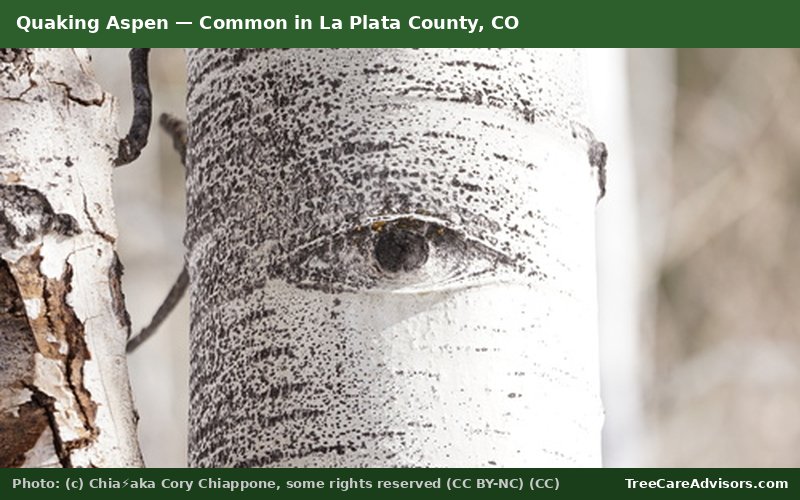
Quaking Aspen
The iconic mountain tree - actually a clonal organism, golden fall color, short-lived individually (40-60 yrs)
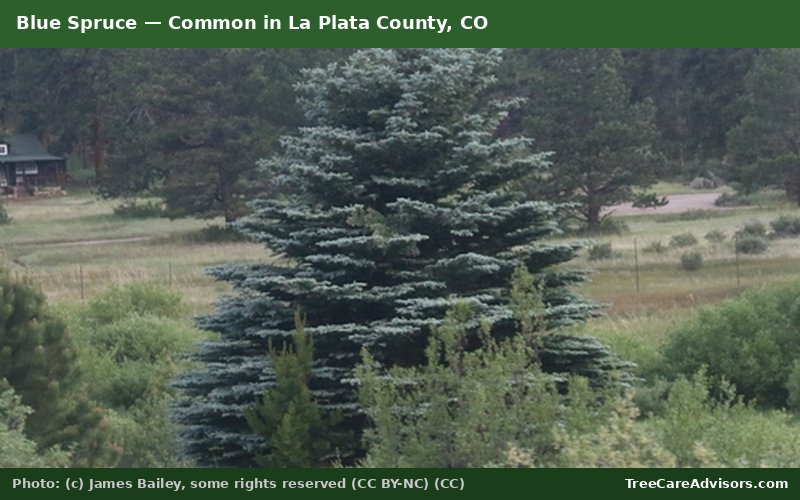
Blue Spruce
Colorado's state tree, stiff blue needles - but needle cast disease is epidemic
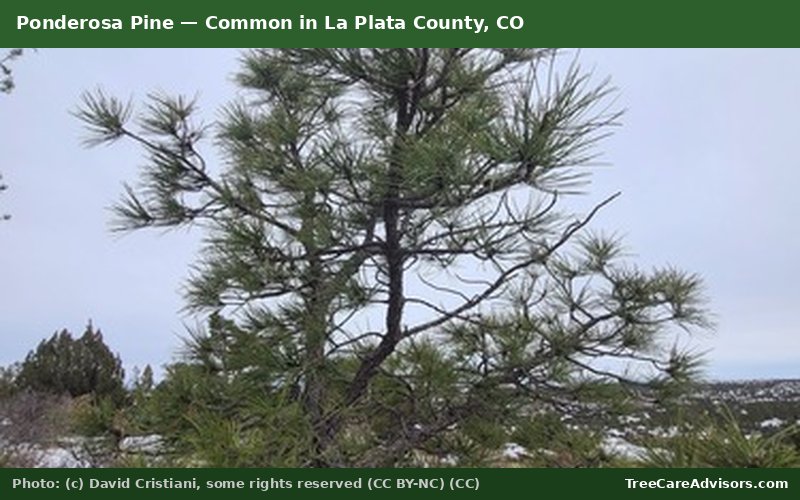
Ponderosa Pine
Tall, open-crowned, butterscotch-scented bark, fire-adapted
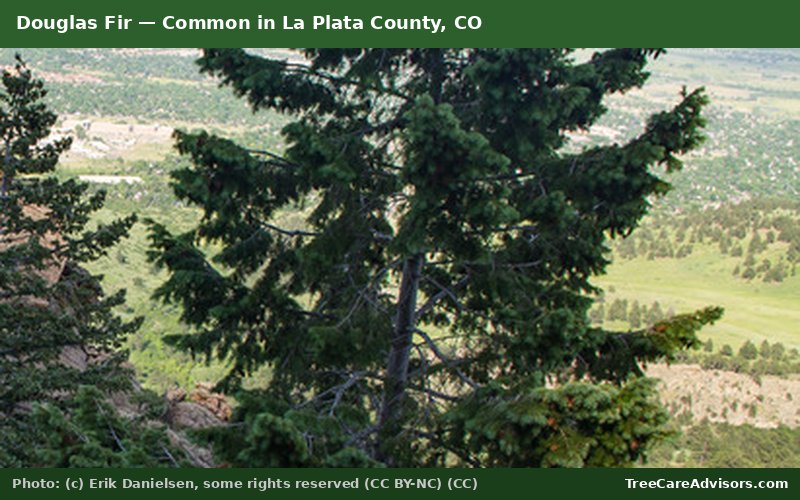
Douglas Fir
Not a true fir - tall, pyramidal, important timber species
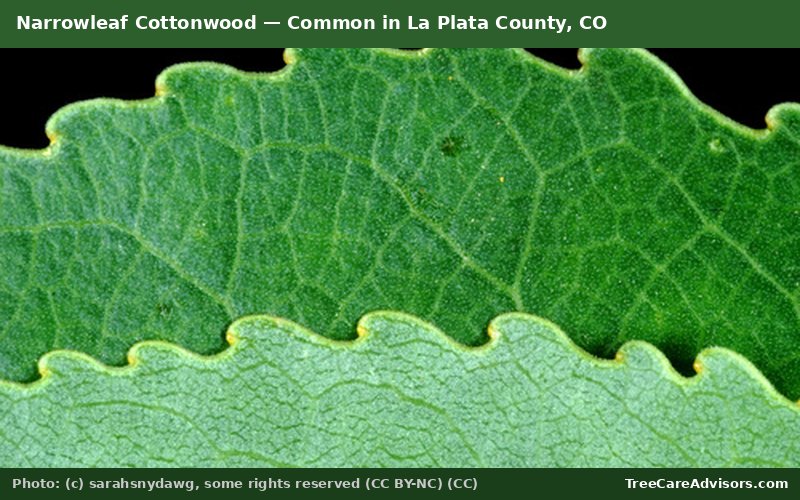
Narrowleaf Cottonwood
Riparian species, fast-growing, brilliant yellow fall color
Active Tree Threats in La Plata County
Mountain Pine Beetle critical
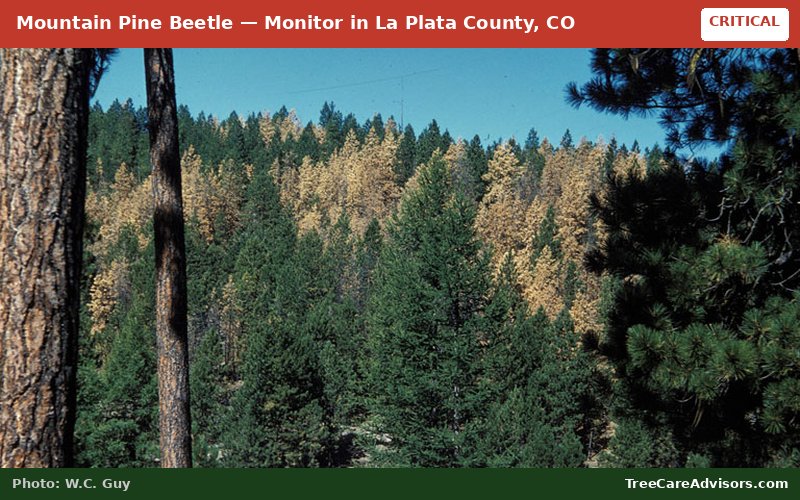
Affects: Lodgepole pine (primary), ponderosa pine, limber pine, whitebark pine
Native bark beetle whose populations have exploded due to drought and warmer winters that no longer kill overwintering larvae. Beetles mass-attack trees, introducing blue-stain fungi that stop water transport. Trees turn red and die within a year.
Emerald Ash Borer critical
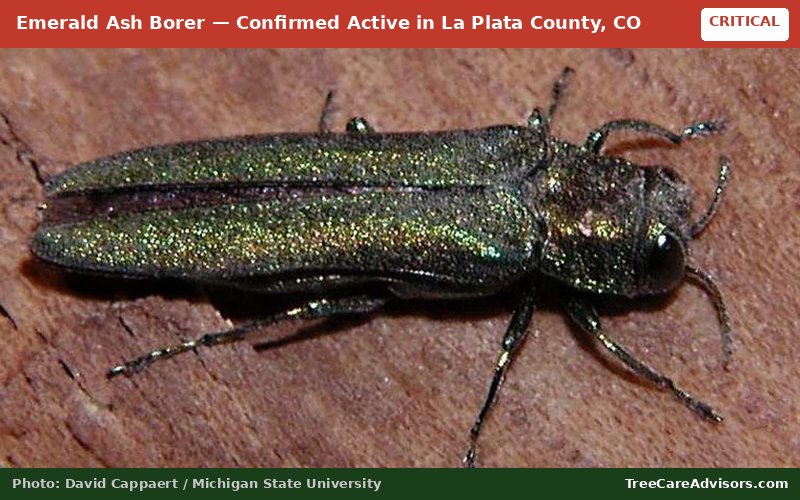
Affects: All ash species - very common urban trees in Front Range CO and Wasatch Front UT
Same devastating beetle as eastern US. Colorado and Utah cities planted heavily in ash - many municipalities have 15-20% ash canopy that will be lost.
Ips Beetle Complex moderate-high
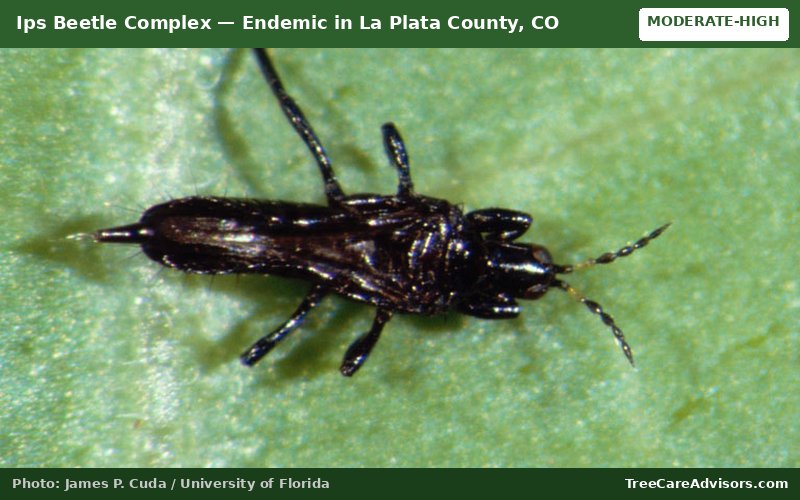
Affects: Spruce, pine - urban and forest settings
Multiple Ips bark beetle species that attack weakened conifers. Unlike mountain pine beetle, Ips can have multiple generations per year and attacks a broader range of species including spruce.
Durango Tree Data
Hiring a Tree Service in Durango
With about 50 landscaping companies in La Plata County, choosing the right one is critical. Look for a certified arborist who understands our specific high-desert conditions and soil. Ask them directly about their experience with local threats like the ips beetle in stressed pines and the proper deep-watering techniques for our dry climate, which is very different from watering a lawn. A true professional will give you a detailed plan, not just a quote for removal.
Get Tree Care Quotes in Durango
Compare ISA-certified arborists serving Durango and La Plata County.
Get Free Quotes