Tree Care in Sitka city and, AK
Why Tree Care Matters in Sitka city and
With rainfall this consistent, you might assume Sitka's trees mostly take care of themselves. They don't. Swiss Needle Cast is a fungal disease that thrives in exactly this kind of wet, cool climate, causing conifers to drop needles and thin out progressively over several years. Most homeowners don't catch it until the tree is already in serious decline. The other issue is structural. Trees that have grown undisturbed for 40 to 50 years develop defects that aren't visible from the ground. An ISA-certified arborist can identify included bark, decay columns, and failing root systems before they become a liability, whether that's a fallen limb on a car or a full tree failure against a structure.
Your Tree's History
Homes built in Sitka during the 1960s through 1980s were commonly planted with green ash and silver maple as front-yard shade trees. Green ash is now being killed by Emerald Ash Borer across the US, and dead ash trees turn brittle within 1 to 2 years of death. Silver maple grows fast but develops weak branch attachments over time. If you have a large shade tree in your front yard that was planted in that era, get it identified before assuming it's healthy.
Sitka city and Climate Profile
Risk Assessment
Growing & Pruning
Tree Services in Sitka city and
Tree Removal
Safe removal of dead, dying, hazardous, or unwanted trees
Tree Trimming & Pruning
Professional pruning for health, safety, and appearance
Stump Grinding & Removal
Complete stump removal after tree cutting
Emergency Tree Service
24/7 response for storm damage, fallen trees, and hazardous situations
Tree Health & Disease Treatment
Diagnosis and treatment of tree pests, diseases, and nutrient deficiencies
Common Trees in Sitka city and
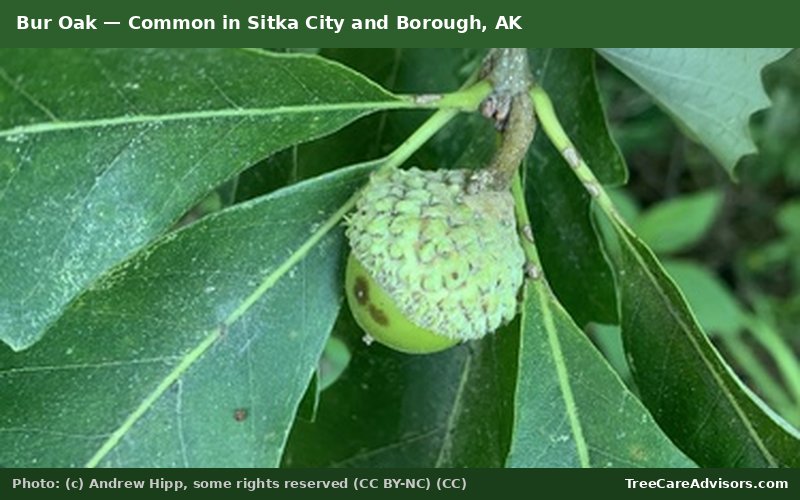
Bur Oak
Toughest native oak - drought, cold, and wind tolerant. Massive specimens
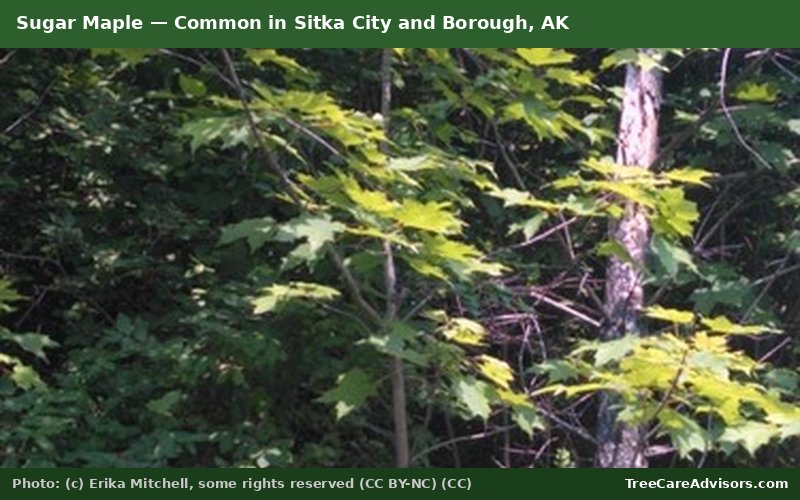
Sugar Maple
Fall color champion, syrup production, but salt-sensitive along roads
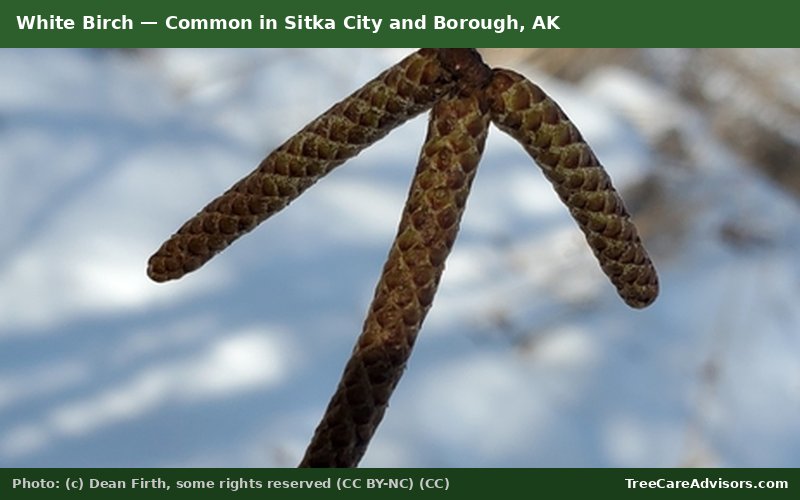
White Birch (Paper Birch)
Iconic white bark, short-lived (40-50 years), bronze birch borer vulnerable
Eastern White Pine
Tall, fast-growing, soft needles - blister rust susceptible
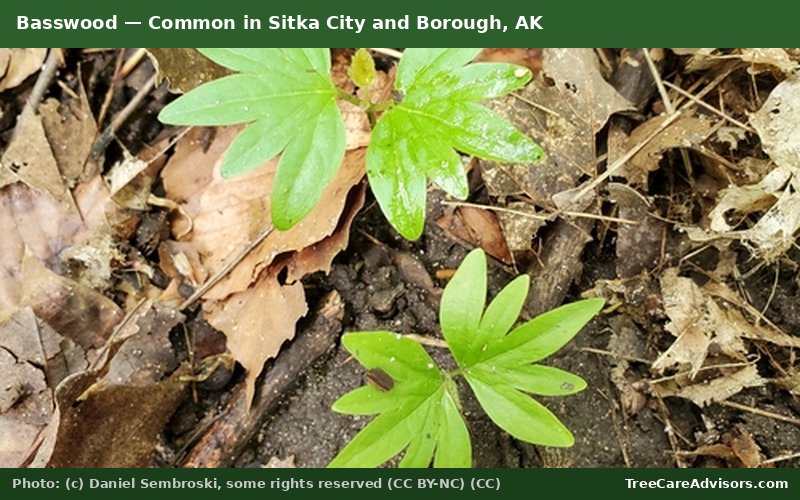
Basswood (American Linden)
Excellent shade, fragrant flowers, attracts pollinators
Active Tree Threats in Sitka City and Borough
Laminated Root Rot high
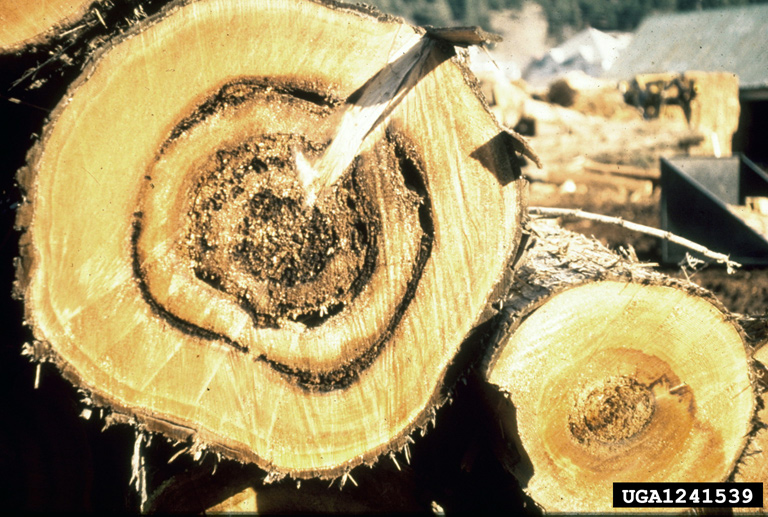
Affects: Douglas fir (primary), grand fir, mountain hemlock - the dominant conifers of the PNW
Soil fungus (Phellinus sulphurascens) that spreads through root contact. Infected trees show reduced growth, thinning crown, and eventually blow over in wind because roots are rotted. Spreads slowly but persistently through stands.
Swiss Needle Cast moderate-high
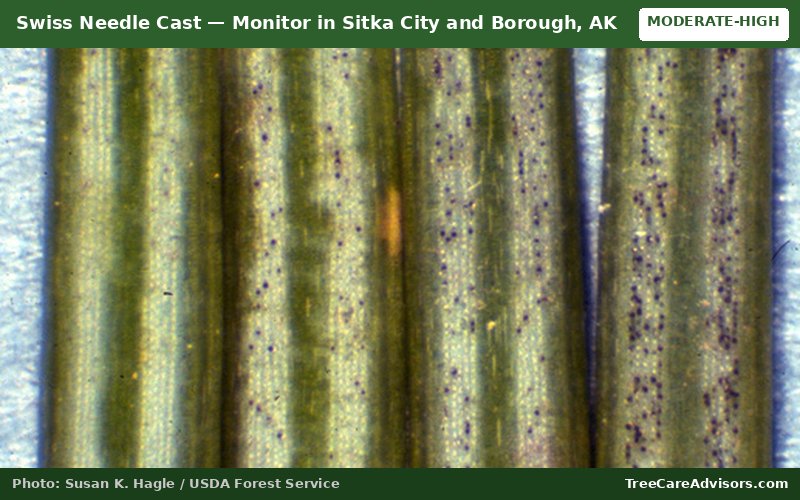
Affects: Douglas fir - the most common tree in PNW landscapes
Fungal disease that causes Douglas fir to shed needles prematurely. Trees look thin and yellow. Fog and moisture promote the fungus. Coastal areas worst affected.
Bronze Birch Borer moderate
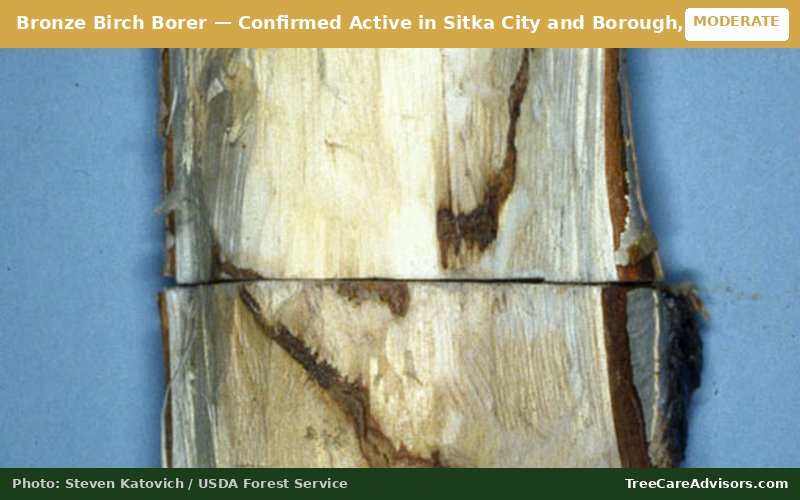
Affects: European white birch (highly susceptible), paper birch, other birch species
Native beetle that attacks stressed birch trees. Larvae bore under bark, killing branches from top down. European white birch (the popular ornamental) is far more susceptible than native species.
Sitka city and Tree Data
Hiring a Tree Service in Sitka city and
There are currently no tree care or landscaping companies listed in Sitka City and Borough, which means bringing in a contractor from outside the area. When you do, ask specifically for ISA certification. An ISA-certified arborist has passed a standardized exam and must keep credentials current. For any removal or significant pruning, ask for proof of liability insurance before work begins.
Get Tree Care Quotes in Sitka city and
Compare ISA-certified arborists serving Sitka city and and Sitka City and Borough.
Get Free Quotes