Where Drought Is Quietly Killing America's Urban Trees
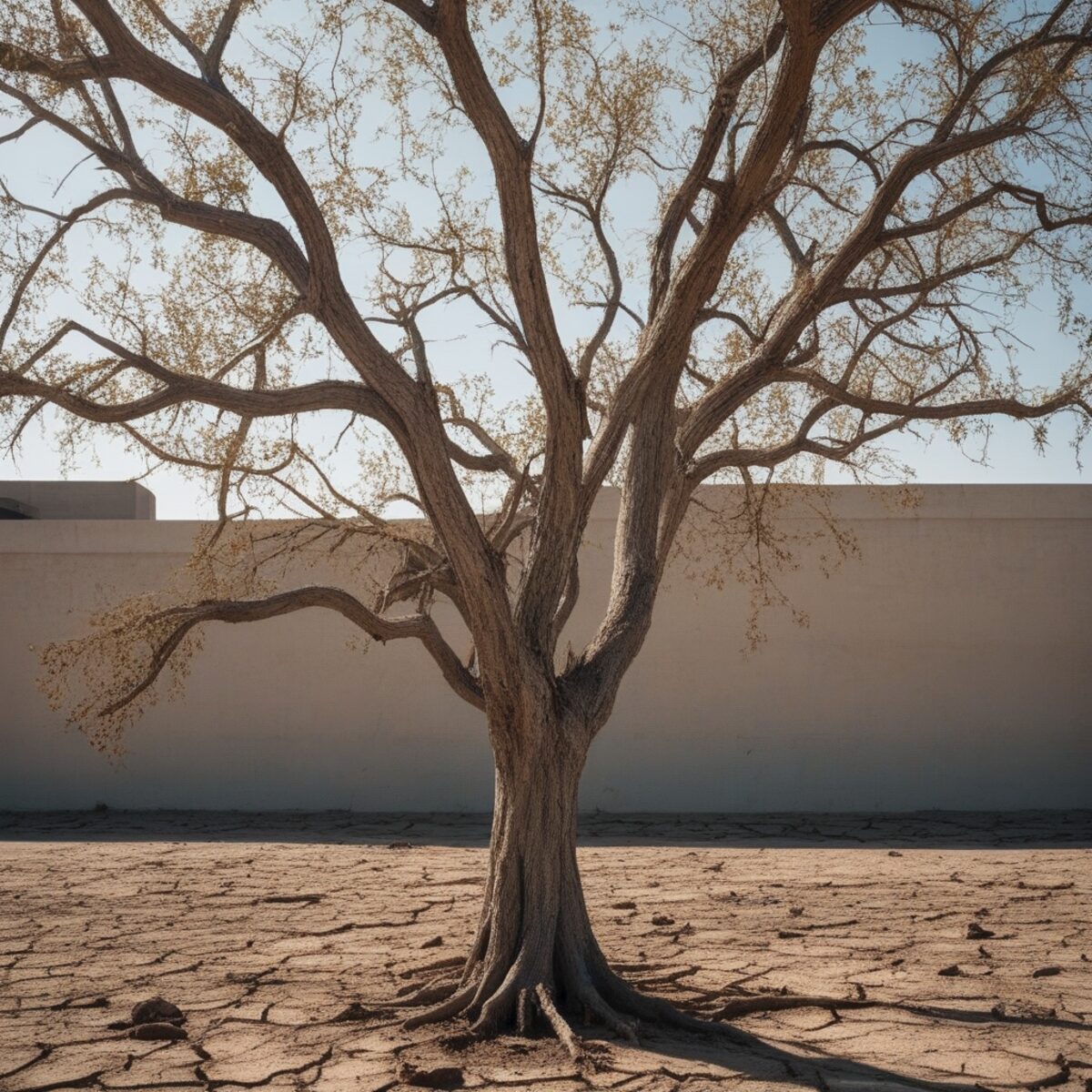
In over 950 of America’s affluent communities, the most dangerous threat to urban trees isn’t a beetle or a blight. It’s the slow, quiet squeeze of drought. The damage is often invisible to homeowners until it’s too late, because a tree showing stress today is likely reacting to conditions that began two or three years ago. This delayed reaction is creating a wave of decline that is reshaping city skylines from the California deserts to unexpected regions in the Pacific Northwest.
The data reveals a concentrated pattern. The cities at greatest risk are not just in expected arid zones, but in areas where urban landscaping ambitions have outpaced environmental reality.
| City | State | Annual Precip (in) | Drought Risk | Hardiness Zone |
|---|---|---|---|---|
| Indian Wells | California | 2.9 | very_high | 10a |
| La Quinta | California | 2.9 | very_high | 10a |
| Desert Palms | California | 2.9 | very_high | 10a |
| Bermuda Dunes | California | 2.9 | very_high | 10a |
| Palm Desert | California | 2.9 | very_high | 10a |
| Rancho Mirage | California | 4.6 | very_high | 10a |
| Palm Springs | California | 5.1 | very_high | 10a |
| Double Spring | Nevada | 5.9 | very_high | 7a |
| Topaz Lake | Nevada | 5.9 | very_high | 7a |
| Walker | California | 5.9 | very_high | 6b |
| Smith Valley | Nevada | 6.2 | very_high | 6b |
| Goodmanville | California | 6.7 | very_high | 9b |
| Rivergrove | California | 6.7 | very_high | 9b |
| Olde Stockdale | California | 6.7 | very_high | 9b |
| Rosedale | California | 6.7 | very_high | 9b |
| Acton | California | 6.8 | very_high | 9b |
| Leona Valley | California | 6.8 | very_high | 9b |
| Quartz Hill | California | 6.8 | very_high | 8b |
| West Pasco | Washington | 7.5 | very_high | 7a |
| Sunland Estates | Washington | 7.5 | very_high | 7a |
Why These Cities Are Ground Zero for Tree Loss
The table tells a clear story. The epicenter is the California desert, where cities like Indian Wells and Palm Desert receive less than three inches of rain per year. Their very existence as lush, green oases is an engineered feat. The common thread across all 958 high risk cities is a fundamental mismatch. Trees were planted for shade, appearance, and property value, often with little regard for their long term water needs. In regions like eastern Washington, seen with West Pasco, the issue is often a rain shadow effect creating naturally arid conditions that urban irrigation temporarily masks. When water restrictions come, or when irrigation practices fail, the trees have no resilience to fall back on.
The Hidden Biology of Drought Stress
To understand why drought is so insidious, you need to think like a tree. A tree doesn’t just need water in its leaves. It needs a vast, healthy root system and, critically, its fungal partners.
When soil dries, the finest root hairs, which are responsible for most water uptake, die first. The tree must then expend precious energy to regrow them when water returns. After repeated cycles, the tree exhausts its stored energy, typically starch reserves in its roots and wood. This is why symptoms are delayed. The tree is living off its savings account. You only see the decline when the account is empty, long after the drought began.
This is where the hidden network comes in. Tree roots are not solitary. They are in a symbiotic partnership with mycorrhizal fungi. These fungi attach to root tips, effectively extending the root system by hundreds of times. They are expert miners of water and nutrients from soil pores too small for roots to enter. In return, the tree feeds the fungi sugars from its photosynthesis.
During stress, this “wood wide web” can be a lifeline, with connected trees potentially sharing resources. But in our urban settings, this network is often already crippled by soil compaction, chemical fertilizers, and fungicides. A drought stressed tree with a damaged fungal network is utterly alone. Its decline is accelerated. This is also why a tree can fail years after nearby construction. The direct root damage was part of it, but the fatal blow was often the severing of its critical fungal connections.
How Our Good Intentions Make Things Worse
Most homeowners respond to tree stress in one of two harmful ways. They either overwater or underwater. The most common culprit is the lawn sprinkler system. Running for 15 minutes every day is perhaps the worst thing you can do for a mature tree. It encourages roots to stay near the surface, where the water is, making them even more vulnerable to heat and drying. These shallow roots never develop the deep, anchoring structure needed for drought resilience.
Signs of overwatering mimic underwatering. Yellowing leaves, premature leaf drop, and dieback occur because waterlogged soil has no oxygen. Roots suffocate and rot, losing their ability to absorb anything. You may see mushrooms or soft bark at the base. It is a slow drowning.
True underwatering presents as wilting, scorched brown leaf edges, and twig dieback starting at the top and outer canopy. The tree is sacrificially abandoning its furthest extremities to conserve resources for its core.
Which Trees Fail First, and What to Watch For
In high risk cities, the first casualties are often the water dependent planted species. Norway maples, some ornamental cherries, red maples planted outside their wet native habitats, and many fast growing hybrids like the Bradford pear are typically the first to show severe stress. They lack the genetic programming for austerity.
Drought adapted natives, like many oaks, mesquite, palo verde, or certain pines, have evolutionary tricks. They may have deeper taproots, smaller or waxy leaves to reduce water loss, or the ability to drop leaves entirely to enter a dormant state. But even these natives have limits, especially when planted in confined tree lawns with compacted soil.
What you should watch for is a progression. Year one of a serious drought may pass with no visible symptoms. In year two, you might see slight wilting on sunny afternoons, or leaves that are smaller than usual. By year three, the scorch, dieback, and canopy thinning become unmistakable. At this point, the tree has exhausted its reserves and recovery requires significant intervention, if it’s possible at all.
The Correct Way to Water Is a Deep, Infrequent Soak
The goal is to mimic a slow, soaking rain that penetrates deep into the soil, encouraging roots to grow downward. For an established tree, forget the trunk. Water at the drip line, which is the circle on the ground directly under the outermost branches, and just beyond it.
The correct method is to apply water slowly for 2 to 4 hours, saturating the soil to a depth of 12 to 18 inches. Then, do not water again for 2 to 4 weeks during dry periods. A soaker hose coiled in a circle at the drip line is an excellent tool for this. For a newly planted tree, the protocol is different. It needs weekly deep watering for its first two growing seasons to establish its root system.
What You Should Do Based on Where You Live
If you live in one of the 958 high risk cities, or in any region experiencing increasing drought, your approach must be proactive.
First, identify your trees. Know which are drought tolerant natives and which are water reliant ornamentals. Prioritize deep watering for the vulnerable specimens, following the drip line method, before they show symptoms during dry spells.
Second, protect the soil ecosystem. Apply a wide ring of wood chip mulch around the base of your trees, starting a few inches from the trunk and extending as far as you can. This moderates soil temperature, retains moisture, and most importantly, feeds and protects the essential mycorrhizal fungi. Avoid soil compaction and the use of chemical fertilizers and fungicides on your lawn near tree roots.
Third, reconsider your landscape. When planting new trees, select species proven to be drought tolerant in your hardiness zone. Your local cooperative extension office is the best resource for vetted lists.
Finally, learn to read the signs. Wilting and scorch are late stage cries for help. The time to act is before you see them. By understanding the quiet biology of drought, and the delayed reaction it triggers, you can intervene in time. The goal is not just to keep trees alive, but to help them build the resilient, deep rooted foundation they need to survive the dry years ahead.
Check Your Trees
Enter your zip code to see local species, pest threats, and risk assessments.
Search by Zip Code