What Your Tree Service Doesn't Want You to Know About Topping
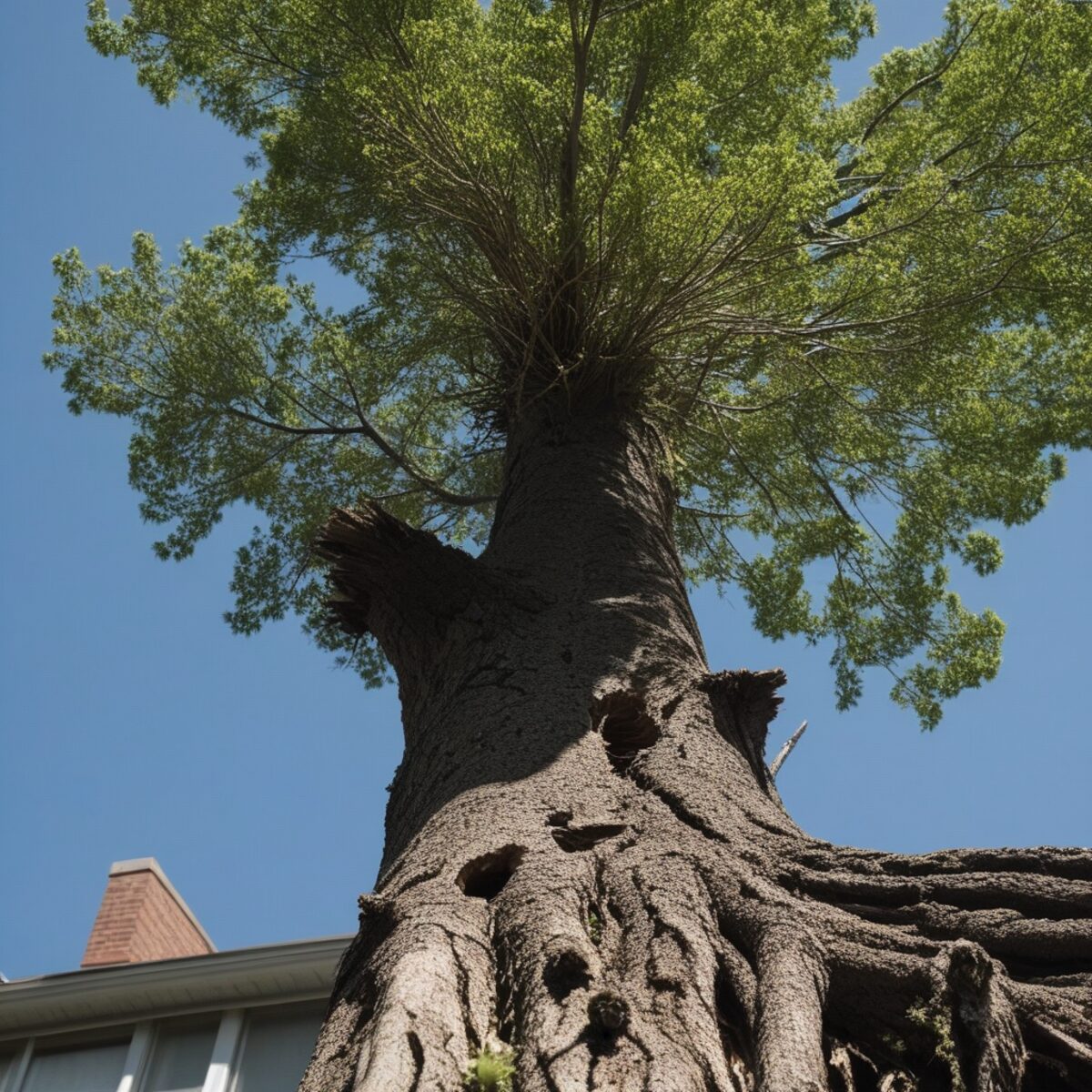
What Your Tree Service Doesn't Want You to Know About Topping
I’ve spent over two decades climbing trees for a living, and a significant part of that job has been cleaning up disasters. Not storms, but the man made kind. The most common, and most destructive, is topping. If you hire someone who suggests it, you are not getting a tree service. You are hiring a vandal with a chainsaw.
Let’s be clear about terms. Topping is the brutal, indiscriminate cutting of a tree’s main branches or leader back to stubs. It’s also called heading, stubbing, or tipping. The goal is usually to reduce the tree’s height quickly. The result is always a mutilated, hazardous, and dying tree. Every legitimate organization in my field, from the International Society of Arboriculture to the Tree Care Industry Association, explicitly bans this practice. The ANSI A300 pruning standard, the rulebook for proper tree work, says do not top trees. It’s that simple.
Why Topping Is Worse Than Neglect
A homeowner might think, “Well, at least they did something.” No. Doing nothing is almost always better. Topping actively makes your tree more dangerous and less healthy.
First, you’ve just turned your tree into a biological time bomb. Those large, flat cuts cannot callus over. They are wide open doors for decay fungi to march straight into the heartwood of the tree. The tree’s defense, the branch collar, is gone. That swollen area where branch meets trunk contains specialized tissue that walls off decay. A proper cut is made just outside it. A topping cut slices right through it, or worse, leaves a long stub that dies back into the trunk.
Second, the tree goes into emergency survival mode. It will push out dozens of thin, fast growing shoots just below each wound. These are called water sprouts or epicormic shoots. They grow with alarming speed, sometimes 10 to 20 feet in a single season. This is the “it’ll grow back” the topper promised you. Here’s what they don’t say.
Those sprouts are only weakly attached to the surface of the decaying stub. They are not anchored into the strong, core wood of the original branch. In three to five years, you will have a tree that is once again tall, but now it’s a dense cluster of poorly attached, heavy branches growing out of rotten parent limbs. It is far more likely to fail in a wind or ice storm than the original tree ever was. You have traded a perceived problem for a certain, and much worse, hazard.
The Myth of Proper Topping
You might hear a contractor say they practice “drop-crotching” or “crown reduction.” Sometimes these are just fancy words for topping. So what does a proper reduction actually look like?
A true crown reduction is selective and respects the tree’s structure. We don’t just buzz off the top. We identify a specific, smaller lateral branch that can assume the terminal role. The cut is made just beyond that lateral branch, at its branch collar, leaving no stub. The remaining branch is at least one third the diameter of the one removed. This maintains the tree’s natural form, minimizes stress, and allows for proper wound closure. It’s technical, thoughtful work. It is not fast.
Compare that to the topping cut: a random slice through a main limb, leaving a stub with no viable lateral to take over. The difference is the difference between surgery and butchery.
How to Spot a Topper Before You Hire Them
The guy who tops your tree is not an arborist. He is a cutter. Here are the red flags.
They have no ISA Certified Arborist credential on their truck, proposal, or website. This is the bare minimum. Ask for their certification number and verify it online.
They give you a per tree price over the phone without ever looking at the tree. A proper assessment requires an onsite visit. Every tree is different.
They use phrases like “we’ll take it down to size,” “hat-rack it,” “round it over,” or “you won’t even know it’s there.” This is topping code.
They recommend topping for any reason. To “make it safer,” to “let in more light,” to “reduce the size.” There are correct ways to address these concerns that don’t involve destruction. A qualified arborist will explain them.
Their insurance is questionable, if it exists at all. The liability from a failed, topped tree falling on your house is enormous. You want that liability on their policy, not your homeowner’s.
If Your Tree Has Already Been Topped
I see this every week. A client in Scottsdale, AZ or Paradise Valley, AZ calls, desperate because their once beautiful tree now looks like a bug zapper and is dropping skinny branches everywhere. The damage is permanent.
You have two options, and neither is good.
First, you can commit to a long term corrective pruning plan. Over several years, a skilled arborist can selectively thin those water sprouts, trying to encourage a leader and remove the worst attached ones. This will not restore the tree’s natural form or structure. It is damage control, an attempt to manage the hazard that was created. It is expensive and ongoing.
Second, you can remove the tree. This is often the most realistic and safest choice. The tree’s structural integrity is gone. The decay spreading from those wounds will not stop. It is now a liability that will only grow.
The core of this issue is a fundamental misunderstanding of trees. They are not like hedges. You cannot shear them. They are complex structural systems. A branch is not just stuck on. It is a cantilevered beam, engineered over decades. Topping smashes that engineering. It triggers predictable, dangerous failure modes.
I am not just being picky about aesthetics. I am talking about physics and biology. A tree that has been topped is a sick and dangerous tree. The person who did it knew that, or should have known that. They chose speed and a cheap price over the life of your tree and the safety of your property.
Stop hiring them. Demand better. Your trees, and your wallet, will thank you.
Check Your Trees
Enter your zip code to see local species, pest threats, and risk assessments.
Search by Zip Code