How to Tell If Your Tree Is Dying: A Field Guide
How to Tell If Your Tree Is Dying: A Field Guide
Most homeowners see a few yellow leaves and worry. Others miss major red flags until it’s too late. The difference is knowing where to look and what it means. A dying tree isn’t just an eyesore. It’s a safety hazard and a financial liability. Catching problems early can save the tree with simple care. Missing them often leads to emergency removal, a process costing thousands. This guide organizes the clues by where you find them on the tree. Think like a detective, and start your investigation.
The Big Picture: How Trees Fail
A critical fact to remember is that you cannot see inside a tree from the outside. The external symptoms we look for often appear years after internal problems begin. A tree can have a trunk that is 70% hollow yet still produce a full canopy of green leaves. It looks healthy but is a major fall risk. Arborists assess this hidden world with tools like mallets for sounding, resistographs that drill to measure wood density, and sonic tomography that maps decay with sound waves. They calculate the ratio of sound wood to decay. Generally, a tree can lose up to one third of its trunk cross section to decay and remain structurally viable. Beyond that, the risk of failure grows quickly. With that in mind, let’s examine the external signs.
Section 1: The Crown (Look Up)
The canopy is the tree’s most visible health report. Changes here are often the first signal.
Symptom: Overall Thinning or Sparse Leaves * What it means: This is not normal seasonal leaf drop. A healthy tree has a dense, uniform layer of leaves. Generalized thinning indicates a systemic issue, often originating in the roots. The tree cannot support its full leaf load due to stress, like drought, soil compaction, or root damage. * What to do: Monitor for the next season. Ensure the tree is receiving adequate water, especially during dry periods. If thinning progresses rapidly, or is combined with other symptoms below, call an arborist this week.
Symptom: Dead Branches at the Top or Tips (Flagging) * What it means: Dead branch tips, especially at the very top of the tree, are a classic sign of “dieback.” The pattern matters. Dieback that starts at the top and works down strongly suggests a root or soil problem. The roots cannot supply water to the highest, most distant points. Dieback isolated to one major branch or one side of the tree often points to a vascular disease or specific root damage on that side. * What to do: Call an arborist this week. Top down dieback requires a professional root zone evaluation. One sided dieback may indicate a serious disease like oak wilt or Dutch elm disease that requires immediate, specific action.
Symptom: Abnormally Small Leaves or Early Fall Color * What it means: Leaves that are much smaller than usual signal the tree is conserving resources. Similarly, leaves turning color weeks before other trees of the same species in autumn is a stress response. Both point to issues with water uptake or nutrient flow. * What to do: Monitor for the next season. Check soil moisture and consider a mulch ring to improve soil conditions. If this symptom appears alongside crown thinning, escalate your concern.
Symptom: Epicormic Sprouting * What it means: This is when a tree suddenly sprouts many small, vertical branches along its trunk or from large, older branches. It’s a survival mechanism, an attempt to grow new leaves closer to the trunk after the outer canopy is stressed or dying. * What to do: Call an arborist this week. Epicormic growth is almost always a sign of significant stress, such as severe root loss, major trunk damage, or advanced disease.
Section 2: The Trunk (Look at Eye Level)
The trunk is the tree’s structural engine. Problems here are often serious.
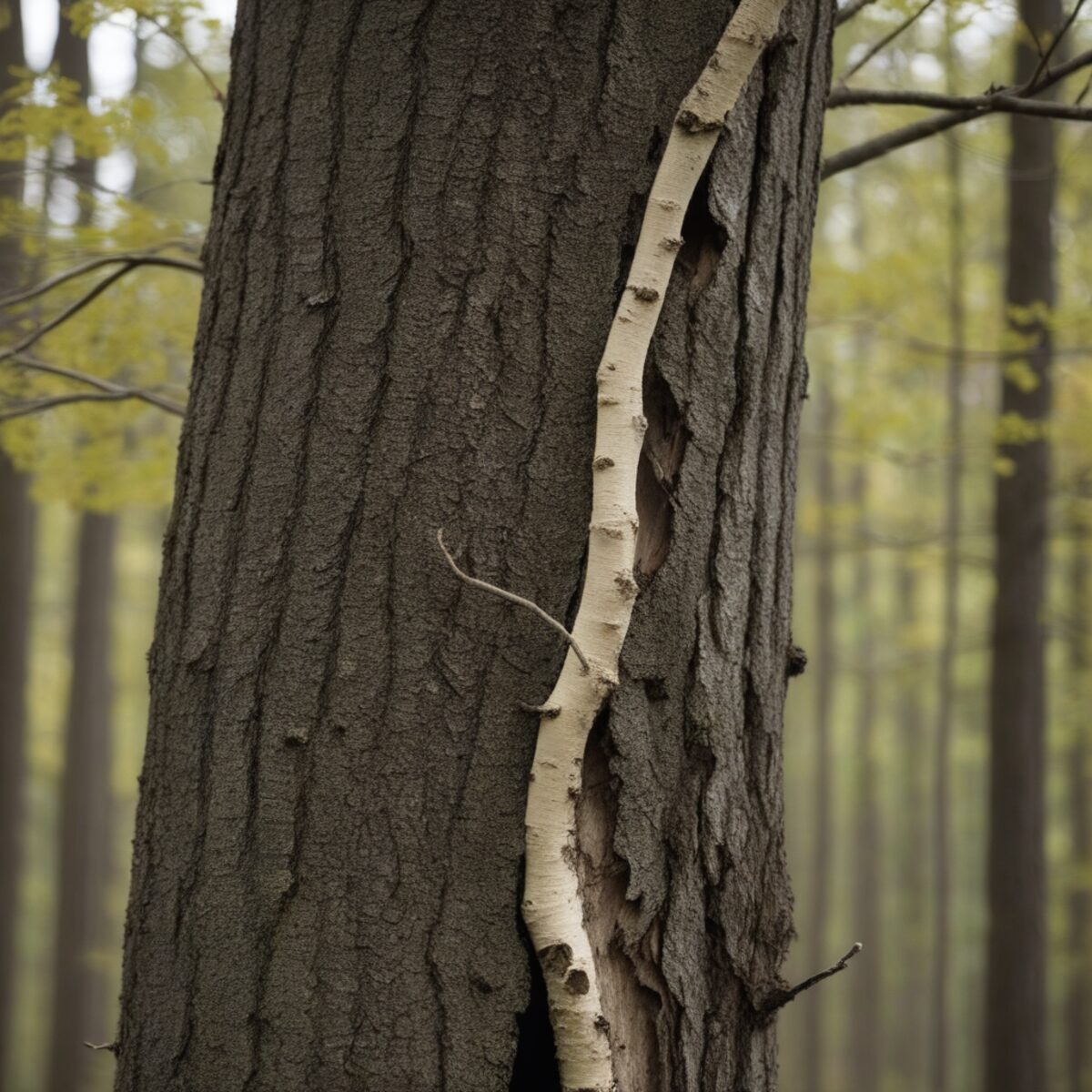
Symptom: Bark Splitting, Peeling, or Falling Off * What it means: Some trees, like birches, have naturally exfoliating bark. On others, bark that cracks deeply or detaches from the wood beneath is a problem. It can result from frost cracks, sunscald, physical damage, or internal decay. The wound exposes the tree to insects and fungi. * What to do: Monitor for the next season for small, isolated cracks. Call an arborist this week if the split is large, vertical, and reveals bare wood, or if bark is falling off in sheets on a species where this is not normal.
Symptom: Fungal Conks or Brackets * What it means: These are the reproductive structures of fungi. If you see hard, shelf like growths (conks) on the trunk, the fungus is already actively decaying the wood inside. They are a definitive sign of advanced internal decay. The tree’s structural integrity is compromised. * What to do: Call an arborist this week. The tree needs a professional risk assessment, likely using the tools mentioned earlier, to determine if it is safe.
Symptom: Increased Woodpecker Activity * What it means: Woodpeckers are insect hunters. A sudden pattern of holes, especially in horizontal rows (from sapsuckers) or large, deep excavations (from pileated woodpeckers), means they have found a food source. This often indicates a significant insect infestation, such as borers or carpenter ants, which are themselves attracted to decay. * What to do: Call an arborist this week. You need to identify the insect pest and the extent of the damage.
Symptom: Cankers, Oozing Sap, or Dark Wet Spots * What it means: A canker is a sunken, dead area on the bark, often discolored. Oozing sap (slime flux) or dark, wet spots can indicate bacterial or fungal infection. These are points where the tree’s vascular system is disrupted, and disease is present. * What to do: Monitor for the next season if it’s a single, small canker. Call an arborist this week if you see multiple cankers, large areas of oozing, or if the symptom is on a species prone to fatal diseases like sudden oak death (oozing on oak trunks) or bacterial leaf scorch (on maples or oaks).
Section 3: The Base and Roots (Look Down)
This is the most critical and most overlooked zone. Tree roots are not a mirror of the canopy. In reality, 90% of a tree’s roots reside in the top 12 to 18 inches of soil, spreading far wider than the branches. A tree with a 40 foot wide canopy can have roots 80 feet away. The fine feeder roots that absorb water and nutrients live in the top 6 inches. Damage here is often silent and deadly.
Symptom: Buried Root Flare * What it means: The root flare is where the trunk naturally widens and meets the roots. It should be visible at ground level. If it looks like a telephone pole going straight into the soil, it is buried. This is often caused by adding soil, sod, or mulch against the trunk (volcano mulching). It keeps the bark constantly moist, leading to rot, and can suffocate roots. * What to do: Call an arborist this week. Carefully excavating the root flare is necessary, but must be done properly to avoid further damage. This is a long term stressor that needs correction.
Symptom: Mushrooms or Fungus at the Base * What it means: Unlike trunk conks, mushrooms growing in the soil at the base of the tree indicate root decay. Specific types are strong indicators. A cluster of honey colored mushrooms (Armillaria) signals a severe and often fatal root rot. Large, fruiting bodies like giant puffballs can also indicate decay. * What to do: Call an arborist this week. Root decay severely compromises a tree’s anchor system and health.
Symptom: Soil Heaving or a Recent Lean * What it means: Soil mounding on one side of the trunk or a noticeable change in the tree’s vertical lean indicates root movement or failure. This is a major red flag for imminent failure, especially after heavy rains or winds that saturate the soil. * What to do: Call an arborist immediately. This is a potential emergency situation.
Symptom: Girdling Roots * What it means: These are roots that grow across and around the main trunk or other large roots, instead of radiating outward. They slowly strangle the tree, compressing its vascular system. You may see a root diving into the soil right at the trunk, or the trunk appearing to have no flare on one side. * What to do: Call an arborist this week. A professional can determine if the girdling roots can be safely pruned to relieve the pressure.
Symptom: Recent Soil Disturbance in the Root Zone * What it means: Remember the critical root zone: protect an area with a radius of one foot for every inch of trunk diameter. Construction, trenching, adding soil, or severe soil compaction from vehicles in this zone destroys the delicate feeder roots and can sever major anchoring roots. Cutting a root 6 inches in diameter can remove 40% of the tree’s anchor system. * What to do: If you are planning such work, consult an arborist before you begin. If damage has already occurred, call an arborist this week to assess the impact and plan supportive care.
Putting It All Together: Your Action Plan
Use this guide as a systematic checklist. Start at the crown and work your way down.
- Single, Minor Symptom: (e.g., a small bark crack, a few dead twigs inside the canopy). Monitor for the next growing season. Improve the tree’s care with proper watering and mulching.
- Multiple Symptoms or One Major Symptom: (e.g., crown thinning plus mushrooms at base, significant dieback, fungal conks, soil heaving). Call an arborist this week. A certified arborist can provide a definitive diagnosis, assess risk, and recommend a course of action, which may be treatment, pruning, or removal.
- Clear Hazard Symptom: (e.g., large dead branches hanging over a house, a pronounced new lean, severe trunk decay with a hollow). Call an arborist immediately for a risk assessment.
Early detection is the key to saving your tree and your wallet. Regular, informed observation is the most powerful tool you have. When in doubt, the safest choice is always to seek a professional opinion from a certified arborist.
Check Your Trees
Enter your zip code to see local species, pest threats, and risk assessments.
Search by Zip Code