Hail, Wind, and Ice: The Storm Damage Map for Every Tree Owner
If you think storms are random, you haven’t seen the data. Some towns get hit year after year, and the type of damage is predictable. It’s not just bad luck. It’s geography, weather patterns, and tree biology colliding. I’ve spent 18 years cleaning up the aftermath, and I can tell you the failure patterns for hail, wind, and ice are completely different. Knowing which one you face is the first step to protecting your trees.
The most surprising finding isn’t just the frequency, it’s the concentration. The Colorado Front Range isn’t just the hail capital, it’s in a league of its own. Black Forest, CO averages over 70 hail events per year. That’s not a typo. For context, the second-place city, Westlake, TX, sees about 41.
Here’s what the 10-year averages from the NOAA Storm Events Database show.
Top Cities for Hail Events Per Year: * Black Forest, CO: 71.7 * Westlake, TX: 41.6 * Timnath, CO: 38.8 * Ranchettes, WY: 36.9 * Bartonville, TX: 35.5 * Lake Aluma, OK: 29.6 * Parker, TX: 28.3 * Hill Country Village, TX: 26.8 * Eastborough, KS: 26.8 * Knife River, MN: 21.5
Top Cities for High Wind Events Per Year: * Paradise Valley, AZ: 68.3 * Kenilworth, IL: 55.2 * Sewickley Heights, PA: 54.0 * Douglassville, PA: 47.4 * Devon, PA: 46.2 * Erda, UT: 45.3 * Belle Meade, TN: 44.6 * Chevy Chase Village, MD: 43.2 * Crosswicks, NJ: 38.4 * Great Falls, VA: 38.3
Top Cities for Ice Storm Events Per Year: The data here tells a different story. The “top” list is dominated by California towns with averages of 0.0 events per year. This simply means these areas virtually never experience official ice storms. The real risk zones are elsewhere, typically in a band from the Southern Plains through the Midwest and into the Northeast, where cold rain freezes on contact.
So why these patterns? The hail alley from Texas to Colorado and Wyoming is famous. Moisture from the Gulf hits the rising air of the High Plains, creating perfect conditions for severe thunderstorms with large hail. The wind list is more about topography and prevailing weather systems. Many high-wind towns, like Paradise Valley, AZ or the Pennsylvania and New Jersey suburbs, are in areas prone to strong downslope winds, derechos, or nor’easters. Ice storms require a specific recipe of cold air at the surface and warmer, moist air above it, which is why they plague some regions and spare others entirely.
The key is this. Your local storm type dictates your tree’s specific threat. You need to prepare for what actually hits your yard.
Hail Doesn’t Just Bruise Leaves, It Skins Trees Alive
Most people see shredded leaves after a hailstorm and think the damage is cosmetic. It’s not. The real danger is to the bark. Golf ball-sized hail doesn’t bounce off. It strips bark from twigs, branches, and the main trunk. This exposes the cambium layer, the tree’s living pipeline just under the bark.
Once that protective layer is gone, the tree is wide open. It’s like leaving a deep wound unbandaged. Fungi and insects move in. I’ve seen this kill mature trees within three years. The tree slowly declines from a thousand small wounds, not one big break.
Vulnerable Species: Young trees with thin bark are most at risk. This includes species like maple, cherry, and birch. However, in a severe enough storm, even thick-barked oaks and pines can be grievously wounded.
Preventive Action: You can’t stop hail. Your strategy is about promoting recovery and reducing stress. After a major hail event, deep watering during dry periods is critical to help the tree heal. Avoid fertilizing, as that can spur vulnerable new growth. A certified arborist can perform a cambium check by gently scraping small wounds to see if the tissue is still alive. They can also clean ragged wound edges to encourage proper sealing. The best long-term prevention is simply keeping your tree healthy so it has the reserves to recover.
Wind Targets Weak Unions, Not Healthy Wood
Wind doesn’t typically break strong, healthy branches. It finds the weak spots. The number one failure point I see in windstorms is a codominant stem. That’s when two or more main trunks of roughly equal size grow too closely together. As they expand, they press against each other. Bark gets enclosed inside the union, creating a seam of weak, included bark instead of strong, interlocking wood.
In a wind event, these stems act like levers against each other. They can split right down the middle. I’ve seen 80-year-old oaks destroyed because of one bad union 15 feet up.
The most dangerous wind condition isn’t just high speed. It’s sustained wind from one direction that loads the root system, followed by a sudden shift. This fatigues the root plate and can lead to entire trees uprooting, especially if the soil is already saturated from rain.
Vulnerable Species: Any tree with codominant stems is at high risk. This is very common in many maples, ashes, and some oaks. Species with brittle wood, like silver maple, poplar, and willow, are also prone to branch snap.
Preventive Pruning: This is where professional pruning pays for itself. The goal is structural pruning from a young age to establish a single, central leader. On mature trees, we can reduce end weight on large, overextended limbs. This is called end-weight reduction or structural reduction. We make smaller cuts back to appropriate side branches, lowering the sail area and the leverage on that weak union. It doesn’t make the tree immune, but it dramatically increases its chances. Removing deadwood is also essential, as those branches are the first to go.
Ice Loading Is a Simple, Brutal Weight Problem
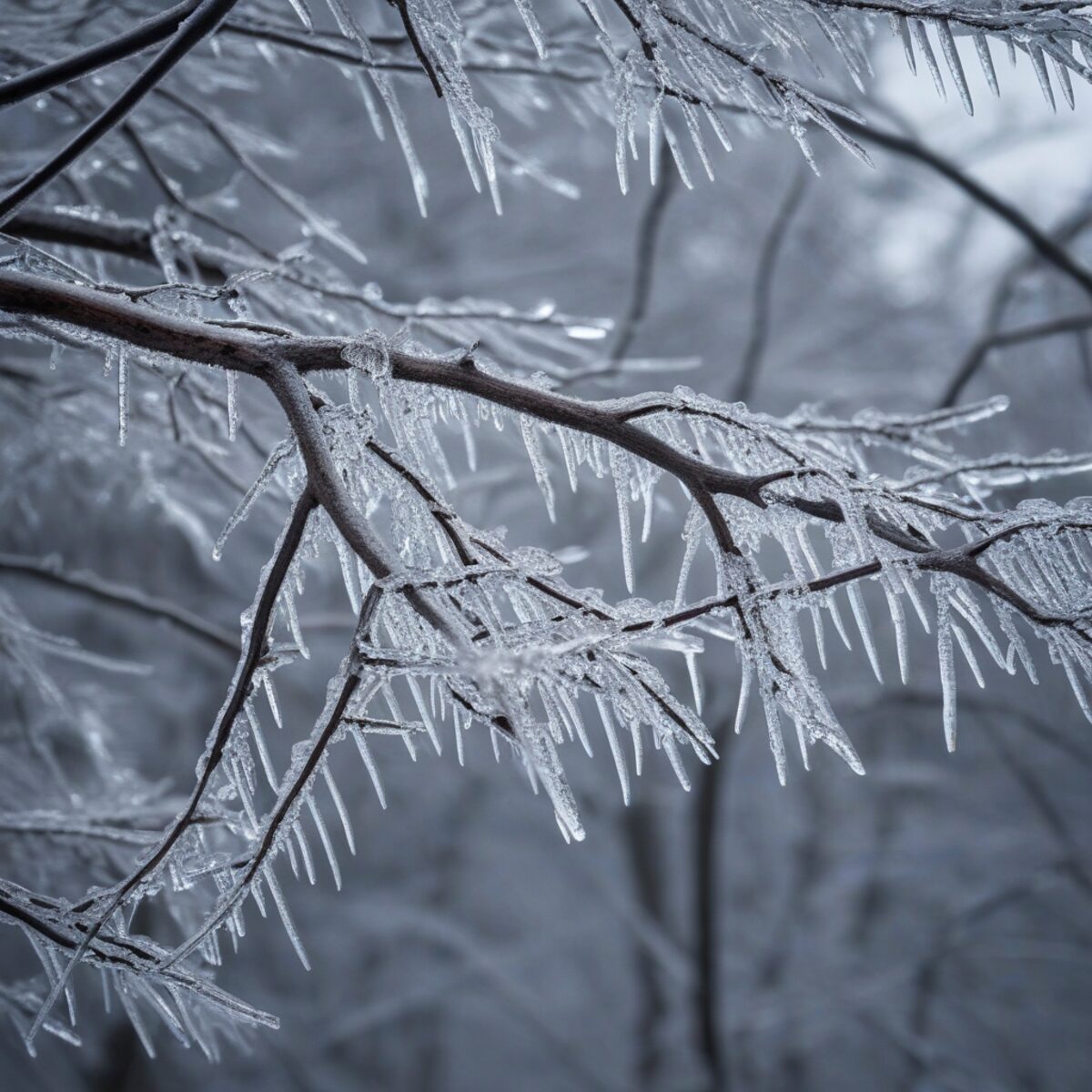
Forget fancy terms. Ice damage is about pure physics. A half-inch of ice coating can add 500 pounds or more to a single large limb. The tree’s structure is simply not designed to hold that much extra weight.
Failure happens from the outside in. Small twigs snap first. Then, as the ice accumulates, larger branches bend until the wood fibers rupture. Entire crowns can collapse. Dense evergreens like blue spruce are hit exceptionally hard because the ice locks onto the needles and can’t slide off. A loaded spruce becomes a tangled, broken mess.
Species with fine, flexible branching, like birch or elm, often fare better. They can bend and shed some ice. The worst combinations are broad-crowned trees like sugar maple or oak that hold leaves late, catching early season ice, or evergreens already burdened by snow.
Vulnerable Species: Blue spruce, white pine, any broadleaf tree that retains its leaves in early winter, and species with wide, horizontal branching patterns.
Preventive Pruning: The strategy is similar to wind, but with even more emphasis on reducing density and end weight. Thinning the crown allows more wind to pass through and can help shed some ice. Removing select interior branches lightens the overall load. For key evergreens, gently knocking ice off lower branches with a broom before they bend too far can prevent permanent damage. Do not shake the trunk, as this can transfer damaging stress to other limbs.
When Pruning Isn’t Enough, Support Systems Can Save a Tree
Sometimes a mature tree has a structural defect that makes removal seem like the only safe option. But if the tree is otherwise healthy and valuable, supplemental support systems can extend its safe life for decades.
Cabling involves installing flexible steel cables between codominant stems or major limbs. The cable doesn’t hold the tree up. It limits how far a weak union can spread apart during a storm. Modern dynamic cables are designed to allow normal movement while preventing a catastrophic split. Bracing is more invasive. It uses threaded steel rods drilled through a weak union to provide rigid support, usually for a crack that has already started.
This is not a DIY project. It requires a certified arborist to calculate load stresses and install hardware correctly in the tree’s strong wood. A well-installed system on a mature oak can manage risk for 20 to 30 years. But it’s not permanent. The hardware must be inspected every two to three years. The tree grows around the attachments, and cables can corrode or become too tight. It’s a long-term commitment, but it can preserve a landmark tree that would otherwise be lost.
Your Storm Preparedness Plan Starts With Your Address
Look at the data. Then look at your trees.
If you live in Colorado, Texas, Wyoming, or the Central Plains, hail is your primary adversary. Your focus should be on overall tree health and post-storm wound care.
If you live in the Midwest, Northeast, or areas like Paradise Valley, AZ with high wind averages, structural defects are your enemy. Hire an ISA Certified Arborist to perform a risk assessment. Target pruning to eliminate codominant stems and reduce end weight on large limbs.
If you live in the Ice Storm belt, from Oklahoma to New England, crown thinning and weight reduction are your best tools. Pay special attention to evergreens and trees with wide, horizontal branches.
No matter where you live, the universal rule is health. A stressed tree is a vulnerable tree. Water deeply during droughts, mulch properly to protect roots, and avoid damaging the trunk with lawn equipment. A healthy tree has the reserves to compartmentalize damage and recover.
Storms aren’t random for trees. They are a predictable test. Prepare for the test your geography is going to give them.
Check Your Trees
Enter your zip code to see local species, pest threats, and risk assessments.
Search by Zip Code