The 25 US Cities Where Trees Are Most Likely to Damage Your Home
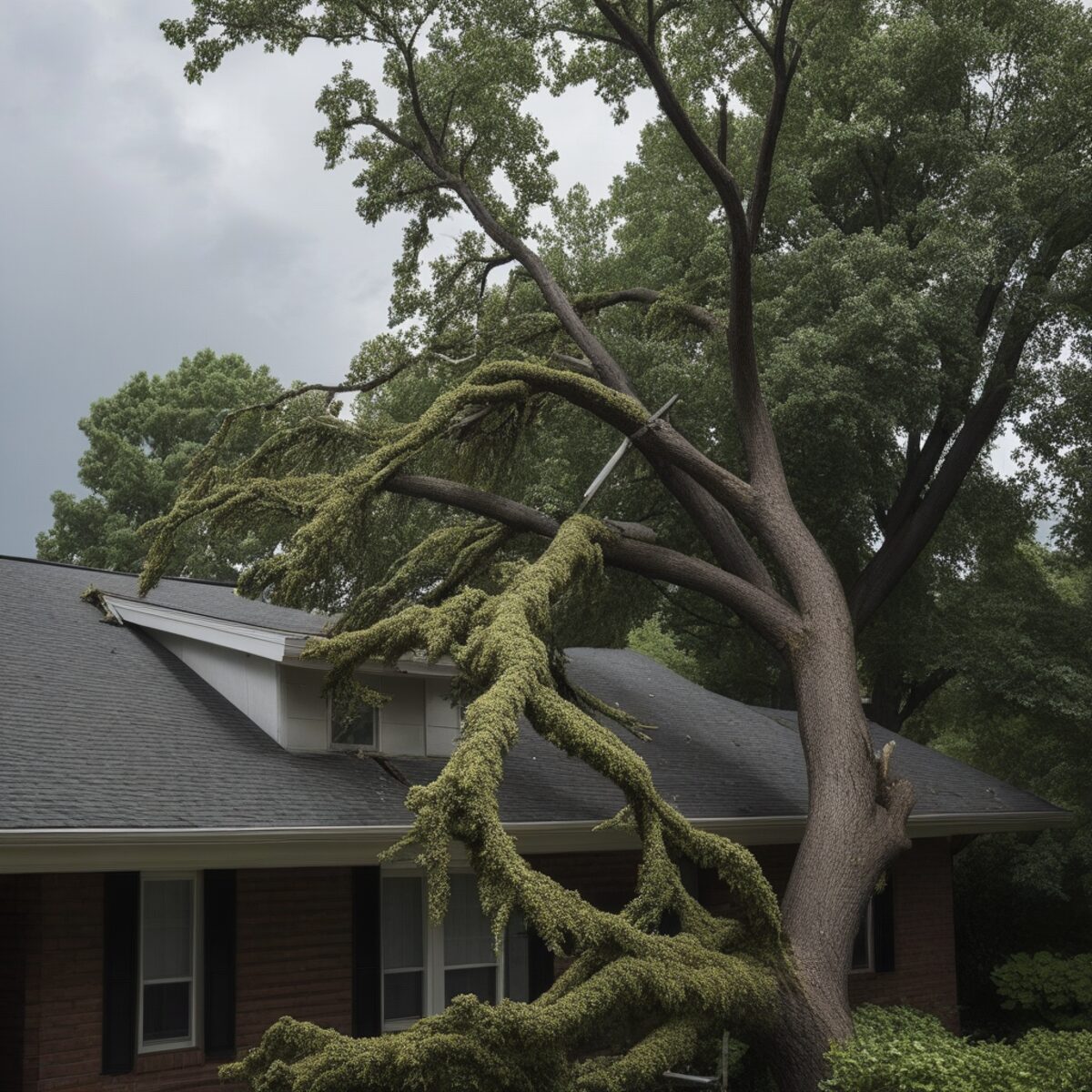
Look at the list below. The most dangerous tree situation for your home isn’t just a big storm, or just an old tree. It’s the combination of both. The number one risk factor is a mature tree in a place that gets hit, over and over, by high winds, hail, and ice.
Our analysis of nearly 3,800 U.S. cities pinpointed the places where these two factors collide. Here are the 25 cities where trees are most likely to damage your home.
| City | State | Storm Events/Yr | Tree Maturity (yrs) | Storm Risk |
|---|---|---|---|---|
| Black Forest | CO | 77.9 | 30 | very_high |
| Paradise Valley | AZ | 76.5 | 42 | very_high |
| Kenilworth | IL | 72.3 | 88 | very_high |
| Westlake | TX | 67.9 | 16 | very_high |
| Sewickley Heights | PA | 65.5 | 68 | very_high |
| Eastborough | KS | 58.9 | 75 | very_high |
| Lake Aluma | OK | 56.2 | 61 | very_high |
| Douglassville | PA | 53.2 | 28 | very_high |
| Timnath | CO | 51.6 | 11 | very_high |
| Belle Meade | TN | 51.0 | 71 | very_high |
| Knife River | MN | 49.2 | 37 | very_high |
| Chevy Chase Village | MD | 49.0 | 88 | very_high |
| Devon | PA | 48.7 | 75 | very_high |
| Bartonville | TX | 47.8 | 35 | very_high |
| Ranchettes | WY | 47.6 | 34 | very_high |
| Erda | UT | 46.0 | 28 | very_high |
| Crosswicks | NJ | 44.1 | 32 | very_high |
| Great Falls | VA | 43.4 | 42 | very_high |
| Apex | NC | 42.7 | 21 | very_high |
| Merion Station | PA | 39.6 | 88 | very_high |
| Saratoga Springs | UT | 37.9 | 52 | very_high |
| Parker | TX | 37.7 | 22 | very_high |
| Hill Country Village | TX | 37.6 | 42 | very_high |
| Neptune Beach | FL | 37.4 | 55 | very_high |
| Bunker Hill Village | TX | 36.2 | 36 | very_high |
Why These Three Factors Create a Perfect Storm
The table tracks two key numbers. “Storm Events/Yr” is the average number of hail, high wind, thunderstorm wind, and winter storm events per year. “Tree Maturity” is the estimated median age of the tree canopy. “Storm Risk” is the combined score.
A 20-year-old tree in a stormy area might lose branches. An 80-year-old tree in a calm area might drop a limb in a rare ice storm. But an 80-year-old tree that gets pounded by 70+ storm events a year? That’s a statistical certainty for failure. The weak points will be found.
The Colorado Front Range is a Hail and Wind Machine
The top of the list is dominated by Colorado, with Black Forest and Timnath. This isn’t about tornadoes. It’s about the relentless hail and high winds that roar down from the Rockies. I’ve seen mature ponderosa pines in these areas with crowns shredded by years of hail. The branches are weakened, then a straight-line wind event finishes the job. Seventy-eight storm events a year means a tree has almost no time to recover between assaults.
Mature Canopies in the Midwest and Mid-Atlantic are Ticking Clocks
Look at Kenilworth, IL (88 years), Sewickley Heights, PA (68), and Chevy Chase Village, MD (88). These are established, affluent suburbs with magnificent, ancient trees. Age alone isn’t a disease. But it means these trees have lived through decades of construction, soil compaction, and minor storms that have slowly compromised root systems. They also have the broad, heavy branching structures of mature oaks and maples. A half-inch of ice adds 500 pounds to a large limb like that. I’ve seen codominant stems on these giants, with hidden included bark, that are one heavy snow load away from splitting the tree in half.
Texas and the Southeast Mix Storms with Rapid Growth
Multiple Texas cities and Neptune Beach, FL, appear. This is the hurricane and severe thunderstorm belt. The risk here is twofold. You have the catastrophic wind events. You also have trees, like certain pines and water oaks, that grow fast in the humid climate. Fast growth often means weaker wood. A 22-year-old tree in Parker, TX, might be massive, but it hasn’t developed the dense, resilient wood of a slower-grown tree. It’s more prone to snap.
How Trees Actually Fail (It’s Not Random)
Trees don’t just fall over. They fail at specific weak points. If you understand these, you know what to look for.
Codominant Stems: The #1 Killer in Yards
This is the most common cause of a healthy-looking tree destroying a house. Look for two or more main trunks of roughly equal size, emerging from the same point. If you see a V-shape instead of a U-shape, you have a problem. The bark gets pinched between the trunks, acting as a wedge instead of a bond. Under wind or ice load, it splits. I’ve been called to dozens of jobs where a 100-year-old oak literally ripped itself in half down the middle. This is almost always preventable with early structural pruning.
Root Plate Failure: The Silent Anchor Problem
The tree tips over, roots and all. This happens when the anchor is compromised. Common causes are root cutting for a driveway or sewer line, soil compaction from parking cars under the tree, or root rot. The scary part is the tree can look perfectly healthy, full of leaves, right until it goes over. The most dangerous wind pattern is sustained wind from one direction that strains the roots, followed by a sudden shift. That fatigues the root plate and it gives way. If you’ve had construction near a tree in the last 20 years, assume the root zone is damaged.
Branch Failure: The Deadfall You Can See
This one is more obvious. Dead branches, called “widowmakers” for a reason, have no flexibility. A dead limb 6 inches thick can weigh over 500 pounds. Ice dramatically increases this load. Species matter. Dense evergreens like blue spruce are ice traps. The ice can’t slide off the needles, and the weight can shear whole limbs off. Fine-branched trees like birch shed ice better. The most deceptive load is wet, heavy spring snow on a tree that has already leafed out. That combines sheer weight with the sail area of the leaves.
What You Can’t See is What Matters Most
Homeowners often say, “But it looks fine.” I hear it every day. A tree can be hollowed out by 70% internal decay and show almost no external sign. The leaves might be green because a thin layer of living wood under the bark is still transporting water. I use a tool called a resistograph for trees near homes. It drills a thin needle in and measures wood resistance. It’s the only way to know for sure. Lightning damage is another hidden killer. It often travels down one side of the trunk, boiling the sap and exploding the wood fibers underneath the bark. The damage might not be visible, and the tree can die months later. Any tree struck by lightning needs a professional assessment within days.
What to Do Based on Where You Live
If You’re in a “Very High” Risk City on This List
Your approach must be proactive, not reactive. Assume your mature trees are in a fight they will eventually lose. Schedule a professional assessment with an ISA Certified Arborist every two years. Ask specifically about codominant stems, root zone health, and internal decay. Prioritize pruning to reduce end weight on long limbs and address weak unions. Consider preemptive removal of high-risk trees that are declining. The cost of removal is always less than the deductible and trauma of a tree through your roof.
If You’re in a Storm-Prone Region (High Annual Events)
Your focus is on wind and ice preparedness. Before storm season, have deadwood pruned out. Thin the crowns of broad-leaf trees (oaks, maples) to allow wind to pass through. For evergreens, particularly spruces and pines near your house, consider crown reduction or even removal if they are dense and over-mature. After any major hail event, have your trees inspected. Hail damages the bark and creates entry points for disease and insects that weaken the tree structurally.
If You Have Mature Trees (Over 60 Years Old) Anywhere
Age demands respect. The goal is to preserve these trees safely. Your main enemy is soil compaction and root damage. Never park under them. Don’t change the grade or soil level around them. Mulch the root zone properly. Your annual inspection should look for fungal conks (mushrooms) on the trunk or roots, new lean, and cracks in the trunk or major unions. Invest in the health of the soil. A robust root system is an old tree’s best defense.
The Universal Rule for Every Homeowner
Look up. Right now. Look at the trees whose failure would hit your house, garage, or where your kids play. Do you see V-shaped forks? Large dead branches? Fungi on the trunk? Is there a cavity? That’s your shortlist. Then, call a professional. Not a guy with a chainsaw. An arborist. Get a written report. It’s not an expense. It’s the cheapest insurance policy you’ll ever buy for your home. Trees fail at predictable weak points. Finding those points before the next storm does is the only way to protect what you have.
Check Your Trees
Enter your zip code to see local species, pest threats, and risk assessments.
Search by Zip Code