America's Oldest Urban Trees: 30 Cities Where Your Landscaping Is Older Than You
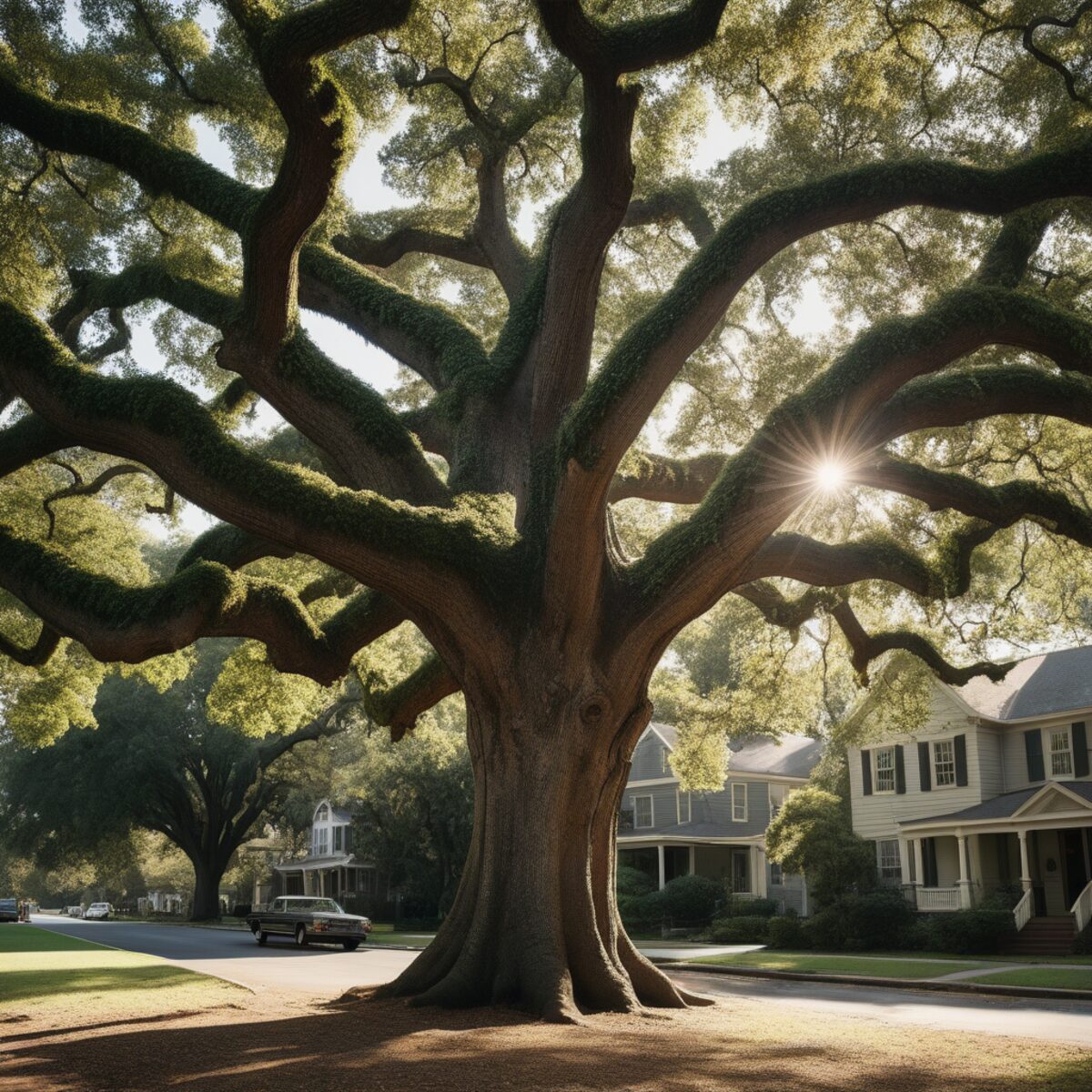
If you live in one of America’s older neighborhoods, the trees shading your street are likely senior citizens. They may be the oldest living things you interact with daily, and they are almost certainly older than you. This isn’t just trivia. The age of your neighborhood’s landscaping dictates the risks, rewards, and responsibilities you inherit as a homeowner.
Our analysis of U.S. Census data reveals a striking pattern. The cities with the oldest housing stock, and therefore the oldest planted trees, are concentrated in a specific corridor. They are largely pre-World War II suburbs of major Northeastern cities, with a few historic towns and resorts scattered across the country.
Here are 30 cities where the median home was built in 1938, meaning the original landscaping is now approximately 88 years old.
| City | State | Median Year Built | Tree Maturity | Hardiness Zone |
|---|---|---|---|---|
| Piedmont | California | 1938 | 88 | 10a |
| Fenwick | Connecticut | 1938 | 88 | 7a |
| Chevy Chase Village | Maryland | 1938 | 88 | 7b |
| Plandome | New York | 1938 | 88 | 7b |
| Tuxedo Park | New York | 1938 | 88 | 6b |
| Watch Hill | Rhode Island | 1938 | 88 | 7a |
| Lance Creek | Wyoming | 1938 | 88 | 4b |
| Deal | New Jersey | 1938 | 88 | 7b |
| North Crows Nest | Indiana | 1938 | 88 | 6b |
| Larchmont | New York | 1938 | 88 | 7b |
| Kenilworth | Illinois | 1938 | 88 | 6a |
| Grand View-on-Hudson | New York | 1938 | 88 | 7a |
| Belmont | Massachusetts | 1938 | 88 | 6b |
| Upper Montclair | New Jersey | 1938 | 88 | 7a |
| Valmont | Colorado | 1938 | 88 | 6a |
| Candlewood Isle | Connecticut | 1938 | 88 | 6b |
| Seton Village | New Mexico | 1938 | 88 | 7a |
| Merion Station | Pennsylvania | 1938 | 88 | 7b |
| Waterford | Virginia | 1938 | 88 | 7a |
| Gilgo | New York | 1938 | 88 | 7b |
| Oak Bluffs | Massachusetts | 1938 | 88 | 7a |
| Stonington | Connecticut | 1938 | 88 | 7a |
| Crockett | California | 1938 | 88 | 9b |
| Newtown | Pennsylvania | 1938 | 88 | 7a |
| Flint Hill | Virginia | 1938 | 88 | 7a |
| Nahant | Massachusetts | 1938 | 88 | 7a |
| Silverado | California | 1938 | 88 | 10b |
| Haddonfield | New Jersey | 1938 | 88 | 7b |
| Newport | Rhode Island | 1938 | 88 | 7a |
| Woodstock | Vermont | 1938 | 88 | 5a |
Why These Cities Are a Time Capsule for Urban Trees
The list is dominated by places like Larchmont, NY, Chevy Chase Village, MD, and Kenilworth, IL. These are established, often affluent, early streetcar and railroad suburbs built before the postwar boom. Development largely paused during the Great Depression and WWII, creating a distinct cohort of homes, and trees, planted in the late 1930s.
These communities share two things. First, they have the wealth to support the significant maintenance and insurance costs mature trees require. Second, their mature tree canopy is a primary component of their identity and property value. The tree in your yard is not just a plant. It is a legacy asset that has been growing in value, literally and figuratively, for generations.
The Lifecycle of a Legacy Tree: From Sapling to Senior Care
To manage an 80-year-old tree, you must understand what was planted and why, and what happens to that species over a human lifetime.
The 1930s-1950s: The Fast-Growth Era. The landscaping philosophy for these new suburbs was simple and short-sighted. Instant curb appeal. Builders and early homeowners selected trees that grew quickly to provide shade and a settled look. The concept of "right tree, right place" was decades away. Popular choices included: * American Elm: The iconic street tree, planted by the millions. By the 1960s and 70s, Dutch elm disease had wiped out most, making surviving specimens rare and ecologically precious. * Silver Maple: Chosen for its extremely fast growth. Now, an 88-year-old silver maple is a giant with notoriously weak, brittle wood prone to storm damage, and aggressive surface roots that heave sidewalks and invade sewer lines. * Norway Maple: Another fast-grower planted for dense shade. That dense shade kills all understory plants. It is now known to be invasive, and its shallow root system competes aggressively with turf. * White Pine: Planted as a fast evergreen screen or specimen. At 80+ years, these pines are often towering, hazard-prone giants in residential settings, susceptible to windthrow, pine bark beetles, and fungal diseases.
Age 60-80: The Consequences Arrive. This is when the growth habits of youth become the structural liabilities of maturity. A tree planted in 1938 is now in its twilight years for many common landscape species. The internal decay that is a natural part of aging for many fast-growing trees weakens trunks and major limbs. The tree’s immense size, once its glory, now poses a significant risk to the home it was planted to adorn. This is the stage of constant risk management. Proactive, expert pruning and sometimes cabling or bracing are required to extend the tree’s safe lifespan.
The Double-Edged Sword: Immense Value and Immense Risk
This is the central paradox of the mature urban tree. It is simultaneously your property’s most valuable landscape asset and its greatest potential liability.
The value is quantifiable. The Council of Tree and Landscape Appraisers (CTLA) method is the industry standard for valuation. It factors species, size, condition, and location. A healthy 30-inch oak in a front yard can appraise for $15,000 to $30,000. Real estate studies consistently show mature tree cover adds 7-15% to property value. For a $500,000 home in Haddonfield, NJ, or Belmont, MA, that’s $35,000 to $75,000 of value rooted in your yard.
This is why tree preservation during renovation is critical, and why removal of a healthy mature tree is a last resort. It is also why insurance claims for tree damage or contractor negligence are so high. If a healthy, valuable tree is killed, the owed compensation is its appraised replacement value, not just the cost to cut it down.
The risk is equally real. The same tree that adds tens of thousands in value can cause equivalent or greater damage in a storm. The cost of proactive, expert maintenance is an investment in preserving that asset and mitigating risk. The cost of neglect is often catastrophic failure.
What You Should Do If You Live with Legacy Trees
Your role is not that of a gardener, but of a steward. Your actions will determine whether these community elders thrive for another generation or become a statistic.
First, Know What You Have. Hire a certified arborist for a consultation. Not a tree cutter, but an ISA Certified Arborist. Get a report that identifies species, assesses health and structure, and outlines any recommended treatments. This is your baseline.
Invest in Intelligent Maintenance. Pruning is not a cosmetic task. For an octogenarian tree, it is preventive medicine. Crown cleaning, weight reduction, and deadwood removal are essential to reduce sail area in wind and prevent limb failure. This work requires expertise. Poor pruning can accelerate decline or create new hazards.
Plan for Succession. No tree lives forever. If you have a silver maple from 1938, it is living on borrowed time. The most responsible thing you can do is plant its replacement now. Select a species proven for your site with a long lifespan and minimal problems. Think oaks, hackberries, Kentucky coffeetree, or species-native maples. Plant it well, at a proper distance from structures, and care for it. In 20 years, when the old tree must come down, the new one will be established and ready to take its place in the canopy.
Protect What You Have. Ensure construction contractors understand the value of your trees. Establish clear root protection zones. A single trench or soil compaction within the critical root zone can kill a mature tree slowly over five years, wiping out that $30,000 asset.
The trees in these 30 cities are living history. They have shaded multiple generations. They have seen neighborhoods transform. They are assets that require sophisticated, informed care. The decisions made by homeowners today, informed by the lessons of the past 88 years, will determine whether these urban elders remain a blessing, or become a burden, for the next generation.
Check Your Trees
Enter your zip code to see local species, pest threats, and risk assessments.
Search by Zip Code